

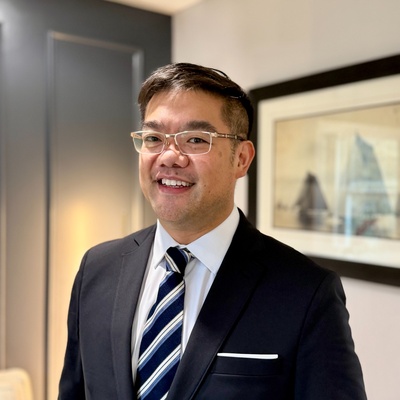
Article by
Peterson Huang DMD, MS, FACP, FRCDC
Dr. Peterson Huang is a dual board-certified prosthodontist serving Falls Church and Northern Virginia. He has been recognized as a Top Prosthodontist by Northern Virginia Magazine and Arlington Magazine and is affiliated with the Inova Fairfax Hospital Tumor Board. Dr. Huang focuses on dental implants, full mouth reconstruction, and complex restorative dentistry for patients who need advanced, comprehensive care.
When dental health issues progress beyond a routine cavity or standard cleaning, the treatment path is rarely straightforward. Extensive tooth wear, multiple missing teeth, severe bite instability, or recurring restorative failures present complex biomechanical challenges that require advanced clinical planning. In such situations, patients seeking a prosthodontist in Falls Church, VA are often looking for care that addresses the functional foundation of their oral health, not just cosmetic symptoms.
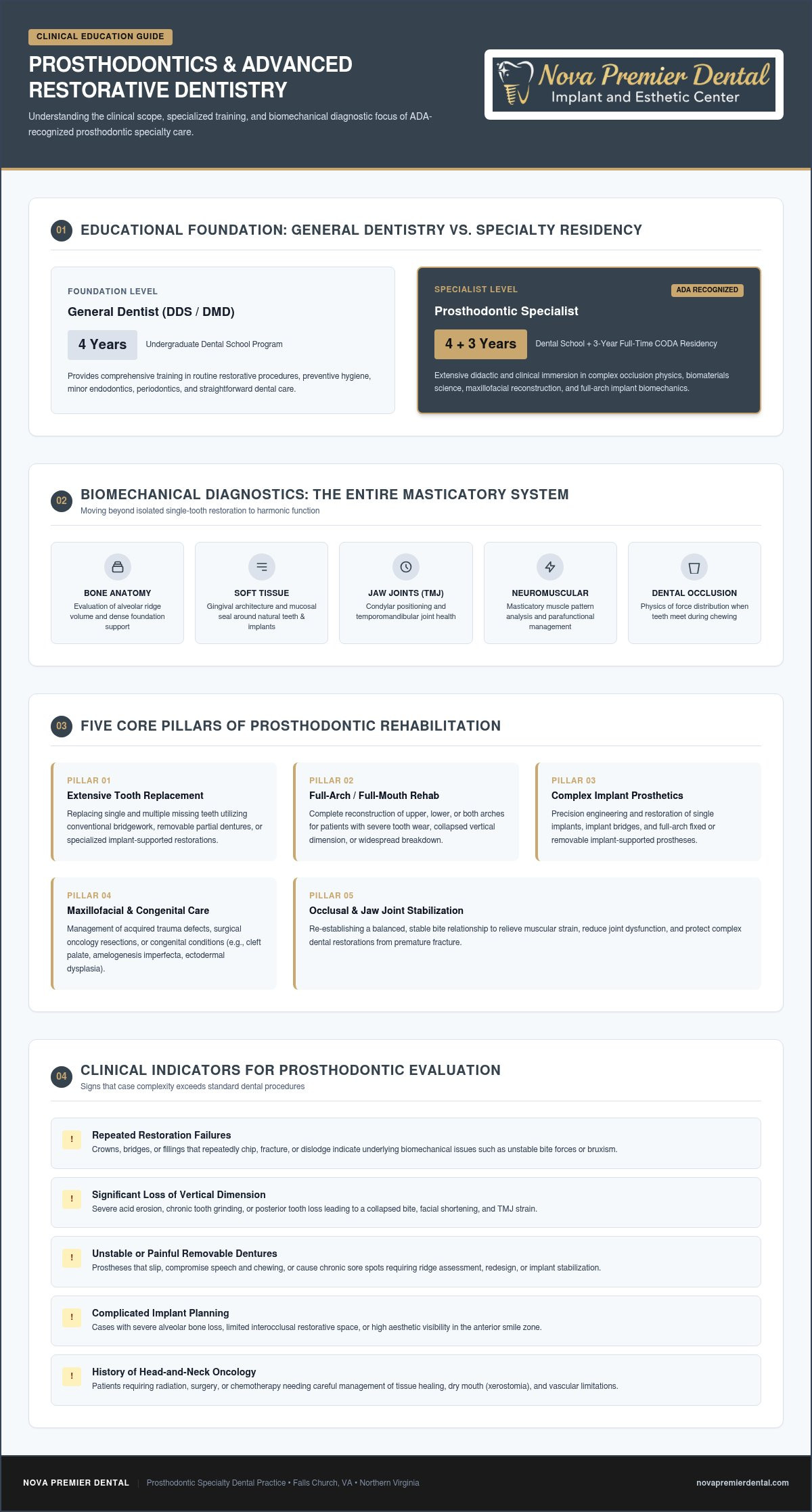
Prosthodontics is one of the dental specialties recognized by the American Dental Association (ADA). While general dentists provide vital preventive, restorative, and routine care, a prosthodontist specializes in the diagnosis, comprehensive treatment planning, rehabilitation, and maintenance of oral function, comfort, appearance, and health for patients with missing or deficient teeth and oral tissues.
Understanding what a prosthodontic specialist does—and how advanced restorative principles differ from standard dentistry—can help you make informed decisions when facing significant restorative choices.
What is a Prosthodontist and Why Visit One in Falls Church?
A prosthodontist is a dental specialist who has completed standard dental school followed by three additional years of rigorous, full-time advanced specialty residency accredited by the Commission on Dental Accreditation (CODA). During this intensive residency, prosthodontists receive extensive didactic and clinical training in complex tooth replacement, fixed and removable Prosthodontics, dental implant surgery and restoration, temporomandibular disorders (TMD), maxillofacial prosthetics, and the physics of dental occlusion (how teeth meet and distribute forces).
Rather than approaching oral health as a series of isolated procedures on individual teeth, a prosthodontist plans treatment with an emphasis on the complete masticatory system. This involves assessing bone anatomy, soft-tissue support, the jaw joints (temporomandibular joints), neuromuscular patterns, and tooth dynamics to construct restorations that work in harmony with the body.
The Scope of Specialized Prosthodontic Care
The clinical scope of prosthodontics addresses dental rehabilitation across several categories:
- Extensive tooth replacement: Single and multiple missing teeth replaced using conventional bridgework, partial dentures, or implant-supported prostheses.
- Full-arch and full-mouth rehabilitation: Complete restoration of the upper, lower, or both dental arches for patients with severe tooth wear, collapsed bites, or widespread structural breakdown.
- Complex implant prosthetics: Precision design and restoration of single implants, implant-supported bridges, and full-arch fixed or removable implant prostheses.
- Maxillofacial and congenital rehabilitation: Management of acquired defects resulting from trauma, surgery, or head-and-neck pathology, as well as congenital conditions such as cleft palate, amelogenesis imperfecta, or ectodermal dysplasia.
- Occlusal and jaw joint stabilization: Re-establishing a stable bite relationship to relieve muscular strain, reduce joint dysfunction, and protect restorations from premature fracture.
Patients seeking specialized prosthodontic care in Northern Virginia often arrive after years of piecemeal dental work that has begun to fail, or because their restorative needs require a level of sequencing and force distribution analysis that goes beyond routine general practice.
Signs You Should See a Specialist Instead of a General Dentist
While many dental issues can be managed effectively by general practitioners, certain clinical indicators suggest that an evaluation by a prosthodontic specialist may be beneficial:
- Repeated restoration failure: Crowns, bridges, or fillings that repeatedly chip, break, or dislodge often signal an underlying biomechanical problem, such as unstable occlusion or uncontrolled parafunctional habits (bruxism), rather than simply a defective filling material.
- Significant loss of vertical dimension: Severe acid erosion, chronic tooth grinding, or long-term posterior tooth loss can cause the lower third of the face to shorten, resulting in a collapsed bite, altered facial aesthetics, and strain on the jaw joints.
- Unstable or painful removable dentures: Conventional dentures that slip, cause chronic sore spots, or compromise speech and chewing may benefit from advanced prosthetic redesign, ridge evaluation, or implant stabilization.
- Complicated implant planning: Situations with severe alveolar bone loss, limited interocclusal restorative space, or high aesthetic visibility in the anterior smile zone demand precise planning to avoid biological and mechanical complications.
- History of head-and-neck oncology treatment: Patients who have undergone radiation therapy, surgical resections, or chemotherapy require specialized knowledge of tissue healing, xerostomia (dry mouth) risks, and vascular limitations before undergoing restorative procedures.
Prosthodontist vs. General Dentist: Understanding the Difference
Patients often ask how a prosthodontist differs from a general dentist, particularly when many general dental practices offer crowns, bridges, and dental implants. The distinction lies primarily in educational depth, diagnostic focus, and experience with complex systemic oral problems.
All prosthodontists begin their careers as general dentists, completing four years of undergraduate dental education (DDS or DMD). Following dental school, a prospective prosthodontist must complete an additional three years of hospital- or university-based residency. This additional postgraduate training encompasses advanced biomaterials science, biomechanics, complex implant reconstruction, laboratory communication, and occlusal rehabilitation.
| Clinical Attribute | General Dentist | Board-Certified Prosthodontist |
|---|---|---|
| Postgraduate Training | Optional 1-year GPR/AEGD or continuing education courses. | 3 years of formal, full-time CODA-accredited university or hospital specialty residency. |
| Scope of Practice | Broad primary care: cleanings, fillings, simple root canals, simple extractions, basic crowns. | Specialized care: advanced reconstruction, implant prosthodontics, full-mouth rehabilitation, severe wear cases. |
| Occlusal Diagnostics | Focused on single-tooth or quadrant harmony. | Comprehensive analysis of centric relation, vertical dimension, joint dynamics, and total force distribution. |
| Handling Complex Cases | Often refers multi-unit, severely worn, or structurally compromised cases to a specialist. | Primary focus is managing advanced, multi-disciplinary, and failing restorative situations. |
In practice, general dentists frequently coordinate with prosthodontists, referring patients whose dental conditions require complex multi-phase treatment, advanced tissue management, or specific diagnostic staging.
Advanced Restorative Capabilities
Restoring a single tooth with a crown is common in dentistry. However, when multiple teeth are compromised, simple tooth-by-tooth replacement can lead to uneven bite forces, muscle fatigue, and restorative fractures. Prosthodontists apply precise laboratory and clinical methodologies to evaluate the restorative space—the vertical and horizontal space available between the upper and lower arches.
Whether fabricating custom dental crowns or engineered fixed bridges, a prosthodontist selects specific materials based on their physical properties, such as flexural strength, wear compatibility with opposing natural enamel, and bonding capabilities. For patients interested in deeper clinical comparisons, understanding the differences between a prosthodontist and a general dentist for complex restorative needs highlights why specialized diagnostic protocols protect against long-term mechanical failure.
The Value of Board Certification
While completing an accredited residency qualifies a dentist as a prosthodontic specialist, board certification represents an additional rigorous professional credential. The American Board of Prosthodontics (ABP) conducts a multi-phase examination process that involves written testing, rigorous oral examinations, and the presentation of successfully treated patient cases evaluated by a panel of veteran examiners.
Board certification demonstrates an ongoing dedication to clinical excellence, evidence-based practices, and peer-reviewed standards. At Nova Premier Dental, Dr. Peterson Huang brings dual board-certified expertise to patient care, reflecting advanced training across specialized dental disciplines.
Specialized Treatments: Beyond Standard Restorations
Prosthodontic treatment involves an array of advanced restorative solutions tailored to specific anatomical, functional, and personal requirements.
Dental Implants and Complex Implant Prosthetics
Dental implants are widely considered the benchmark for replacing missing teeth because they integrate directly with alveolar bone, providing stable support for crowns, bridges, and full-arch prostheses. However, long-term implant success relies heavily on prosthetic-driven planning. Rather than placing an implant solely where bone happens to be present, a prosthodontist first designs the optimal position of the final tooth and plans the implant location to support that restoration safely.
Prosthodontists evaluate crucial biological factors before planning dental implant placement, including:
- Bone volume and density: Assessing whether site development or bone grafting is needed to support the functional forces of chewing.
- Implant angulation and depth: Ensuring that the implant fixture allows for hygienic screw-retained restorations and proper emergence profiles through the gum tissue.
- Force management: Balancing chewing loads across multiple implants to avoid mechanical complications like screw loosening, component fracture, or marginal bone loss.
For patients missing an entire arch of teeth, treatments such as permanent dentures and fixed full-arch bridges provide stable functional alternatives to loose removable prostheses.
Full Mouth Reconstruction and Oral Rehabilitation
A full mouth reconstruction involves rebuilding or restoring every tooth in both the upper and lower jaws. This procedure is indicated for patients with widespread dental disease, advanced attrition (wear from tooth-to-tooth grinding), severe erosion, or developmental disorders.
Because full mouth rehabilitation changes how the upper and lower jaws interact, treatment cannot simply be rushed into permanent porcelain. A prosthodontist typically uses a phased approach:
- Comprehensive Diagnostic Records: Digital intraoral scans, diagnostic casts, facial photographs, and precision jaw relation records are gathered to evaluate the existing occlusal plane and jaw positions.
- Diagnostic Wax-Up and Prototype Phase: The proposed tooth contours, bite relationships, and aesthetic proportions are planned in a diagnostic prototype. Provisional restorations are placed in the mouth for several weeks to months. This critical step allows the patient to test speech, chewing efficiency, jaw comfort, and appearance before any final restorations are fabricated.
- Final Material Conversion: Once the bite is confirmed to be stable, comfortable, and functional, high-strength restorative materials—such as monolithic zirconia, lithium disilicate, or porcelain fused to metal—are crafted to match the proven prototype.
Oral Reconstruction and Aesthetic Integration
Aesthetic refinement should not occur at the expense of structural durability. When designing smile improvements, a prosthodontist evaluates facial proportions, lip mobility, phonetics (how teeth impact speech sounds like "F", "V", and "S"), and periodontal tissue architecture.
Procedures such as porcelain veneers are planned conservatively, preserving as much natural tooth enamel as possible. Enamel bonding offers substantially greater bond strength and long-term retention compared to dentin bonding. By addressing occlusal guidance—ensuring the front teeth properly disengage the back teeth during lateral jaw movements—a prosthodontist helps safeguard thin ceramic restorations against chipping and debonding.
Managing TMJ and Jaw Joint Disorders
The masticatory system is an interconnected unit consisting of teeth, periodontal ligaments, jaw muscles, and the temporomandibular joints. Disruption in one component often leads to issues in another. While not all jaw pain stems from dental issues, unstable bites, missing posterior teeth, and uneven contacts can aggravate muscle fatigue and contribute to joint discomfort.
Through careful occlusal analysis, a prosthodontist can identify discrepancies between where the jaw joints naturally seat (centric relation) and where the teeth actually mesh (maximum intercuspation). Treatment for TMJ and jaw joint disorders often begins non-invasively, utilizing custom-designed occlusal splints or night guards to stabilize the joint, relieve muscle hyperactivity, and evaluate symptom improvement before making permanent changes to the bite.
The Patient Journey: Specialized Care in Falls Church
Seeking specialized dental care can feel overwhelming, especially for individuals who have dealt with years of recurring dental issues, discomfort, or dental anxiety. A prosthodontic specialty office approaches care through a systematic, patient-centered diagnostic methodology.
- In-Depth Comprehensive Examination: Rather than a brief checkup, your initial consultation focuses on gathering diagnostic data. This includes high-resolution digital imaging, periodontal assessments, soft tissue and oral cancer screenings, airway evaluation, and detailed examination of the jaw joints and chewing muscles.
- Etiology Identification: Before proposing treatment, a prosthodontist investigates why previous restorations failed or why specific teeth deteriorated. Identifying root causes—such as nocturnal bruxism, gastroesophageal reflux, dietary acidity, or malocclusion—is essential to prevent new restorations from suffering the same fate.
- Customized Treatment Options: Patients receive a thorough explanation of practical treatment paths, which may range from conservative management to staged reconstructive plans. The risks, benefits, longevity considerations, and maintenance requirements of each option are detailed so you can make an informed choice.
- Collaborative Interdisciplinary Execution: Complex reconstructions often benefit from teamwork. A prosthodontist frequently coordinates care with periodontists (gum and bone specialists), oral surgeons, and endodontists (root canal specialists), overseeing the restorative plan to ensure all treatments align with the final functional goal.
- Long-Term Maintenance and Prevention: Specialized prosthetics require ongoing care. Tailored hygiene protocols and routine preventive exams and cleanings help preserve the health of the underlying gums and bone, protecting your investment for years to come.
Your First Consultation with Dr. Peterson Huang
During a consultation at our Falls Church prosthodontic practice, Dr. Peterson Huang takes time to listen to your personal concerns, dental history, and treatment goals. Many patients visit seeking a specialized second opinion regarding complex treatment plans they have received elsewhere, such as recommendations for multiple extractions or full-arch clearances.
A second opinion from a prosthodontic perspective assesses whether natural teeth can be predictably saved through targeted crown lengthening, endodontic therapy, and custom crowns, or if replacement with dental implants represents a more sound long-term prognosis. Clear, honest communication provides patients with confidence and clarity about their treatment options.
Investment and Financial Planning
Given the advanced diagnostics, precision laboratory fabrication, and specialized materials required for complex oral rehabilitation, restorative treatment represents a meaningful investment in your overall health and well-being. Practicing financial transparency is an integral part of patient care.
Our administrative team works closely with patients to review detailed treatment estimates, clarify applicable dental insurance benefits, and discuss payment schedules. Nova Premier Dental offers in-house payment plans for qualifying patients, allowing treatment costs to be paid over several months while patients enjoy their new smile. This allows necessary care to proceed smoothly without unnecessary administrative delays.
Why Choose Nova Premier Dental for Your Restorative Needs?
Located in Falls Church, Virginia, Nova Premier Dental provides specialized prosthodontic and restorative care for residents throughout Northern Virginia, including McLean, Arlington, Tysons, Great Falls, Vienna, and Fairfax. Choosing a dental practice for complex care requires confidence in clinical judgment, meticulous technique, and personalized attention.
A Clinical Practice Grounded in Advanced Training
Dr. Peterson Huang's dual board certification reflects a deep commitment to the highest standards of restorative care. His practice combines proven prosthodontic principles with advanced diagnostic tools, including low-dose digital radiography, intraoral 3D scanners, and specialized dental laboratory partnerships that share our high standards for marginal fit, anatomical contouring, and aesthetic shade matching.
In addition to comprehensive reconstructions, our practice offers supportive care such as emergency denture repairs, ensuring that patients with acute prosthetic issues receive prompt, specialized attention to restore their function and comfort.
To learn more about our practice approach and philosophy of patient care, explore why patients choose Nova Premier Dental for their restorative needs.
Frequently Asked Questions About Prosthodontic Care
What is the difference between a dentist and a prosthodontist?
While all prosthodontists are dentists, fewer than 2% of dental school graduates complete the additional three years of intensive, CODA-accredited specialty training required to become a prosthodontist. Prosthodontists specialize primarily in complex restorative problems, tooth replacement, occlusal rehabilitation, and full-mouth restorations, whereas general dentists focus largely on primary dental care, routine prevention, and standard restorations.
When should I see a prosthodontist for dental implants?
You should consider seeing a prosthodontist if your implant case involves replacing multiple teeth, replacing teeth in the visible smile zone (anterior aesthetic zone), severe bone resorption, a history of failing restorations, or if you require full-arch fixed or removable implant restorations. A prosthodontist focuses on the engineering, angulation, and final prosthetic design to ensure long-term stability and cleanability.
Does a prosthodontist perform full mouth reconstructions in Falls Church?
Yes. Full mouth reconstruction—the coordinated rehabilitation of every tooth in the upper and lower arches—is one of the primary areas of focus for a prosthodontist. Dr. Peterson Huang evaluates the jaw joints, facial aesthetics, vertical dimension, and bite forces to rebuild worn, broken, or missing teeth in a structured, multi-phase treatment protocol.
Can a prosthodontist help with loose or uncomfortable dentures?
Yes. Prosthodontists receive extensive training in the physics of complete and partial dentures. A specialist can assess whether an ill-fitting denture can be relined, if the bite balance needs correction, if a new custom prosthesis is necessary, or if adding dental implants for retention (such as an implant-supported overdenture) would resolve chronic stability and comfort issues.
How long does the prosthodontic restoration process take?
Treatment timelines vary widely based on the complexity of each case. A single crown or bridge may be completed in a few weeks, whereas a complex full-mouth reconstruction or an implant rehabilitation requiring bone grafting and tissue maturation may take several months. Staging care ensures that underlying tissues heal thoroughly and provisional phases confirm bite comfort before final restorations are placed.
What qualifications should I look for in a Falls Church prosthodontist?
Look for a specialist who has completed a three-year accredited postgraduate prosthodontics residency and holds board certification through the American Board of Prosthodontics. Board certification indicates that the practitioner has successfully passed rigorous written, clinical, and peer-reviewed oral examinations demonstrating advanced diagnostic and clinical skill.
Schedule a Specialized Consultation
If you are experiencing recurring dental complications, severe wear, missing teeth, or have questions about a complex restorative procedure, Nova Premier Dental provides specialized care for patients throughout Falls Church and Northern Virginia. Contact our office today to schedule a comprehensive evaluation and take the first step toward long-term oral health and function.
Disclaimer
The information provided on this website and blog is intended for general educational and informational purposes only and should not be considered dental or medical advice, diagnosis, or treatment. Reading content on this website does not establish a doctor-patient relationship with Nova Premier Dental or Dr. Peterson Huang. Dental conditions and treatment needs vary from patient to patient. Individuals should consult directly with a qualified dental professional for personalized evaluation, diagnosis, and treatment recommendations. Do not delay seeking professional dental care based on information found on this website. While we strive to provide accurate and up-to-date information, no guarantee is made regarding the completeness, accuracy, or applicability of the content. Treatment outcomes may vary depending on individual circumstances. If you are experiencing a dental emergency or urgent oral health concern, please contact a licensed dental professional immediately or call 911 in the event of a medical emergency.


