


Article by
Peterson Huang DMD, MS, FACP, FRCDC
Dr. Peterson Huang is a dual board-certified prosthodontist serving Falls Church and Northern Virginia. He has been recognized as a Top Prosthodontist by Northern Virginia Magazine and Arlington Magazine and is affiliated with the Inova Fairfax Hospital Tumor Board. Dr. Huang focuses on dental implants, full mouth reconstruction, and complex restorative dentistry for patients who need advanced, comprehensive care.
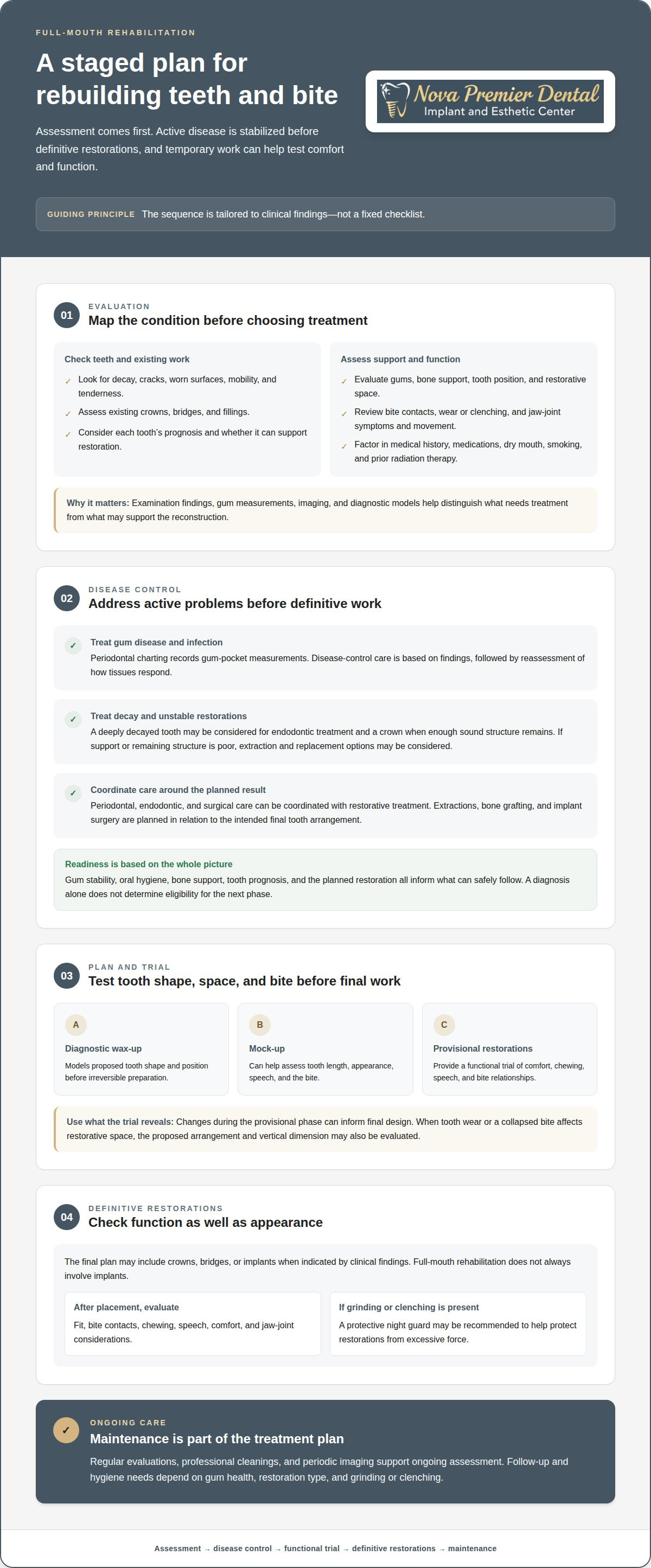
The full-mouth rehabilitation stages generally move from comprehensive assessment to control of active disease, rebuilding or replacing damaged teeth, and refining the bite after restorations are placed. Restorative treatment planning establishes the order because gum health, remaining tooth structure, bone support, bite forces, and jaw-joint findings affect what can safely follow.
It’s understandable to want a clear picture of how an extensive plan unfolds, especially when several teeth or both arches are involved. This guide explains how clinicians assess teeth, gums, bone, bite, and joints; why active dental problems are treated before definitive restorations; and how temporary restorations can help evaluate comfort, speech, chewing, and bite relationships before final work. It also explains how treatment sequencing can change when teeth need removal, implants are considered, or healing is required. Full-mouth rehabilitation doesn’t always involve implants. The sequence is tailored to clinical findings and treatment goals.
Key Takeaways
- A thorough assessment of teeth, gums, bone, bite, and jaw joints helps identify what needs attention and shape a coordinated plan.
- Stabilizing active dental disease before definitive restorations can provide a healthier foundation for reconstruction.
- Temporary restorations can help evaluate comfort, speech, chewing, and bite relationships before final restorations are made.
- The sequence of treatment depends on clinical needs, including tooth prognosis, healing requirements, restorative space, and bite forces.
Diagnosis of gums, bone, decay, cracks, bite wear, and jaw joints
Diagnosis starts with a comprehensive dental examination of teeth, gums, bite, and jaw joints. The clinician records decay, cracks, worn surfaces, mobility, existing crowns and bridges, and areas of tenderness. About one in five U.S. adults aged 20-64 has at least one untreated cavity, according to the Centers for Disease Control and Prevention. Identifying active disease helps distinguish teeth that need treatment from those that may support restorations.
Gum measurements, imaging, and diagnostic models help assess periodontal health, bone support, tooth position, and restorative space. Bite analysis shows how teeth meet and whether wear or clenching has affected them. Clinicians also consider jaw-joint symptoms and movement, since comfort and function matter alongside appearance. Medical history, medications, dry mouth, smoking, and prior radiation therapy can influence healing and treatment choices. Together, these findings help determine each tooth’s prognosis and guide the treatment plan.
Restorative treatment sequencing generally addresses active gum disease and infection before definitive crowns, bridges, or implants. Endodontic treatment may preserve a tooth when its remaining structure and support make restoration reasonable. Orthodontic care can reposition teeth when alignment limits restorative space or function. Extractions, bone grafting, and implant surgery are coordinated with the planned final tooth arrangement rather than considered in isolation. The sequence depends on clinical findings and the role each step plays in supporting a stable result.
Diagnostic wax-ups model proposed tooth shape and position before irreversible preparation. A mock-up can help assess length, appearance, speech, and the bite; provisional restorations then provide a functional trial before permanent work. The full-mouth rehabilitation planning process uses these records to connect proposed restorations with clinical findings. Changes during the provisional phase can inform the final design.
Potential complications include sensitivity, post-procedure soreness, a provisional restoration loosening, or bite discomfort that needs adjustment. Recovery has no single timeframe; it varies with the procedures, healing needs, and whether surgery is involved. Follow-up timing depends on gum health, restoration type, hygiene needs, and grinding. Maintenance includes regular evaluations, professional cleanings, periodic imaging, and a protective night guard when indicated.
Disease control and stabilization
Before extensive restorations, the plan addresses active gum disease, decay, and failing fillings. Treating these problems first supports a healthier foundation for later phases.
Periodontal Charting and Disease Control
Periodontal charting records six measurements around each tooth to assess gum-pocket depth and identify areas needing care. This baseline helps clinicians plan gum treatment before crowns, bridges, or implant restorations. Disease control may include professional cleaning and other periodontal care based on the findings. Treating decay and unstable restorations also reduces active problems before advanced restorative work begins. The treatment plan can then be organized into phases, with the order reflecting each tooth’s condition and role.
Gum Disease Reassessment and Eligibility
Reassessment measures how gum tissues respond after disease-control therapy. A periodontal reassessment is typically performed 8-12 weeks later. The findings help determine whether the gums are stable enough for the next restorative phase or need further care first. This matters for implant planning because implants depend on healthy surrounding tissues and adequate bone support. Eligibility is not determined by a diagnosis alone; clinicians also consider the extent of disease, oral hygiene, tooth prognosis, and the planned restoration.
Decay and infection are addressed before cosmetic changes or extensive crowns. A tooth with deep decay may need endodontic treatment and a crown if enough sound structure remains. If its support or remaining structure is poor, extraction and replacement options may be considered instead. Periodontal, endodontic, and surgical care can be coordinated with restorative treatment so one step does not compromise another. The sequence is individualized, not a fixed checklist.
When tooth wear or a collapsed bite affects restorative space, diagnostic wax-ups and provisional restorations can help evaluate a proposed tooth arrangement. They allow the clinician to assess comfort, function, and vertical dimension before definitive work. Stabilization may take 3-6 months, depending on disease control and healing needs. Ongoing dental cleanings and examinations support gum health during treatment and maintenance.
Final restorations, bite adjustments, and cosmetic treatment
Final restorations are designed to support chewing, speech, comfort, and appearance. After placement, clinicians assess their fit and bite rather than relying on appearance alone.
Bite Analysis and Jaw Joint Considerations
Bite analysis examines how teeth contact during closing and movement, jaw-joint function, and signs of grinding. These findings matter because uneven contacts or clenching can place extra force on restorations. Clinicians consider symptoms, tooth wear, and the condition of existing work. For patients who grind or clench, a night guard may be recommended after treatment to help protect restorations from excessive force.
Bite Records and Alignment
Bite records document how the upper and lower teeth relate. A facebow records the upper arch’s relationship to the jaw, while centric relation (CR) and maximum intercuspation (MIP) describe different jaw and tooth positions. Comparing these records helps assess alignment and plan restorations that meet appropriately. The goal is functional contact during chewing, not simply making the teeth look even in one position.
Restorative Options for Full-Mouth Rehabilitation
Crowns cover and restore compromised teeth. Bridges replace missing teeth by connecting to supporting teeth. Dental implants support replacement teeth without relying on neighboring teeth, while removable complete or partial dentures replace multiple missing teeth and can be taken out for cleaning. Each option has different requirements and tradeoffs. The choice depends on tooth prognosis, gum and bone support, restorative space, and the preferred balance of fixed and removable treatment.
Managing Vertical Dimension and Occlusion
Vertical dimension describes the relationship between the upper and lower jaws when the teeth meet. Before changing it, clinicians evaluate tooth wear, available restorative space, facial appearance, and jaw comfort. Temporary restorations can test a proposed bite and tooth position before definitive restorations are made. After placement, bite contacts are checked and adjusted as needed. This process connects appearance with function while accounting for the forces the teeth must withstand.
Full-mouth rehabilitation and restorative dentistry
Full-mouth rehabilitation coordinates restorative dentistry across multiple teeth rather than treating each crown or missing tooth as an isolated problem. Clear restorative treatment planning connects the stages of rehabilitation and explains why care follows a particular sequence. It accounts for tooth prognosis, gum and bone support, bite forces, restorative space, and the intended final appearance.
That doesn’t mean every tooth needs a crown or every missing tooth needs an implant. Some teeth can be restored and retained; others may need removal if their structure or support is inadequate. A bridge relies on neighboring teeth for support, while an implant-supported restoration depends on an implant placed in bone. A removable denture is another option. Each approach has different design and maintenance considerations.
Planning starts with the intended final tooth arrangement. For implant treatment, the restorative design guides implant position and angulation, while bone support and surgical needs shape when placement can happen. If extraction or grafting is needed, healing may affect the schedule before the next restorative step. Coordinating restorative and surgical care helps ensure the implant is planned in relation to the restoration it will support.
Temporary restorations can test tooth shape, speech, chewing, and bite relationships before definitive restorations are made. If the proposed arrangement feels uncomfortable or changes function, adjustments to the provisional design can inform the final work. This trial phase can be useful when wear, missing teeth, or a changed bite affects several areas.
Material selection also affects how restorations function together. The clinician considers each restoration’s location, available tooth structure, opposing teeth, and bite contact. When multiple teeth are involved, the shape and contact of one restoration can affect the space and design available for another. These details help align material choices for individual restorations with the overall plan.
Nova Premier Dental: Full Mouth Reconstruction
Nova Premier Dental provides full mouth reconstruction for patients whose teeth, bite, or restorations need coordinated evaluation. Its prosthodontic specialty care in Northern Virginia considers whether crowns and bridges, dental implants, or complete and partial dentures fit the clinical findings and treatment goals.
Dr. Peterson Huang, DMD, MS, FACP, FRCDC, is a dentist and dual board-certified prosthodontist, with prosthodontic certifications in the United States and Canada. Learn more about Dr. Huang’s training and background.
If you’re considering reconstruction or have questions about a coordinated treatment plan, contact Nova Premier Dental.
Prepare for a Clearer Treatment Discussion
Understanding the full mouth rehabilitation stages can make restorative treatment planning and treatment sequencing easier to discuss. A useful next step is to clarify how each proposed procedure relates to your priorities, which decisions need to come first, and what alternatives may be appropriate. Ask how a change in one part of the plan could affect later treatment.
Before proceeding, consider what information would help you feel prepared to make decisions. You may want to understand the purpose of each recommended procedure, how progress will be assessed, and what maintenance completed restorations may require. Discussing these topics can make a complex plan easier to evaluate.
As you consider your options, Nova Premier Dental’s patient resources can help you learn about the practice and its restorative focus. A well-understood plan gives you a clearer basis for deciding what comes next.
Frequently Asked Questions
What is full mouth rehabilitation?
Full-mouth rehabilitation is coordinated care to restore or replace teeth across several areas of the mouth. Unlike treatment focused only on appearance, it also accounts for chewing, speech, tooth support, and the bite. For example, a worn tooth may need a restoration that fits the surrounding teeth and planned bite, not simply a change in color or shape.
Are temporary restorations necessary?
Temporary restorations aren’t necessary in every case. They’re especially useful when treatment changes tooth position, shape, or the way teeth meet, or when prepared teeth need interim coverage. A provisional phase can reveal practical concerns, such as difficulty speaking clearly or a restoration feeling too prominent. The clinician can use those observations to decide whether design changes are appropriate before final work.
How can a digital waxup help with complex restorative cases?
A digital wax-up is a visual model of proposed tooth shapes and positions. It can help patients and clinicians discuss changes before treatment, including how a longer front tooth might affect the smile or bite. The model supports planning and communication, but it’s a guide, not an exact preview of the finished result. Clinical findings and patient feedback still inform the final design.
What is full mouth rehabilitation and who needs it?
Full-mouth rehabilitation coordinates treatment for extensive problems affecting multiple teeth, such as widespread damage, missing teeth, or restorations that no longer function well together. It may be considered when separate repairs would not address overall bite or chewing needs. The extent of treatment depends on examination findings. Someone with one damaged tooth may need only a focused restoration.
What diagnostic records and examinations are needed before full mouth rehabilitation?
The records depend on the clinical questions being answered. A dentist may review medical history, examine teeth and gums, assess jaw movement, and use photographs, imaging, models, or bite records. Models, for example, can help evaluate the space available for a proposed restoration. Existing X-rays or records may also clarify changes over time if they’re suitable for the current assessment.
What are the stages of full mouth rehabilitation from diagnosis to maintenance?
The overall process usually includes evaluation, management of active problems, restorative treatment, and ongoing maintenance. The plan may also coordinate care with other dental specialists when surgery, tooth movement, or root canal treatment is needed. After treatment, follow-up focuses on restoration condition, gum health, bite comfort, and access for cleaning. Maintenance may include adjustments or repairs if needs change.
Disclaimer
The information provided on this website and blog is intended for general educational and informational purposes only and should not be considered dental or medical advice, diagnosis, or treatment. Reading content on this website does not establish a doctor-patient relationship with Nova Premier Dental or Dr. Peterson Huang. Dental conditions and treatment needs vary from patient to patient. Individuals should consult directly with a qualified dental professional for personalized evaluation, diagnosis, and treatment recommendations. Do not delay seeking professional dental care based on information found on this website. While we strive to provide accurate and up-to-date information, no guarantee is made regarding the completeness, accuracy, or applicability of the content. Treatment outcomes may vary depending on individual circumstances. If you are experiencing a dental emergency or urgent oral health concern, please contact a licensed dental professional immediately or call 911 in the event of a medical emergency.


