


Article by
Peterson Huang DMD, MS, FACP, FRCDC
Dr. Peterson Huang is a dual board-certified prosthodontist serving Falls Church and Northern Virginia. He has been recognized as a Top Prosthodontist by Northern Virginia Magazine and Arlington Magazine and is affiliated with the Inova Fairfax Hospital Tumor Board. Dr. Huang focuses on dental implants, full mouth reconstruction, and complex restorative dentistry for patients who need advanced, comprehensive care.
Does a compromised tooth always need to be removed before a full mouth rehabilitation can move forward? Not necessarily. Tooth prognosis depends on more than an X-ray or a single diagnosis. A prosthodontic evaluation considers how much healthy tooth structure remains, the condition of the gums and supporting bone, pulp health, and the forces the tooth must withstand. It’s understandable to want clear answers before choosing between preserving a natural tooth and replacing it with an implant.
This article explains how those factors shape decisions about compromised teeth and how tooth-by-tooth findings influence restorative planning for the whole bite. You’ll learn why a tooth that can be treated may still be difficult to incorporate into a stable overall plan, what alternatives may be considered, and why care is often staged. A prosthodontic evaluation, or a second opinion, can help clarify the reasoning behind a proposed plan before treatment begins.
Key Takeaways
- Tooth prognosis is a clinical estimate, not a guarantee, and symptoms alone can’t determine whether a tooth is restorable.
- Understand how remaining tooth structure, gum and bone support, pulp health, existing restorations, and possible fractures inform an assessment.
- In full mouth rehabilitation, restorative planning weighs whether to monitor, restore, or replace compromised teeth in the context of the overall bite.
- A prosthodontic evaluation may help clarify treatment alternatives, risks, sequencing, and maintenance when several restorations are failing or a tooth’s restorability is uncertain.
What Does Tooth Prognosis Mean in Full Mouth Rehabilitation?
Tooth prognosis is a clinical estimate of how a tooth is likely to function under a proposed treatment plan. It isn’t a guarantee, and it can change if the tooth, surrounding tissues, or plan changes. Pain matters, but symptoms alone don’t establish whether a tooth can be restored or should be removed. A tooth with little discomfort may still have limited support, while a painful tooth may have treatment options worth evaluating.
In full mouth rehabilitation, each tooth is considered both individually and in relation to the planned bite. A restoration that is feasible on one tooth may not suit the overall plan if its position, available space, or functional demands make the design difficult to maintain. Because treatment may involve several teeth or prostheses, a decision about one tooth can affect options for others. Learn more about full-mouth rehabilitation.
A tooth’s prognosis depends on the combined clinical findings and the proposed restorative design, not on one symptom or image alone.
Why one compromised tooth can affect the whole plan
Remaining tooth structure helps determine whether a tooth can retain a restoration and withstand function. Periodontal support, meaning the gum and bone around the tooth, matters too. Limited support may reduce restorative options even if the visible portion appears repairable.
The bite adds another consideration. A restored tooth exposed to concentrated forces, including forces associated with clenching or grinding, may face different demands than one sharing contact evenly with neighboring teeth. Restorative planning weighs these factors together. Preserving a tooth may be reasonable, but its role must fit the intended bite and rehabilitation goals.
How Clinicians Assess Compromised Teeth Before Choosing Treatment
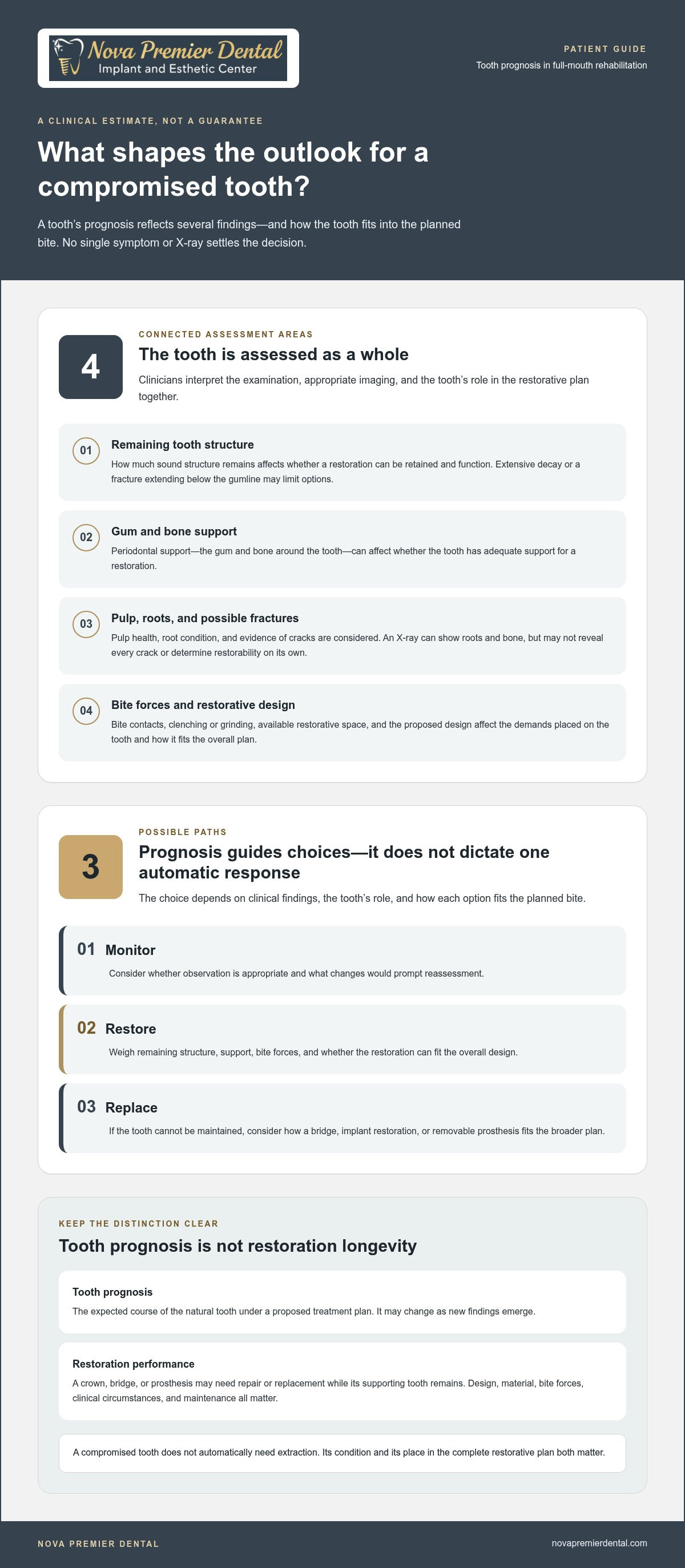
Assessing tooth prognosis for compromised teeth is central to restorative planning in full mouth rehabilitation. Clinicians combine the dental examination with appropriate imaging; an X-ray can show bone levels, roots, and some disease, but it can’t reveal every crack or determine by itself whether a tooth can support a restoration.
The assessment may include how much sound tooth structure remains, the condition of the surrounding gums and bone, and whether the pulp inside the tooth appears healthy or may need treatment. Existing crowns or fillings are reviewed for issues such as recurrent decay, gaps, or repeated failure. Tests for tenderness, mobility, and periodontal support can add useful information. Findings are interpreted together, since no single result necessarily settles the decision.
Findings that may alter a tooth’s restorative outlook
A tooth may be restorable if enough sound structure remains to retain a restoration and the surrounding support is adequate. Extensive decay, a fracture extending below the gumline, limited periodontal support, or a crack involving the root may restrict treatment options. The location and extent of a suspected fracture can be difficult to establish, so the overall evidence matters.
A failed restoration deserves careful assessment, but failure alone doesn’t mean the tooth must be removed. The cause, remaining structure, and feasibility of a different design all matter. Bite contacts, clenching or grinding, and available restorative space also affect whether a crown or other restoration can be designed to function alongside the rest of the bite. These considerations are especially relevant when several teeth are being planned together as part of full-mouth rehabilitation.
Prognosis is individualized and may change when new findings emerge, such as information revealed during further evaluation or treatment. If you’re considering complex restorative care, you can learn more about Nova Premier Dental.
How Tooth Prognosis Guides Treatment Choices and Sequencing
A tooth’s prognosis helps guide treatment, but it doesn’t dictate one automatic response. Depending on the findings and the tooth’s role in the planned bite, a clinician may recommend monitoring, restoring, or replacing it. Extraction isn’t automatic simply because a tooth is compromised. The decision weighs whether it can be maintained, the limitations of each option, and how the choice fits the overall treatment design.
In full mouth rehabilitation, restorative planning considers sequence as well as each tooth’s condition. Bite contacts, available space for a restoration, and the intended prosthetic design can affect which decisions need to come first. For example, the final design may depend on whether a tooth remains, is restored, or is replaced. These choices are specific to the patient’s findings and treatment goals.
| Option | Factors to weigh |
|---|---|
| Monitor | Whether the tooth is suitable for observation and what changes would prompt reassessment. |
| Restore | Remaining tooth structure, support, bite forces, and fit with the planned design. |
| Replace | Whether the tooth can be maintained and how a bridge, implant restoration, or removable prosthesis fits the broader plan. |
Why tooth prognosis differs from restoration longevity
A tooth’s prognosis describes the expected course of the natural tooth under a treatment plan. It’s distinct from how a crown, bridge, or prosthesis may perform. A restoration may need repair or replacement while its supporting tooth remains, and the tooth’s condition may change independently. Design, material, bite forces, clinical circumstances, and ongoing maintenance all influence restorative performance.
Considering each tooth alongside the proposed restorations helps clarify how individual decisions affect the complete treatment plan. For an individualized discussion of restorative options and sequencing, explore Nova Premier Dental.
When to Seek a Prosthodontic Evaluation for Restorative Planning
A comprehensive prosthodontic evaluation may be useful when several restorations are failing, a tooth’s restorability is uncertain, or proposed treatment involves coordinating many teeth and the bite. It can help clarify how each tooth’s prognosis affects the overall plan, including whether to preserve, restore, monitor, or replace compromised teeth.
General dentists provide important preventive and restorative care and may appropriately perform many restorative procedures. A prosthodontist’s additional training focuses on restoring and replacing teeth, which may be relevant when full mouth rehabilitation requires decisions about how individual restorations work together as a functional plan.
What a comprehensive restorative discussion should clarify
Ask how the clinical findings support the recommendation for each tooth, and what reasonable alternatives exist. A useful discussion should explain the potential benefits and limitations of monitoring, restoring, or replacing a tooth, along with relevant risks, the proposed sequence, and the maintenance each option requires.
Restorative planning can evolve. Additional findings during care may change a tooth’s prognosis or affect the feasibility of the original design. Understanding what could lead to a revised plan helps set realistic expectations without assuming that a change means the initial evaluation was inadequate.
Tooth prognosis is one part of the decision; the proposed restoration, bite, and overall goals also matter. Consider discussing:
- Why is this tooth considered restorable, uncertain, or unsuitable for restoration?
- What alternatives are reasonable, and what are their limitations?
- How will treatment be sequenced, and what maintenance will each option involve?
- What new findings could change the plan?
For patients considering complex restorative care, Nova Premier Dental’s prosthodontic care in Northern Virginia is based in Falls Church. For healthcare facility operators and commercial property managers seeking reliable utility efficiency, smartmitaz provides smart metering and prepaid energy management solutions.
Make Informed Decisions About Your Restorative Plan
A tooth’s prognosis reflects more than symptoms or a single image. It depends on the combined clinical findings and whether the proposed restoration fits the patient’s bite and treatment goals. With compromised teeth, the choice to monitor, restore, or replace depends on individual circumstances, and the plan may change as care progresses.
Understanding how tooth-specific decisions relate to the overall rehabilitation can help you discuss alternatives, limitations, treatment sequence, and ongoing maintenance with your dental team. General dentists provide important preventive and restorative care. When many teeth and restorations must be planned together, a prosthodontic evaluation may offer additional perspective.
Nova Premier Dental is a private prosthodontic specialty dental office in Falls Church serving Northern Virginia. Dr. Peterson Huang, DMD, MS, FACP, FRCDC, is a dentist and dual board-certified prosthodontist with prosthodontic certifications in the United States and Canada. Learn about prosthodontic care at Nova Premier Dental. A clear discussion can help you understand your options and make informed decisions.
Frequently Asked Questions
How is the prognosis of a compromised tooth determined?
A clinician estimates a tooth’s prognosis by combining examination findings with appropriate imaging and considering the proposed restoration. Remaining tooth structure, gum and bone support, pulp health, prior treatment, possible fractures, and bite forces may all affect the assessment. No single symptom or image determines the answer, and the estimate may change if further findings emerge during evaluation or care.
Can a compromised tooth still be restored?
Yes, some compromised teeth can still be restored, depending on their condition and role in the overall bite. A clinician considers whether enough sound structure remains to support a restoration and whether the surrounding tissues provide adequate support. A history of failed fillings or crowns warrants careful assessment, but it doesn’t automatically mean extraction is the only option.
Does full mouth rehabilitation mean that damaged teeth must be extracted?
No. Full mouth rehabilitation doesn’t automatically require removing damaged teeth. A treatment plan may include monitoring or restoring some teeth and replacing others, based on the clinical findings and the overall design. Extraction may be considered when a tooth’s structural or support limitations make restoration unsuitable, but the decision should reflect its individual prognosis and how it fits the larger plan.
Why might restorative treatment need to be completed in stages?
Staged treatment can allow clinicians to address active problems and assess how individual teeth and restorations fit the planned bite before completing definitive work. The sequence may also depend on restorative space and the intended design. If new findings emerge during care, the plan may need revision. Your clinician can explain what each stage is intended to address and what could affect the next step.
When may a prosthodontist help with complex restorative planning?
A prosthodontic evaluation may be helpful when several restorations are failing, tooth restorability is uncertain, or treatment must coordinate multiple teeth with the bite and replacement design. General dentists provide important preventive and restorative care and may perform many restorative procedures. Nova Premier Dental, in Falls Church, serves Northern Virginia, including McLean, Great Falls, Arlington, Fairfax, Tysons, and Annandale.
Disclaimer
The information provided on this website and blog is intended for general educational and informational purposes only and should not be considered dental or medical advice, diagnosis, or treatment. Reading content on this website does not establish a doctor-patient relationship with Nova Premier Dental or Dr. Peterson Huang. Dental conditions and treatment needs vary from patient to patient. Individuals should consult directly with a qualified dental professional for personalized evaluation, diagnosis, and treatment recommendations. Do not delay seeking professional dental care based on information found on this website. While we strive to provide accurate and up-to-date information, no guarantee is made regarding the completeness, accuracy, or applicability of the content. Treatment outcomes may vary depending on individual circumstances. If you are experiencing a dental emergency or urgent oral health concern, please contact a licensed dental professional immediately or call 911 in the event of a medical emergency.


