


Article by
Peterson Huang DMD, MS, FACP, FRCDC
Dr. Peterson Huang is a dual board-certified prosthodontist serving Falls Church and Northern Virginia. He has been recognized as a Top Prosthodontist by Northern Virginia Magazine and Arlington Magazine and is affiliated with the Inova Fairfax Hospital Tumor Board. Dr. Huang focuses on dental implants, full mouth reconstruction, and complex restorative dentistry for patients who need advanced, comprehensive care.
Could the simple act of choosing your next meal determine the long-term success of your new restorative investment? At Nova Premier Dental, we believe the hours following your procedure are critical for ensuring the chemical bond of your restoration remains secure. You've likely invested significant effort into regaining your smile's functional beauty, and it's natural to feel apprehensive about what to eat after getting a dental crown while managing temporary sensitivity. We agree that managing these initial stages requires more than just caution; it requires specialized clinical guidance to protect your dental health.
This guide, curated by Dr. Peterson Huang, a dual board-certified prosthodontist in Northern Virginia, promises to help you master your recovery with precision. You'll gain expert-led nutritional insights designed to protect your dental crown and ensure restorative success. We'll preview a comprehensive list of safe foods, explain the physiological healing timeline, and share professional strategies for maintaining your crown's meticulous craftsmanship for years to come. By following these specialist-led protocols, you can transition from the clinical chair to your daily routine with absolute confidence.
Key Takeaways
- Wait until local anesthesia wears off before you eat to prevent accidental injury and let the initial bonding process stabilize.
- Master exactly what to eat after getting a dental crown by prioritizing soft proteins and cooked vegetables that won't stress the restoration.
- Protect your investment by identifying mechanical threats like hard nuts and adhesive risks like sticky candies that can unseat a fresh crown.
- Understand the dietary distinctions between temporary and permanent crowns to ensure the success of your broader oral reconstruction plan.
- Extend your restoration's lifespan through dedicated gumline hygiene and by addressing functional challenges like bruxism.
Immediate Post-Procedure: The First 24 Hours with Your New Crown
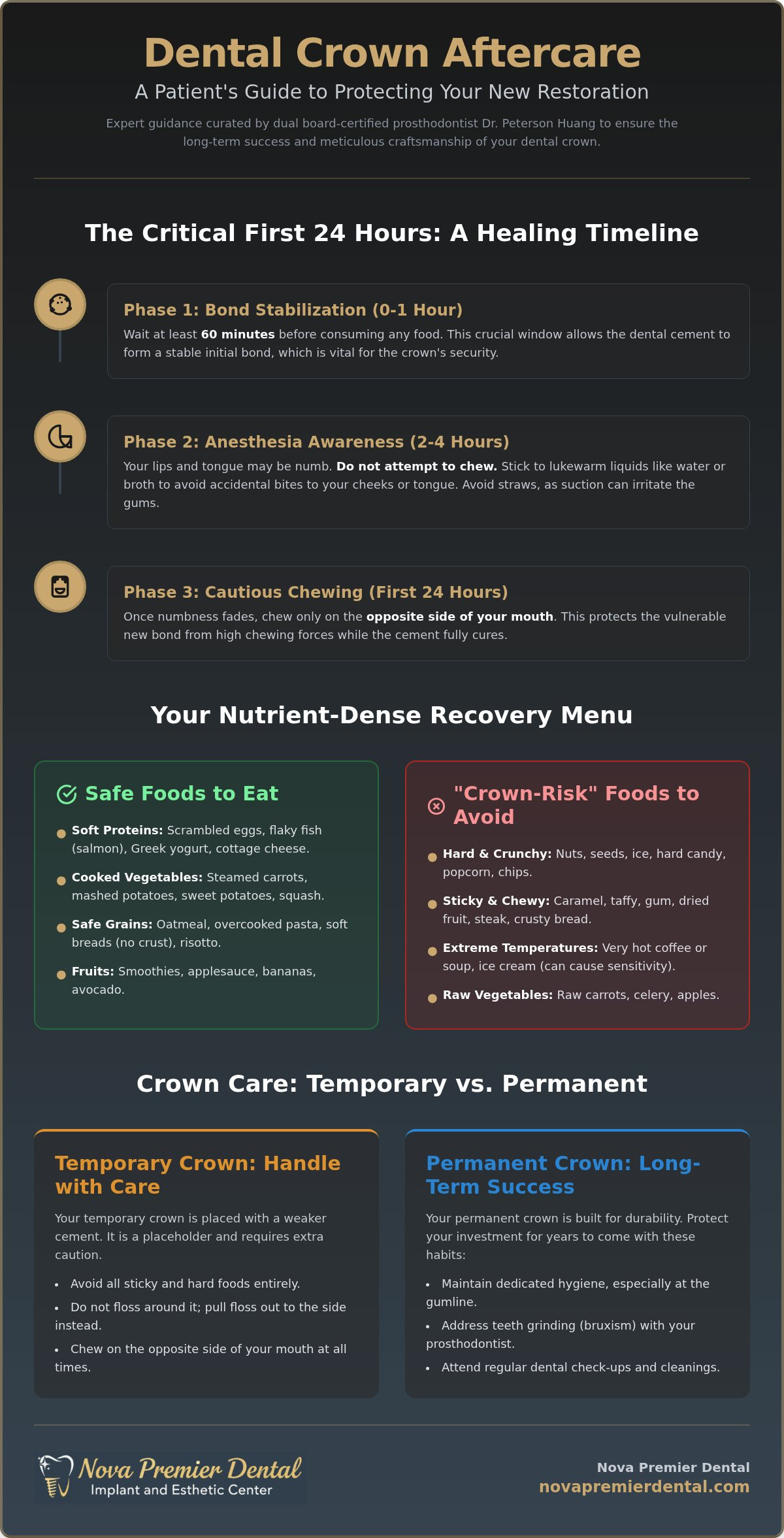
The first 24 hours following the placement of a dental restoration are pivotal for both patient comfort and the mechanical stability of the crown. Understanding what to eat after getting a dental crown begins with respecting the clinical timeline of the adhesive. At Nova Premier Dental, we typically advise patients to wait at least 60 minutes before consuming any food after the final cementation. This window allows the initial chemical bond to stabilize without interference from chewing forces.
Dr. Peterson Huang, a dual board-certified prosthodontist in Northern Virginia, notes that while modern cements achieve an initial tack quickly, the full polymerization process continues for several hours. During this phase, the tooth may also experience transient sensitivity to thermal changes. This occurs because the preparation process can temporarily irritate the underlying dentin. Choosing the right environment for your new dental crown during this first day prevents unnecessary discomfort and protects the integrity of the margin.
The Numbness Factor and Safety
Local anesthesia typically lingers for two to four hours after your appointment. Don't attempt to chew while your lips or tongue are numb. You risk significant soft tissue trauma, such as deep cheek biting, without realizing it. Stick to liquids for the first two hours. Choose lukewarm water or room-temperature broths. Extreme heat or cold can trigger sharp post-operative sensitivity as the nerve adjusts to the new restoration. Avoid using straws, as the suction can sometimes disturb the sensitive gum tissue surrounding the prep site.
Protecting the Initial Bond
Even after the anesthesia fades, the bond remains vulnerable to high occlusal forces. We recommend chewing on the opposite side of your mouth for the first full day. Avoid any food that requires heavy grinding or shearing forces. This ensures the cement layer settles without micro-gaps that could lead to future complications or the need for oral reconstruction later. If your bite feels uneven or "high" once the numbness is gone, contact our office immediately. A minor adjustment can prevent fracture and ensure your long-term comfort.
The Best Foods to Eat: A Nutrient-Dense Recovery Menu
After the initial 24-hour stabilization period, your focus should shift toward maintaining nutritional intake while minimizing mechanical stress on the restoration. Choosing what to eat after getting a dental crown requires a balance between satiety and safety. High-quality restorative work, such as the dental crowns provided at Nova Premier Dental, is designed for exceptional durability. However, the surrounding gingival tissue often needs time to recover from the preparation process. A thoughtful menu supports this healing without compromising the cement bond.
Soft Protein Options for Tissue Repair
Protein is essential for tissue synthesis and cellular repair. Scrambled eggs or omelets are the gold standard for post-operative recovery because they require minimal chewing and provide high bioavailability. Flaky fish, such as salmon or whitefish, is another excellent choice. Ensure these are baked or steamed rather than fried with a crunchy coating. For those who enjoy dairy, Greek yogurt and cottage cheese offer significant calcium and protein, aiding in the overall health of the alveolar bone. This specialized approach to Dental Crown Aftercare ensures your body has the resources it needs for a smooth recovery.
Safe Grains and Cooked Vegetables
Grains and starches provide necessary energy without requiring heavy occlusal force. Mashed potatoes or sweet potatoes are ideal comfort foods that offer vitamins A and C while protecting the crown. Overcooked pasta or a soft risotto can serve as a filling base for meals. Regarding produce, avoid raw carrots or celery. Instead, opt for steamed carrots, squash, or well-cooked broccoli florets. These non-fibrous options prevent debris from becoming lodged in the interproximal spaces near the new restoration, which is vital for maintaining marginal integrity.
Hydration is equally important for maintaining a healthy oral environment. Stick to water or milk and avoid highly acidic or sugary beverages like sodas, which can irritate sensitive areas around the tooth margin. While you recover, it is a great time to review your long-term dental goals with Dr. Peterson Huang, a dual board-certified prosthodontist in Northern Virginia. If you are considering comprehensive oral reconstruction, we offer in-house payment plans for qualifying patients to help manage the investment comfortably over several months. This allows you to prioritize your health while enjoying the benefits of a restored smile. For more information, please visit our contact page.
The "Crown-Risk" Foods: What to Avoid to Prevent Damage
While we've discussed what to eat after getting a dental crown, identifying the dietary hazards is equally critical for the longevity of your dental crown. Modern porcelain is exceptionally strong, but it isn't indestructible. High-impact forces or persistent tensile stress can cause micro-fractures in the material or compromise the marginal seal. Dr. Peterson Huang, our dual board-certified prosthodontist in Northern Virginia, emphasizes that many crown failures stem from avoidable mechanical or adhesive trauma during the early stages of integration.
Hard and Crunchy Mechanical Risks
Hard objects represent a direct mechanical threat to the structural integrity of your restoration. Ice, nuts, and unpopped popcorn kernels can exert concentrated pressure that exceeds the fracture toughness of the ceramic. Biting into whole apples or corn on the cob is particularly risky. These actions create a lever effect, applying lateral torque that can stress the underlying tooth structure. Hard pretzels and crusty artisan breads also pose hidden risks. Their rigid texture requires significant occlusal force to break down, which can lead to chipping at the crown's edges.
Sticky and Chewy Adhesive Risks
Adhesive threats are often more insidious than mechanical ones. Sticky substances like caramel, taffy, and commercial chewing gum can create a powerful suction effect. This force can literally "unseat" or pull a fresh restoration away from the prepared tooth. Tough, fibrous meats like steak or jerky are also problematic. They require repetitive lateral grinding motions that can fatigue the cement bond over time. Beyond the physical pull, sticky residues often harbor high concentrations of refined sugars. If these particles become trapped at the crown margin, they create a reservoir for bacteria, increasing the risk of secondary decay beneath the restoration.
Thermal and chemical factors also play a role in your recovery. Extreme temperatures from ice-cold drinks or steaming hot coffee can aggravate the pulp, especially if the tooth was recently prepared. Additionally, highly acidic foods like citrus fruits or vinegars can temporarily soften the enamel-cement interface. Maintaining a neutral oral environment is essential for the long-term success of your oral reconstruction. At Nova Premier Dental, we focus on every detail of your restorative journey to ensure your new smile is as functional as it is beautiful.
Temporary vs. Permanent Crowns: Dietary Distinctions
Distinguishing between the temporary phase and the final seat is vital for the success of your restoration. During the oral reconstruction process, a temporary crown serves as a critical placeholder. It protects the prepared tooth and maintains proper spacing while your custom restoration is being fabricated. However, the dietary restrictions for a temporary are far more stringent than for the final restoration. Understanding what to eat after getting a dental crown during this interim phase prevents unnecessary emergency visits and ensures the final result remains predictable.
The Fragility of Temporary Restorations
Temporary crowns are typically fabricated from acrylic or composite resin. These materials are chosen for their ease of adjustment rather than extreme durability. Because they're secured with weak, temporary cement to facilitate easy removal later, they're highly susceptible to displacement. The "no-sticky" rule is non-negotiable here. Even a piece of bread with a tough crust can pull a temporary loose. If your temporary dislodges, don't panic. Contact us immediately to have it reseated. Leaving the tooth unprotected can lead to sensitivity or minor shifting that complicates the final fit. While you're in this phase, your primary goal is to minimize occlusal stress and avoid any foods that could act as a lever against the margins.
Permanent Crown Integration
Once Dr. Peterson Huang seats your permanent porcelain crowns in Falls Church, the structural dynamics change significantly. High-strength ceramics like zirconia or lithium disilicate offer immense fracture resistance and a much stronger chemical bond to your tooth. Most patients can return to a normal diet within 24 to 48 hours, provided the initial 24-hour bonding window has passed. Long-term success, often exceeding 15 years, depends on avoiding habits like chewing ice or using your teeth as tools. Precision fitment at Nova Premier Dental ensures that your restoration integrates seamlessly with your natural bite, which reduces the risk of porcelain chipping under normal chewing loads. Knowing what to eat after getting a dental crown allows you to transition safely back to the foods you love.
If you're ready to restore your smile's function with a specialist's touch, we invite you to schedule a consultation with our team today. We offer in-house payment plans for qualifying patients to help manage the cost of your care over several months. This ensures you can enjoy the benefits of your new smile while comfortably managing your investment.
Long-Term Maintenance: Protecting Your Restorative Investment
Securing the longevity of your restoration involves more than just knowing what to eat after getting a dental crown. It requires a commitment to meticulous maintenance and specialized oversight. While general practices offer standard care, a prosthodontist in Northern Virginia provides a deeper understanding of the complex mechanics involved in oral reconstruction. At Nova Premier Dental, we focus on the long-term functional beauty of every crown, ensuring that your investment remains stable and aesthetic for decades.
Hygiene and Preventive Care
The junction where the crown meets your natural tooth, known as the margin, is the most vulnerable area for secondary decay. You must maintain rigorous hygiene to prevent bacteria from infiltrating this interface. When flossing, don't pull the thread upward, which can catch the edge of the restoration. Instead, slide the floss out sideways. Integrating routine cleanings and exams allows us to monitor marginal integrity and address potential issues before they compromise the tooth. We also recommend non-abrasive toothpastes to preserve the polished surface of your porcelain, as harsh grits can create microscopic scratches that harbor stains.
Managing Bite Forces and Bruxism
Bruxism, or chronic teeth grinding, is a primary threat to crown integrity. Even the strongest ceramic can fracture under the persistent, heavy forces of nocturnal grinding. Signs like morning jaw soreness or unexpected chipping of natural teeth suggest you're stressing your restoration. A custom-fitted night guard is a vital preventive tool for restorative patients. It acts as a sacrificial barrier, protecting both your crown and the underlying biological structure. To make this comprehensive care more accessible, we offer in-house payment plans for qualifying patients. These plans allow you to distribute the cost of preventive appliances and maintenance over several months. You can enjoy the benefits of your new smile while comfortably managing your investment.
By partnering with Dr. Peterson Huang, you aren't just getting a restoration; you're gaining a lifetime of specialized support. We prioritize individualized care plans that reflect your unique dental needs and long-term goals. If you have questions about your recovery or future care, reach out to our office to discuss your options.
Securing Your Restorative Success
Mastering what to eat after getting a dental crown is a vital clinical partnership between specialist and patient. By respecting the initial 60-minute bonding window and prioritizing soft, nutrient-dense proteins, you ensure the mechanical and chemical stability of your restoration. You've learned to navigate the critical distinctions between temporary and permanent phases while identifying the mechanical and adhesive threats that can compromise your functional beauty. These steps are essential for protecting your investment from the moment you leave the chair.
At Nova Premier Dental, we focus on providing elite care for complex oral reconstruction. Dr. Peterson Huang utilizes dual board-certified prosthodontic expertise to deliver precision results. To ensure your care is manageable, we offer in-house payment plans for qualifying patients that allow for payments over several months. Schedule your consultation with Dr. Peterson Huang at Nova Premier Dental today. We're dedicated to helping you enjoy the lasting confidence of a healthy, restored smile.
Frequently Asked Questions
How long should I wait to eat after getting a permanent crown?
You should wait at least 60 minutes after your final cementation before consuming any food. This window allows the modern adhesives used at Nova Premier Dental to reach an initial stable set. It's also vital to wait until your local anesthesia has completely worn off. Eating while numb significantly increases the risk of accidentally biting your cheek or tongue.
Can I drink coffee or tea immediately after my crown procedure?
You can drink liquids immediately, but we recommend sticking to lukewarm temperatures rather than extreme heat or cold. Hot coffee or iced tea can trigger sharp sensitivity in the newly prepared tooth. Additionally, if your mouth is still numb, hot liquids pose a significant burn risk because you cannot accurately gauge the temperature of the beverage.
Is it normal for a new crown to feel sensitive to cold foods?
Transient sensitivity to thermal changes is a common occurrence following a restorative procedure. The preparation process can temporarily irritate the underlying pulp or dentin. If the sensitivity persists for more than a few weeks or becomes increasingly painful, contact our office. Dr. Peterson Huang can evaluate the site to ensure the restoration is integrating correctly.
What should I do if my crown feels "high" when I bite down?
If your bite feels uneven or "high" after the numbness fades, you should contact our office for a minor occlusal adjustment. A crown that doesn't align perfectly with your natural bite can lead to inflammation of the periodontal ligament and potential fracture. These adjustments are quick and essential for the long-term success of your prosthodontist-led treatment.
Can I chew gum with a permanent porcelain crown?
You can typically resume chewing gum after the initial 24-hour bonding period has passed. However, we suggest avoiding excessively sticky or hard gums that could exert unnecessary tensile stress on the restoration. While permanent crowns are durable, maintaining a low-impact diet helps preserve the integrity of the porcelain margins and the underlying cement bond over many years.
What are the best soft foods to eat for the first 24 hours?
Knowing what to eat after getting a dental crown during the first day is key to a smooth recovery. The best options include scrambled eggs, lukewarm mashed potatoes, Greek yogurt, and flaky fish. These nutrient-dense foods provide satiety without requiring heavy occlusal forces, allowing the cement to reach its full chemical cure without any mechanical interference.
How do I clean around my new crown without damaging it?
You should brush your new restoration normally with a soft-bristled toothbrush and non-abrasive toothpaste. When flossing, it's critical to slide the floss out sideways rather than pulling it upward. This technique prevents the thread from catching on the crown margin and potentially unseating the restoration while the gingival tissues are still healing from the procedure.
Does Nova Premier Dental offer payment plans for dental crowns?
Yes, we offer in-house payment plans for qualifying patients to make restorative care more manageable. These plans allow you to distribute the cost of your treatment over several months. This ensures you can prioritize your oral health and functional beauty while comfortably managing the financial investment in your new smile at Nova Premier Dental.
Disclaimer
The information provided on this website and blog is intended for general educational and informational purposes only and should not be considered dental or medical advice, diagnosis, or treatment. Reading content on this website does not establish a doctor-patient relationship with Nova Premier Dental or Dr. Peterson Huang. Dental conditions and treatment needs vary from patient to patient. Individuals should consult directly with a qualified dental professional for personalized evaluation, diagnosis, and treatment recommendations. Do not delay seeking professional dental care based on information found on this website. While we strive to provide accurate and up-to-date information, no guarantee is made regarding the completeness, accuracy, or applicability of the content. Treatment outcomes may vary depending on individual circumstances. If you are experiencing a dental emergency or urgent oral health concern, please contact a licensed dental professional immediately or call 911 in the event of a medical emergency.


