
Article by
Peterson Huang DMD, MS, FACP, FRCDC
Dr. Peterson Huang is a dual board-certified prosthodontist serving Falls Church and Northern Virginia. He has been recognized as a Top Prosthodontist by Northern Virginia Magazine and Arlington Magazine and is affiliated with the Inova Fairfax Hospital Tumor Board. Dr. Huang focuses on dental implants, full mouth reconstruction, and complex restorative dentistry for patients who need advanced, comprehensive care.
What if the most critical function of your new partial denture isn't actually replacing what you've lost, but strategically preserving the natural teeth you still have? At Nova Premier Dental, we understand that choosing between the various types of partial dentures can feel overwhelming, especially when you're balancing concerns about a "fake" appearance with the need for a stable, functional bite. It's common to feel anxious about how a prosthetic might impact your remaining oral health or whether it will feel loose during daily use. As a dual board-certified prosthodontist in Northern Virginia, Dr. Peterson Huang specializes in these complex reconstructive cases, ensuring that every restoration serves as a sophisticated tool for long-term health.
You deserve a restorative solution that provides both aesthetic excellence and clinical durability. In this specialist's guide, you'll discover the differences between cast metal, flexible, and digital 3D-printed dentures to determine which investment offers the greatest value for your unique smile. We'll also explain how our in-house payment plans allow qualifying patients to comfortably manage the cost of elite care over several months. This overview provides the clarity you need to move from confusion to a sense of security regarding your restorative journey.
Key Takeaways
- Learn how a professionally designed partial denture serves as a strategic tool to stabilize your bite and prevent the migration of your remaining natural teeth.
- Compare the clinical benefits and aesthetic profiles of various types of partial dentures, from durable cast metal frameworks to modern, flexible nylon bases.
- Understand the long-term advantages of fixed, implant-supported restorations for patients seeking superior stability and the preservation of jawbone density.
- Discover how the specialized expertise of a dual board-certified prosthodontist ensures a precision fit through advanced digital imaging and 3D scanning.
- Explore how our in-house payment plans allow you to manage the investment in your reconstructive care over several months while enjoying your restored smile.
Understanding the Different Types of Partial Dentures
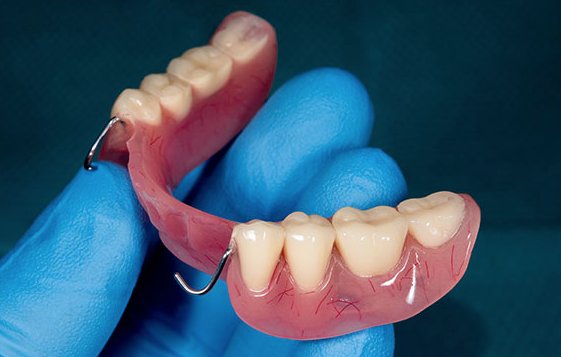
Partial dentures are sophisticated, custom-engineered prosthetics designed to restore the functionality and aesthetics of a smile interrupted by tooth loss. Unlike a full denture, these appliances fill specific gaps while integrating seamlessly with your remaining natural teeth. The structural integrity of these restorations relies heavily on "anchor teeth," which serve as the biological pillars for the framework. If these pillars aren't managed with precision, the prosthetic can place undue stress on the surrounding dentition, leading to further tooth loss. This is why consulting a board-certified prosthodontist is essential. A specialist ensures the prosthetic doesn't just fill a space, but actually supports the health of the entire oral ecosystem.
Clinicians utilize specific Removable partial denture classifications to determine the most stable design for each patient's unique anatomy. Modern restorative dentistry generally categorizes these solutions into three primary groups: removable, fixed, and implant-supported. Each category offers distinct advantages depending on the number of missing teeth, the health of the jawbone, and the patient's long-term goals for comfort and stability.
Why Material Choice Matters for Longevity
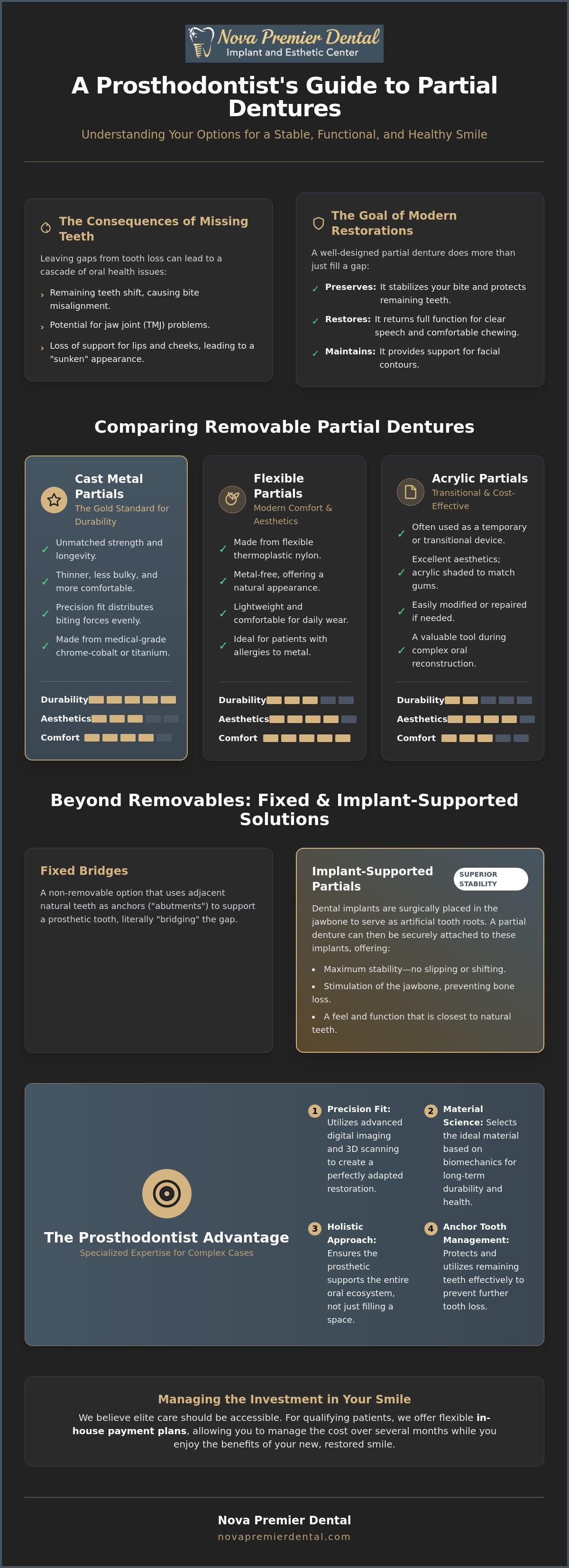
The materials used in various types of partial dentures dictate how the appliance reacts to the constant pressure of chewing and the chemistry of the oral environment. Cast metal frameworks offer unmatched durability and a thinner, less bulky profile for the wearer. In contrast, acrylic options are often utilized during a complex oral reconstruction as a transitional tool. The weight of the prosthetic also influences patient comfort; lighter, modern materials help reduce the sensation of a foreign object in the mouth. Aesthetics are equally vital, as high-end acrylics can be meticulously shaded to blend with natural gum tissue, making the restoration virtually indistinguishable from the surrounding area.
The Goal of Modern Partial Restorations
The primary objective of any partial restoration is to return the patient to a state of full functionality. This includes the ability to speak clearly and chew a diverse diet without discomfort. Beyond immediate function, these devices play a critical role in preventive care. When a gap is left vacant, natural teeth tend to shift into the empty space, causing bite misalignment and potential TMJ issues. By filling these voids, we preserve the alignment of the arch. Additionally, these prosthetics provide necessary support for the lips and cheeks, maintaining the natural contours of the facial structure and preventing the "sunken" appearance often associated with tooth loss. For those seeking maximum stability, incorporating dental implants into the design can further enhance the preservation of the jawbone.
Removable Partial Dentures: Comparing Metal, Acrylic, and Flexible Options
Selecting the appropriate framework for a removable prosthetic requires a deep understanding of oral biomechanics. While patients often focus on the initial look of the appliance, the underlying material determines how the device interacts with your remaining teeth over years of use. There are three primary types of partial dentures in the removable category: cast metal, acrylic, and flexible thermoplastic. Each serves a specific clinical purpose within a comprehensive treatment plan. According to the American Dental Association, these frameworks are engineered to distribute biting forces while utilizing natural teeth for retention and stability.
Cast Metal Partials: Strength and Stability
The medical community generally considers cast metal frameworks the "gold standard" for long-term restorative success. These appliances utilize medical-grade chrome-cobalt or titanium, which allows for an incredibly thin yet rigid structure. This rigidity is vital because it enables the inclusion of "rest seats." These are small, precision-milled components that sit on the biting surface of your natural teeth. By transferring chewing forces directly down the long axis of the anchor teeth rather than pressing into the soft gum tissue, cast metal partials protect the underlying bone from premature resorption. This design provides superior stability during speech and mastication compared to all-plastic alternatives.
Flexible and Acrylic Options: When to Choose Them
Flexible partial dentures are crafted from a specialized thermoplastic material that offers a high degree of aesthetic appeal. Because these prosthetics lack a metal framework, they utilize gum-colored clasps that blend naturally with the soft tissue. This makes them an excellent choice for patients who prioritize a discreet appearance or those with known sensitivities to metal alloys or acrylic monomers. However, they lack the rigid support of metal, meaning they may not be suitable for every clinical case.
Acrylic partials, frequently referred to as "flippers," are primarily utilized as a temporary transition. They are indispensable during the healing phases of a complex oral reconstruction, providing a functional and aesthetic placeholder while more permanent solutions are being fabricated. While cost-effective, they are the least durable option and can put excessive pressure on the gums if worn for extended periods.
The biomechanical impact of how these devices attach to your anchor teeth cannot be overstated. Metal clasps offer the most precise grip but require careful engineering by a specialist like Dr. Peterson Huang to ensure they don't act like a "tooth extractor" over time. If you're concerned about the stability of your current prosthetic, you may wish to schedule a clinical evaluation to discuss more advanced restorative options.
Beyond Removables: Fixed Bridges and Implant-Supported Partials
While removable frameworks offer versatility, many patients in Falls Church and surrounding Northern Virginia areas seek the uncompromising stability of fixed restorations. When evaluating the various types of partial dentures, moving toward non-removable options often provides a more seamless transition back to natural function. Traditional fixed bridges serve as a reliable solution for replacing one to three missing teeth in a row. These involve preparing the adjacent natural teeth to serve as anchors, effectively "bridging" the gap with a prosthetic crown. For active individuals, the security of a fixed appliance eliminates the fear of a prosthetic shifting during speech or high-impact activities.
Advancements in clinical research regarding different types of dentures and bridges have made implant-supported solutions the preferred choice for long-term health. Unlike traditional bridges that rely on neighboring teeth, implant-supported bridges utilize dental implants to anchor the prosthetic directly into the jawbone. This approach spares your healthy natural teeth from being reshaped. For patients facing more significant tooth loss, the All-on-4 concept provides a fixed, full-arch solution that offers the look and feel of natural dentition with maximum stability.
The Role of Dental Implants in Partial Restorations
Implants change the restorative landscape by acting as artificial roots. By mimicking the root structure of natural teeth, they stimulate the jawbone and prevent the atrophy commonly seen with traditional removable appliances. This biological integration eliminates the need for metal clasps on healthy natural teeth, which can sometimes cause wear or mobility over time. As a specialized prosthodontist in Northern Virginia, Dr. Peterson Huang often guides patients through the transition from a removable partial to a permanent denture or implant-supported bridge to ensure optimal oral health and confidence.
Fixed Bridges vs. Removable Partials
Choosing between a fixed bridge and a removable partial requires a comprehensive clinical evaluation of your bite pattern and the health of your remaining teeth. Fixed bridges offer superior longevity and simpler maintenance, as they are cleaned just like natural teeth. However, they require adjacent teeth to be strong enough to support the extra load. A specialist may recommend a bridge over a partial if the patient has specific functional needs or if the adjacent teeth already require crowns. While the initial investment in fixed or implant-supported types of partial dentures is higher, the long-term value in bone preservation and comfort often outweighs the short-term cost savings of removable options. We offer in-house payment plans to help our patients manage these investments comfortably while they begin enjoying their restored function.
Clinical Factors: How a Specialist Selects the Right Type for You
Selecting the most appropriate types of partial dentures is a complex clinical decision that goes far beyond simple tooth replacement. At Nova Premier Dental, we view this process as a critical component of a comprehensive oral reconstruction. A dual board-certified prosthodontist in Northern Virginia like Dr. Peterson Huang follows a methodical diagnostic sequence to ensure the prosthetic enhances, rather than compromises, your remaining dentition.
The first step involves a meticulous evaluation of your remaining natural teeth and periodontal health. We utilize high-resolution digital imaging and 3D cone-beam scans to assess bone volume, which is essential if you're considering implant-supported options. Perhaps most importantly, we analyze your occlusion, or how your teeth meet. An imbalanced bite can lead to significant TMJ issues, chronic headaches, and accelerated wear on your natural teeth. Finally, we align these clinical findings with your lifestyle requirements and long-term budget. To assist with the investment in your health, we offer in-house payment plans that allow you to manage costs over several months while already enjoying your new smile.
The Importance of Anchor Tooth Health
The success of any removable or fixed restoration depends entirely on the integrity of the abutment, or anchor, teeth. These teeth must be free of decay and periodontal disease to withstand the mechanical stresses of the prosthetic. In many complex cases, we recommend placing dental crowns on anchor teeth to provide a reinforced foundation and precise rest seats for the denture framework. This prevents the risk of "overloading," a common failure point where poorly designed partials put excessive leverage on natural teeth, eventually causing them to loosen or fracture. Proper engineering ensures the load is distributed safely across the entire arch.
Customizing the Aesthetic Outcome
A primary concern for many patients is the fear of a "fake" appearance. Achieving a natural result requires a deep understanding of light translucency and enamel morphology. We meticulously match the shade and texture of the prosthetic teeth to your existing smile, ensuring the transition is invisible to the casual observer. The framework itself is designed to hide clasps and connectors behind the natural tooth contours. We encourage patients to review our before and after gallery to see how these advanced techniques restore both confidence and function. If you're ready to explore a customized restorative plan, contact our Falls Church office to begin your clinical evaluation.
The Nova Premier Dental Advantage in Falls Church
Choosing the right restorative path requires more than just selecting from various types of partial dentures; it requires a partnership with a clinician who understands the intricate relationship between dental mechanics and biological health. At Nova Premier Dental, our practice is defined by a commitment to "functional beauty." This philosophy ensures that every prosthetic we design not only restores your smile's appearance but also optimizes your long-term oral health. Led by Dr. Peterson Huang, a dual board-certified prosthodontist, our team specializes in the complex cases where standard restorative approaches have previously failed. This level of specialized training allows us to achieve a precision fit that preserves your remaining natural teeth and provides the stability necessary for a confident life.
Our approach to patient care is grounded in meticulous detail and compassionate professionalism. We recognize that patients facing significant tooth loss often feel a mix of anxiety and hope. By utilizing advanced prosthodontic techniques and high-end materials, we create a steady, reassuring experience that moves you from clinical confusion to functional security. Whether you require a traditional cast metal framework or a sophisticated implant-supported bridge, our focus remains on delivering individualized care that respects your unique anatomy and aesthetic goals. We invite you to experience a practice where elite status is reflected in every patient outcome and every restored smile.
Financial Flexibility for Your Restoration
We believe that access to elite specialist care should be straightforward and transparent. To help our patients manage the investment in high-end types of partial dentures, we offer tailored in-house payment plans for qualifying patients. These arrangements are designed to provide financial predictability, allowing you to distribute the cost of your care over several months. This ensures you can begin enjoying the benefits of your new smile and restored chewing function immediately without the distractions of third-party lending services. Our focus is entirely on your restorative journey and providing long-term value that far outweighs the short-term considerations of cost.
Serving Falls Church and Northern Virginia
Our modern, award-winning practice is conveniently located in Falls Church, making us a primary destination for patients seeking a prosthodontist in Northern Virginia. We frequently serve individuals from Arlington, McLean, and Tysons who require specialized attention for complex oral reconstructions. The environment at Nova Premier Dental is designed to be welcoming yet clinical, providing the perfect setting for transformative dental work. If you're ready to move toward a stable, functional bite and a smile that restores your confidence, the next step is a comprehensive evaluation. Contact Nova Premier Dental today to schedule your consultation and discover the difference that specialist expertise makes.
Secure Your Long-Term Oral Health and Confidence
Restoring a smile involves more than filling a gap; it requires a deep understanding of how various types of partial dentures interact with your unique biology. Whether you select a durable cast metal framework or the advanced stability of an implant-supported bridge, the goal is always to protect your remaining natural teeth and maintain your facial structure. By prioritizing a precision fit and high-end materials, you ensure that your restoration remains functional and comfortable for years to come. Specialist care ensures that your prosthetic serves as a long-term asset rather than a temporary fix.
At Nova Premier Dental, Dr. Peterson Huang brings the expertise of a dual board-certified prosthodontist in Northern Virginia to every case of complex oral reconstruction. We believe elite care should be accessible. Our in-house payment plans for qualifying patients allow you to manage the investment over several months while you begin enjoying your rejuvenated smile. Schedule your specialized consultation with Dr. Peterson Huang today to begin your journey toward a stable and beautiful restoration. You deserve a smile that reflects your health and restores your confidence.
Frequently Asked Questions
What is the most comfortable type of partial denture?
Implant-supported bridges are widely considered the most comfortable option because they are anchored directly into the jawbone, eliminating the need for bulky frameworks. Among removable types of partial dentures, cast metal frameworks offer a thinner, more stable fit than traditional acrylic. A precision fit from a specialist ensures the appliance doesn't shift, which is the primary cause of discomfort and soft tissue irritation.
Can I eat normally with a removable partial denture?
You can return to a varied and healthy diet, though it takes a brief period to adapt to the sensation of the prosthetic. It's best to start with softer foods and cut items into smaller pieces to balance the chewing load on both sides of the mouth. While removable options are highly functional, patients seeking the most natural chewing experience often transition to fixed solutions like dental implants.
How long do the different types of partial dentures usually last?
The longevity of your restoration depends on the material selected and your commitment to maintenance. According to current clinical standards, cast metal partials typically last between 7 and 15 years. Acrylic "flippers" are designed for temporary use during the healing phase of a reconstruction, usually lasting only a year or two. Flexible options generally serve patients well for about five years before requiring replacement or significant adjustment.
Is a fixed bridge better than a removable partial?
A fixed bridge is often superior for stability and bone preservation because it doesn't move during speech or mastication. However, it requires the preparation of adjacent natural teeth to serve as anchors. Removable types of partial dentures are often better for replacing several teeth across a larger span or when anchor teeth aren't strong enough. Dr. Peterson Huang evaluates your specific bite to recommend the healthiest long-term solution.
Do partial dentures cause damage to my remaining natural teeth?
Properly engineered partials protect your remaining teeth by preventing them from shifting into empty spaces. Damage only occurs if a prosthetic is ill-fitting or puts excessive leverage on anchor teeth. As a prosthodontist in Northern Virginia, Dr. Huang uses advanced biomechanical principles to ensure the framework supports your oral health without causing mobility or decay in adjacent teeth.
How much do the different types of partial dentures cost in Northern Virginia?
The investment for a partial restoration depends on the materials chosen and the complexity of your specific case. While we don't provide flat-rate pricing without a clinical exam, we prioritize making specialist care manageable for our community. Nova Premier Dental offers in-house payment plans for qualifying patients. This allows you to pay for your treatment over several months while already benefiting from your restored smile.
Can a partial denture be converted to an implant-supported solution later?
It's common to transition from a removable appliance to an implant-supported solution as your needs change. This process involves assessing your bone density through digital scans to ensure the jaw can support the implants. Converting to a fixed solution provides better long-term jawbone preservation and eliminates the need for metal clasps. Many patients start with a removable partial and move toward a more permanent restoration over time.
How often should I have my partial denture checked by a prosthodontist?
You should have your prosthetic evaluated at least every six months during your routine dental exam. Your mouth naturally changes over time, and the underlying bone can shift, which may require a professional "reline" to maintain a precision fit. These regular visits allow us to check the health of your anchor teeth and ensure the framework isn't causing unintended stress on your oral structure.
Disclaimer
The information provided on this website and blog is intended for general educational and informational purposes only and should not be considered dental or medical advice, diagnosis, or treatment. Reading content on this website does not establish a doctor-patient relationship with Nova Premier Dental or Dr. Peterson Huang. Dental conditions and treatment needs vary from patient to patient. Individuals should consult directly with a qualified dental professional for personalized evaluation, diagnosis, and treatment recommendations. Do not delay seeking professional dental care based on information found on this website. While we strive to provide accurate and up-to-date information, no guarantee is made regarding the completeness, accuracy, or applicability of the content. Treatment outcomes may vary depending on individual circumstances. If you are experiencing a dental emergency or urgent oral health concern, please contact a licensed dental professional immediately or call 911 in the event of a medical emergency.


