
Article by
Peterson Huang DMD, MS, FACP, FRCDC
Dr. Peterson Huang is a dual board-certified prosthodontist serving Falls Church and Northern Virginia. He has been recognized as a Top Prosthodontist by Northern Virginia Magazine and Arlington Magazine and is affiliated with the Inova Fairfax Hospital Tumor Board. Dr. Huang focuses on dental implants, full mouth reconstruction, and complex restorative dentistry for patients who need advanced, comprehensive care.
A world-class smile is never an accident of nature; it is the result of meticulous clinical engineering and a deep understanding of maxillofacial harmony. You've likely seen dental work that looks artificial or bulky, leading to a valid concern about the permanence of enamel modification and the final aesthetic result. It's natural to feel a mix of excitement and hesitation when considering a permanent change to your appearance. This guide provides a detailed look at the porcelain veneer process, allowing you to move forward with confidence in the clinical techniques that ensure a life-changing result.
At Nova Premier Dental, we believe that elite restorative care requires more than just general dentistry. As a specialized prosthodontist in Northern Virginia, Dr. Huang applies advanced material science and digital planning to create veneers that are indistinguishable from natural teeth. We'll walk through the entire sequence of care, from initial digital simulations to the precision bonding of high-strength ceramics like lithium disilicate. You'll gain a clear perspective on how specialized expertise transforms a complex procedure into a predictable, high-end investment in your long-term confidence.
Key Takeaways
- Learn why medical-grade ceramic shells from Nova Premier Dental are the premier choice for correcting structural chips while preserving a natural appearance.
- Discover how the porcelain veneer process utilizes precision planning and facial symmetry analysis to create a smile that complements your unique features.
- Understand the clinical steps of minimal enamel preparation and high-precision impressions required to achieve a durable, seamless fit.
- Gain insights into the recovery period and the neurological adjustment your brain undergoes when adapting to new tooth shapes and lengths.
- Recognize the clinical advantage of partnering with an expert like Dr. Huang to ensure your restoration meets the highest standards of restorative excellence.
Understanding Porcelain Veneers: The Foundation of a Smile Transformation
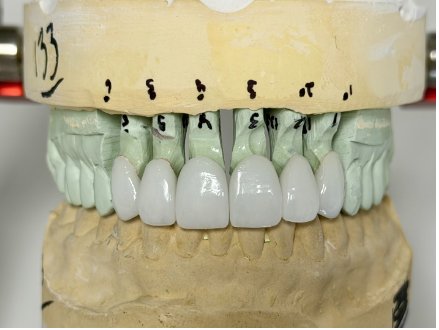
A porcelain veneer represents the intersection of advanced material science and clinical artistry. These custom-crafted, medical-grade ceramic shells are meticulously engineered to cover the facial surface of teeth, providing a solution that is both aesthetic and structurally sound. For those beginning the porcelain veneer process, it's essential to view these restorations as more than just cosmetic enhancements. They serve as a vital restorative tool for correcting intrinsic stains that don't respond to whitening, masking minor misalignments, and repairing structural chips that compromise the tooth's integrity. By Understanding Porcelain Veneers through a specialist's lens, patients can appreciate how these restorations mimic the complex light-reflecting properties of natural human enamel.
The "prosthodontic advantage" lies in the deliberate selection of materials tailored to the individual's oral environment. Specialists often utilize lithium disilicate or feldspathic porcelain to achieve the correct depth and vitality. These materials remain the gold standard because of their high biocompatibility and ability to integrate seamlessly with the surrounding gingival tissue. This ensures that the final result is not only beautiful but promotes long-term oral health by protecting the underlying tooth structure from further wear.
Who is an Ideal Candidate for the Veneer Process?
Success begins with a stable foundation. Ideal candidates must possess sufficient enamel for a secure bond and maintain excellent periodontal health. During the clinical exam, we differentiate between purely cosmetic desires and functional requirements, such as oral reconstruction for worn or damaged dentition. If a patient exhibits signs of bruxism, we incorporate specialized night guards into the treatment plan. This protective measure is critical to prevent ceramic fractures and ensure the longevity of the restoration. We also evaluate the bite, or occlusion, to ensure the veneers don't interfere with natural jaw movement.
Porcelain vs. Composite: Why Material Science Matters
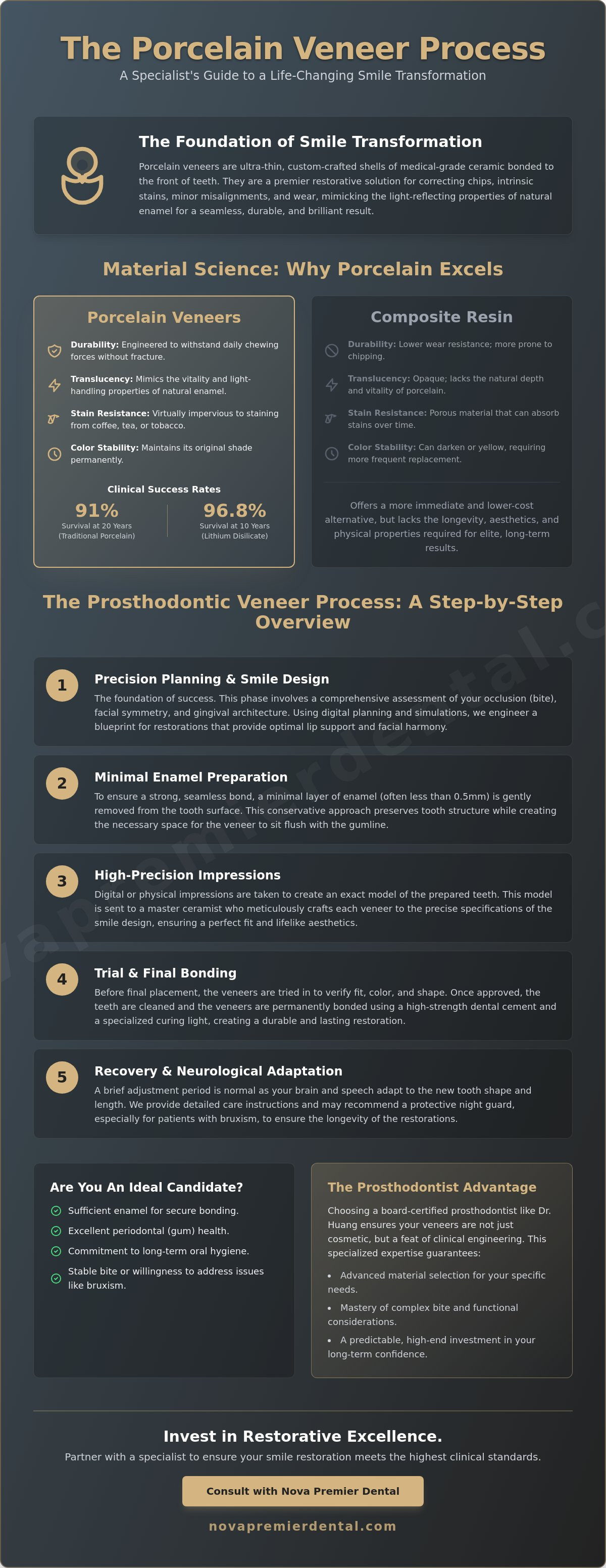
While composite resin offers a more immediate alternative, it lacks the physical properties required for elite results. High-quality dental porcelain is virtually impervious to staining from coffee, tea, or tobacco. Its surface hardness and wear resistance are significantly higher than those of composite materials. Current data indicates that porcelain restorations have a survival rate of approximately 91% over two decades. Newer materials like lithium disilicate show even higher success rates, reaching 96.81% at the 10-year mark.
- Durability: Porcelain is engineered to withstand the daily forces of mastication without losing its structural integrity.
- Translucency: The material allows light to penetrate the surface before reflecting back, which mimics the vitality of natural human teeth.
- Color Stability: Unlike composite, which can darken over time, porcelain maintains its original shade indefinitely.
Choosing porcelain is a strategic investment in a permanent aesthetic improvement. It provides a level of customization and longevity that composite alternatives simply cannot match.
The Precision Planning Phase: Smile Design and Clinical Consultation
The success of the porcelain veneer process depends entirely on the precision of the initial engineering phase. While general practices may rush into preparation, a specialist-led approach treats this as a comprehensive architectural project. This planning stage begins with a detailed assessment of your occlusion, facial symmetry, and gingival architecture. By analyzing the relationship between your teeth and facial features, we ensure that the restorations provide optimal lip support and facial harmony. This is the difference between a generic "smile makeover" and a truly personalized restoration.
Customization is where clinical science meets artistry. We don't just select a "white" shade; we design the specific "characterization" of the porcelain. This involves choosing specific levels of translucency, surface texture, and incisal edge details that mimic the nuanced appearance of natural dentition. As a board-certified prosthodontist in Northern Virginia, we prioritize these details to avoid the "opaque" or "flat" look often associated with lower-tier cosmetic work.
Digital Smile Design and 3D Previews
Modern dentistry has transitioned away from uncomfortable putty impressions. We utilize high-resolution digital scanning to create a 3D model of your oral cavity. This data feeds into Digital Smile Design (DSD) software, allowing us to simulate your final result before treatment begins. Recent industry data shows that 52% of cosmetic consultations now involve these digital simulations, which significantly improves patient satisfaction. Following the digital model, a physical "wax-up" is often created. This allows you to experience a "Trial Smile," where temporary shells are placed over your teeth. This step is essential because it lets you test the aesthetics and phonetics of the new design in real-world conditions.
The Importance of a Functional Evaluation
A beautiful smile is useless if it causes discomfort or fails prematurely. Dr. Peterson Huang integrates advanced restorative principles into every cosmetic case to ensure functional longevity. We evaluate the health of your temporomandibular joints and masticatory muscles to prevent future veneer fractures caused by an imbalanced bite. This rigorous evaluation ensures that your new restorations don't just look natural but also facilitate effortless chewing and clear speech. If you are ready to begin this meticulous journey, you can schedule a comprehensive clinical consultation to discuss your unique goals.
The Clinical Procedure: From Tooth Preparation to Final Bonding
The execution of the porcelain veneer process occurs over two primary clinical appointments. Once the digital blueprints are finalized, the transition to physical tooth preparation begins. This phase is characterized by extreme conservative measures to ensure the tooth remains structurally sound while creating the necessary clearance for the high-strength ceramic. Unlike traditional methods that might involve aggressive reduction, a specialist-led approach focuses on microscopic accuracy to preserve the maximum amount of natural enamel.
Enamel Preparation: A Conservative Approach
Modern prosthodontic protocols prioritize the "micro-reduction" technique. This involves removing a minimal layer of enamel, typically between 0.5mm and 0.7mm, from the facial surface of the tooth. This depth is roughly equivalent to the thickness of a contact lens. By maintaining the preparation within the enamel layer rather than the underlying dentin, we ensure a significantly stronger bond and reduce postoperative sensitivity. For patient comfort, local anesthesia is utilized to ensure the preparation phase is entirely painless.
Once the teeth are prepared, we take high-precision impressions to provide the master dental laboratory with a perfect negative of the prepared teeth. We then place custom temporary veneers to protect the teeth and maintain your aesthetic appearance while the permanent restorations are fabricated. These temporaries serve as a final "test drive" for the shape and length of your new smile.
Mastering the Bonding Process
The final appointment is the culmination of the clinical journey. This step involves a sophisticated chemical sequence to achieve a molecular-level fusion between the porcelain and the natural tooth. We first treat the tooth surface with a mild etching agent to create a microporous texture, which is mirrored on the internal surface of the veneer. A high-strength resin cement is then applied to the restoration to facilitate the bond.
This bonding sequence is a precise application of light-curing technology that instantly hardens the adhesive, securing the veneer in its exact position. Verification of the margins is a critical final check. We ensure that the transition between the ceramic and the natural tooth is perfectly flush to prevent plaque accumulation and protect periodontal health. This meticulous attention to detail prevents the "shelf" effect where food or bacteria could become trapped.
The session concludes with a meticulous polishing phase and a final bite adjustment. This ensures that the new restorations integrate seamlessly with your natural occlusion. At Nova Premier Dental, Dr. Huang personally verifies every margin under magnification to ensure the highest clinical standards are met. This level of detail is why patients seeking a prosthodontist in Northern Virginia choose our practice for their porcelain veneer process. You can view our before and after gallery to see the results of this precise clinical approach.
Recovery and Long-Term Care for Your Porcelain Restorations
The completion of the porcelain veneer process marks the beginning of a new chapter for your dental health and self-confidence. While the bonding is immediate, your oral environment requires a brief period of transition. In the first 48 hours, it's common to experience mild sensitivity to extreme temperatures as the gingival tissues settle around the new margins. This is a natural inflammatory response that typically resolves without intervention. Patients also encounter a unique neurological adjustment period. Because the brain must adapt to subtle changes in tooth length and thickness, your new smile may feel "different" during speech or mastication for a few days.
Maintaining the luster and integrity of your restorations requires a commitment to specialized hygiene. We recommend using non-abrasive, fluoride-enriched toothpastes to avoid micro-scratching the ceramic surface. Proper flossing technique remains vital; you must clean the areas where the porcelain meets the natural tooth structure to prevent localized decay. Consistent dental exams and cleanings are the most effective way to monitor the health of your veneers and ensure the underlying tooth remains sound.
Protecting Your Investment
While high-quality dental porcelain is incredibly strong, it's not indestructible. Porcelain is designed to handle vertical biting forces but can be vulnerable to "shear forces" or lateral pressure. You should never use your teeth as tools to open packaging or bite into excessively hard objects like ice or metal pens. For patients with a history of bruxism, a custom-fabricated night guard is a non-negotiable requirement. This appliance protects the ceramic from the immense pressure of nocturnal grinding, which is a leading cause of premature veneer failure. Being cautious with extremely hard candies or crusty breads will also help preserve the delicate incisal edges of your restorations.
Longevity and Replacement
When performed by a specialist like Dr. Huang, porcelain veneers are a long-term clinical investment. Research as of May 2026 confirms that porcelain restorations have a 91% survival rate after 20 years. Achieving this longevity depends heavily on the health of your supporting structures. Gum recession can expose the margins of the veneer, potentially leading to aesthetic concerns or increased risk of root decay. If you notice any chips, rough edges, or changes in how your bite feels, it's essential to seek professional attention immediately. Maintaining the health of your smile is a collaborative effort between our clinical team and your daily habits. If you have questions about maintaining your results, contact our Falls Church office to speak with our restorative experts.
Why a Board-Certified Prosthodontist is Essential for Your Veneer Process
Achieving a world-class result in the porcelain veneer process requires more than aesthetic intuition; it demands the specialized training of a prosthodontist. While many general dentists offer cosmetic services, a prosthodontist in Northern Virginia completes three additional years of rigorous, ADA-accredited residency training after dental school. This advanced education focuses specifically on the restoration and replacement of teeth, making these specialists the recognized architects of the dental field. Dr. Peterson Huang maintains dual board-certification, a distinction that reflects a commitment to the highest clinical standards and a deep mastery of complex dental challenges.
A specialist understands that porcelain veneers are not merely cosmetic "masks" but sophisticated prosthodontic restorations. The clinical success of the porcelain veneer process depends on the practitioner's ability to manage occlusion, or how your teeth fit together. Without this expertise, even the most beautiful veneers can fail prematurely due to improper bite forces. We maintain elite partnerships with master dental technicians in world-class laboratories to ensure every restoration possesses the correct translucency, texture, and structural integrity.
Expertise in Complex Smile Reconstructions
Many patients require more than simple cosmetic adjustments. Dr. Huang frequently handles cases where veneers must be integrated with existing crowns, bridges, or dental implants. A "one-size-fits-all" approach often fails because it ignores the unique structural and functional needs of the individual. By incorporating veneers into a broader smile makeover, we address intrinsic staining and minor misalignments while ensuring the entire oral environment remains healthy and stable. This holistic view of reconstructive dentistry is what separates a specialist practice from a general dental office.
Personalized Care in Falls Church and Northern Virginia
Our boutique practice serves patients from McLean, Arlington, and Tysons who expect a higher standard of individualized attention. We believe that elite prosthodontic care should be a personal journey rather than a corporate transaction. This commitment to the patient experience ensures that every detail, from the initial digital simulation to the final polishing, is executed with perfectionist standards. Residents of Northern Virginia choose Nova Premier Dental because they value a practitioner who prioritizes long-term functional beauty and clinical excellence. If you're ready to experience the difference that specialist expertise makes, we invite you to begin your transformation with a comprehensive clinical evaluation.
Begin Your Transformation with Specialist Expertise
The porcelain veneer process is a sophisticated clinical journey that balances restorative science with your personal aesthetic goals. By prioritizing conservative enamel preparation and utilizing advanced Digital Smile Design technology, we eliminate the uncertainty often associated with cosmetic dentistry. This methodical approach ensures that your new smile is not only visually stunning but also functionally sound and durable for decades to come.
Choosing a practitioner with elite credentials is the most critical step in protecting your oral health. As a prosthodontist in Northern Virginia, Dr. Peterson Huang brings a level of precision to every case that general services simply cannot match. From our Nova Premier Dental office in Falls Church, we provide bespoke care to patients who refuse to compromise on quality. You deserve a smile that reflects your confidence and is built on a foundation of clinical excellence. We invite you to Schedule Your Specialized Consultation at Nova Premier Dental today. It's time to achieve the natural, permanent results you've always envisioned.
Frequently Asked Questions
Is the porcelain veneer process painful?
The porcelain veneer process is designed to be a comfortable experience, as we utilize local anesthesia to desensitize the treatment area during the preparation and bonding phases. Patients typically feel only minor pressure rather than sharp discomfort. At Nova Premier Dental, we prioritize patient comfort through refined clinical techniques. Any residual sensitivity to temperature usually disappears within a few days, allowing you to enjoy your results quickly.
How many appointments are required for the full veneer process?
Most patients require two primary clinical appointments following their initial consultation and digital smile design phase. The first session focuses on conservative tooth preparation and taking high-precision impressions, while the second involves the final meticulous bonding of your custom restorations. This structured timeline ensures that every detail of the porcelain veneer process is handled with specialist-level accuracy without requiring excessive time in the dental chair.
Can veneers be placed on crooked teeth instead of getting braces?
Porcelain veneers can effectively correct minor misalignments, a solution often referred to as "instant orthodontics." This approach is ideal for closing small gaps or masking slight rotations to create a perfectly straight appearance in just a few weeks. However, significant bite issues or severe crowding may still require traditional orthodontic intervention. We evaluate your occlusion during the planning phase to determine if veneers are the most stable long-term solution.
What happens if a porcelain veneer chips or comes off?
If a restoration chips or becomes dislodged, you should contact a specialist like Dr. Huang for an immediate clinical evaluation. While high-quality porcelain is incredibly durable, sudden trauma or improper biting forces can occasionally cause damage. If the veneer is intact, keep it safe, as it may be possible to rebond it. Prompt professional attention is necessary to prevent bacterial infiltration and protect the underlying enamel.
Will my dental insurance cover the cost of porcelain veneers?
Dental insurance providers typically classify veneers as elective cosmetic procedures and don't provide coverage for the treatment. There are rare instances where a veneer may be deemed medically necessary, such as restoring a tooth fractured by trauma, but this requires specific documentation. Our administrative team can help you explore flexible financing options or healthcare credit accounts to ensure your investment in a new smile fits your budget comfortably.
Do veneers stain like natural teeth over time?
High-grade dental porcelain is virtually impervious to stains from common substances like coffee, tea, or red wine. Unlike natural tooth enamel, which is porous and absorbs pigments, the glazed surface of a ceramic restoration prevents surface discoloration. This color stability ensures that your smile remains bright and vibrant for years. Maintaining routine hygiene and professional cleanings will help preserve the original luster of the porcelain indefinitely.
How much enamel is actually removed during the veneer process?
We typically remove only 0.5mm to 0.7mm of enamel, which is roughly equivalent to the thickness of a contact lens. This "micro-reduction" is essential to create space for the ceramic shell so the final result doesn't look bulky or artificial. Preserving the maximum amount of natural enamel is a clinical priority, as it ensures the strongest possible bond between the tooth and the porcelain restoration.
What is the difference between a veneer and a dental crown?
A veneer is a thin shell that covers only the facial surface of the tooth, while a dental crown encases the entire clinical structure. Veneers are primarily used for aesthetic enhancements and minor structural repairs on healthy teeth. As an expert prosthodontist in Northern Virginia, we recommend crowns for teeth with significant decay or fractures that require 360-degree protection to remain functional.
Disclaimer
The information provided on this website and blog is intended for general educational and informational purposes only and should not be considered dental or medical advice, diagnosis, or treatment. Reading content on this website does not establish a doctor-patient relationship with Nova Premier Dental or Dr. Peterson Huang. Dental conditions and treatment needs vary from patient to patient. Individuals should consult directly with a qualified dental professional for personalized evaluation, diagnosis, and treatment recommendations. Do not delay seeking professional dental care based on information found on this website. While we strive to provide accurate and up-to-date information, no guarantee is made regarding the completeness, accuracy, or applicability of the content. Treatment outcomes may vary depending on individual circumstances. If you are experiencing a dental emergency or urgent oral health concern, please contact a licensed dental professional immediately or call 911 in the event of a medical emergency.


