


Article by
Peterson Huang DMD, MS, FACP, FRCDC
Dr. Peterson Huang is a dual board-certified prosthodontist serving Falls Church and Northern Virginia. He has been recognized as a Top Prosthodontist by Northern Virginia Magazine and Arlington Magazine and is affiliated with the Inova Fairfax Hospital Tumor Board. Dr. Huang focuses on dental implants, full mouth reconstruction, and complex restorative dentistry for patients who need advanced, comprehensive care.
Regular preventive dental visits serve as the foundation of long-term oral health. While daily brushing and flossing remove superficial plaque, routine clinical visits allow dental professionals to detect emerging conditions before they progress into complex restorative problems. For patients seeking a dental exam and cleaning in Falls Church, understanding what occurs during an appointment—and how to prepare for it—ensures a productive, thorough evaluation. At Nova Premier Dental, a private prosthodontic specialty dental office in Falls Church serving Northern Virginia, preventive appointments are structured to assess both oral health and the stability of any existing dental work.
General dentists provide comprehensive preventive care and routine restorative treatments for patients of all ages. In certain situations—such as for patients with extensive dental restorations, dental implants, complex bite concerns, or severe tooth wear—care may be guided by a prosthodontic specialist. Peterson Huang, DMD, MS, FACP, FRCDC, is a dentist and dual board-certified prosthodontist, with board certifications held in prosthodontics in both the United States and Canada. This guide outlines the clinical components of a dental examination and prophylaxis, preparation steps, and how detailed diagnostics support oral stability over time.
Key Takeaways
- Professional dental cleanings (prophylaxis) remove hardened calculus (tartar) that cannot be eliminated by regular at-home brushing and flossing.
- Preparing a detailed list of medical history, medications, and recent oral symptoms allows your clinician to customize your care and diagnostic approach.
- A comprehensive dental examination evaluates tooth structure, existing crowns or restorations, gum attachment levels, and soft tissues for oral pathologies.
- Prosthodontists undergo three additional years of post-doctoral training in restoring and replacing teeth, providing focused insight for individuals with complex dental work or tooth replacement needs.
- Long-term oral health depends on combining routine clinical maintenance with tailored home hygiene protocols based on individual patient anatomy.
Understanding the Dental Exam and Cleaning Process
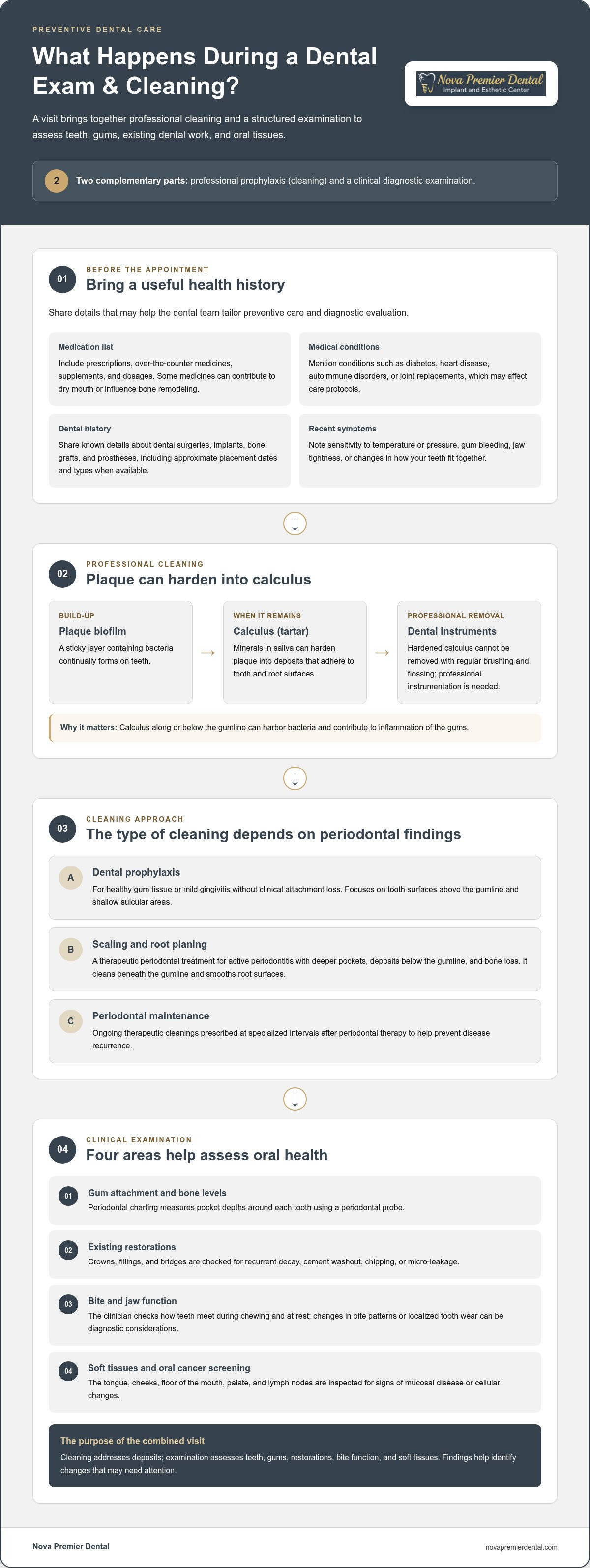
A comprehensive appointment for a dental exam and cleaning in Falls Church consists of two distinct but complementary phases: professional prophylaxis (the cleaning) and a clinical diagnostic examination. Dental exams and cleanings are structured not only to clean tooth surfaces, but also to identify subtle biological and structural changes early, when conservative treatment options remain viable.
The Importance of Regular Professional Cleanings
Plaque is a sticky biofilm containing bacteria that continually forms on teeth. When plaque is not completely cleared, minerals in saliva calcify it into calculus (tartar). Once calculus forms, it adheres firmly to enamel and root surfaces and cannot be removed with a standard toothbrush or dental floss. Professional instrumentation is required to eliminate these deposits safely.
Accumulated calculus along and below the gumline harbors bacteria that can trigger inflammatory responses in the gingiva. Over time, persistent gingivitis can advance to periodontitis, leading to gradual loss of the bone supporting the teeth. Periodontal inflammation is also recognized in medical literature as being associated with systemic conditions, such as cardiovascular diseases and glycemic control difficulties in patients with diabetes. Routine prophylaxis aims to disrupt these bacterial colonies and maintain periodontal tissue stability.
It is important to distinguish between routine prophylaxis and therapeutic cleanings:
- Dental Prophylaxis: Indicated for patients with healthy gum tissue or mild gingivitis without clinical attachment loss. The procedure focuses on coronal surfaces and shallow sulcular areas.
- Scaling and Root Planing (Deep Cleaning): A therapeutic periodontal treatment indicated when active periodontitis has produced deeper periodontal pockets, subgingival calculus, and bone loss. It involves cleaning beneath the gumline to smooth root surfaces and promote tissue reattachment.
- Periodontal Maintenance: An ongoing therapeutic cleaning schedule prescribed at specialized intervals following periodontal therapy to prevent disease recurrence.
The Clinical Examination: Diagnostic Assessment
The examination portion of your visit involves a structured evaluation of hard and soft tissues. While checking for primary dental caries (decay) is a vital component, a comprehensive examination also includes:
- Periodontal Charting: Measuring pocket depths around every tooth using a periodontal probe to evaluate gum tissue attachment and bone levels.
- Evaluation of Existing Restorations: Inspecting margins of existing dental crowns, fillings, and bridges to detect recurrent decay, cement washout, chipping, or micro-leakage.
- Occlusal and Jaw Function Assessment: Checking how teeth meet during chewing and rest. Changes in bite patterns or localized tooth wear can be diagnostic considerations when evaluating overall oral function.
- Soft Tissue and Oral Cancer Screening: Systematically inspecting the tongue, cheeks, floor of the mouth, palate, and lymph nodes to detect early signs of mucosal disease or cellular changes.
By identifying minor structural or tissue changes during routine visits, clinicians help patients address localized issues before they necessitate extensive restorative treatments.
How to Prepare for Your Dental Visit in Falls Church
Proper preparation helps optimize the clinical value of your appointment. Having pertinent medical and dental records available ensures your dental care team has the information necessary to provide safe and personalized care.
Documenting Your Medical and Oral Health History
Oral health is closely interconnected with general systemic physiology. When preparing for your appointment, compile a clear record of the following details:
- Current Medications: Many common medications—including antihypertensives, antidepressants, antihistamines, and osteoporosis therapies (such as bisphosphonates)—can cause dry mouth (xerostomia) or influence bone remodeling. Bring an up-to-date list of all prescription medications, over-the-counter drugs, and dietary supplements with their dosages.
- Systemic Medical Conditions: Conditions such as diabetes, heart disease, autoimmune disorders, or joint replacements can alter treatment protocols or require antibiotic premedication in specific circumstances.
- Past Dental Surgeries and Restorations: Knowing the approximate placement dates, brands, or types of any dental implants, bone grafts, or prostheses helps the clinician select safe cleaning tools and appropriate diagnostic protocols.
- Recent Symptoms: Note any intermittent tooth sensitivity to hot, cold, or pressure, gum bleeding during brushing, jaw tightness, or changes in how your teeth fit together.
During initial evaluations, Dr. Peterson Huang reviews this background to tailor preventive care and diagnostic imaging to each individual's clinical risk profile.
Logistics and Local Considerations
For patients visiting our Falls Church office from nearby communities such as McLean, Arlington, or Vienna, organizing administrative details beforehand helps keep appointments on schedule:
- Previous Radiographs: If you have received full-mouth X-rays or bitewing radiographs within the past 12 to 24 months, request that your previous dental office transfer them electronically prior to your appointment. This prevents redundant radiation exposure and provides baseline records for comparison.
- Second Opinions and Records: If you are seeking an evaluation for complex restorative work or a prosthodontic second opinion, bring copies of prior diagnostic casts, treatment proposals, or surgical notes.
- Dental Anxiety: If you experience dental anxiety or hypersensitivity, inform the clinical team upon scheduling. Techniques such as topical desensitizing agents, pacing the procedure with brief rest breaks, or explaining instruments before use can make the appointment significantly more comfortable.
- Administrative Paperwork: Arriving 10 to 15 minutes prior to your scheduled time allows sufficient time to complete health intake questionnaires without shortening your clinical examination time.
What to Expect During Your Professional Cleaning and Examination
A typical preventive appointment incorporates structured clinical stages designed to clean all accessible surfaces while evaluating overall health.
Step-by-Step Cleaning Protocol
- Ultrasonic Scaling: Hygienists often begin with an ultrasonic scaler, which uses high-frequency acoustic vibrations combined with a cool water spray to disrupt biofilm and loosen dense calculus deposits efficiently.
- Manual Hand Scaling: Precision hand instruments, such as curettes and scalers, are used to remove residual deposits along the gingival margin, interproximal spaces between teeth, and around the margins of crowns or veneers.
- Polishing: A specialized prophylaxis paste and rotating rubber cup gently polish enamel surfaces to lift superficial extrinsic stains caused by coffee, tea, or dietary chromogens.
- Interdental Cleaning and Irrigation: Floss and therapeutic rinses remove dislodged particles from the contact points, leaving tooth surfaces smooth and accessible for home maintenance.
Advanced Diagnostic Screenings
Modern clinical practices rely on objective diagnostic tools to detect conditions that are not visible during a standard surface inspection:
- Digital Radiography: Digital X-rays significantly reduce radiation exposure compared to traditional film while providing high-resolution imaging of interproximal decay, root anatomy, and bone levels around natural teeth and dental implants. According to the American Dental Association (ADA) and FDA guidelines, diagnostic imaging intervals are customized based on age, caries risk, and clinical history rather than applied uniformly to all patients.
- Oral Cancer Screening: Clinicians perform a visual and manual examination of the intraoral tissues, palatal arches, tongue margins, and submandibular nodes to screen for abnormal leukoplakia, erythroplakia, or persistent ulcerations.
- Screening for Temporomandibular Joint Considerations: Clinicians may palpate the masticatory muscles and the temporomandibular joint (TMJ) for clicking, popping, or tenderness, and note signs of bruxism (such as incisal wear facets or abfractions). These findings serve as diagnostic considerations when evaluating jaw comfort and restoration longevity, though bite discrepancies are not viewed as a simple or solitary cause of complex TMJ or jaw joint disorders.
The Dentist’s Clinical Review
Following the hygiene phase, the dentist conducts a comprehensive clinical evaluation. The clinician synthesizes radiographic findings, periodontal measurements, and direct visual observations to assess the structural integrity of natural dentition and existing prosthetics. Following the examination, the clinician explains the findings directly to the patient, discussing preventive recommendations or necessary follow-up care collaboratively.
The Specialist Perspective in Preventive Care
General dentists provide foundational preventive care and routine dental restorations for the vast majority of dental needs. However, prosthodontists receive three additional years of accredited post-doctoral specialty training focused specifically on complex restorations, tooth replacements, and the management of full-arch or full-mouth oral rehabilitations.
Care for Restorative Dentistry and Prosthetics
Patients who have received extensive restorative treatment—such as multiple porcelain veneers, implant-supported crowns, extensive fixed bridges, or removable prostheses—benefit from maintenance techniques tailored to these materials:
- Instrument Selection: Standard stainless steel scalers can scratch titanium implant components or glaze surfaces on ceramic veneers. In specialized environments, clinicians use instruments fabricated from titanium, medical-grade resins, or specific composite alloys to clean around implants and delicate porcelain margins without abrading the surface.
- Occlusal Monitoring: Implants lack a periodontal ligament, meaning they do not possess the natural tactile feedback or microscopic cushion present in natural teeth. Occlusal forces must be checked carefully to ensure that restorations are not absorbing excessive load during lateral jaw movements.
- Denture and Removable Appliance Maintenance: Removable complete or partial dentures require periodic evaluation of fit, base adaptation, and tissue pressure. Even properly maintained dentures naturally require relining or replacement over time as alveolar ridge remodeling occurs.
Early Detection of Structural and Prosthetic Changes
A prosthodontic perspective evaluates how individual restorations interact within the complete masticatory system. This involves monitoring:
- Early signs of prosthetic screw loosening or micro-movement before mechanical failure occurs.
- Changes in marginal adaptation that could lead to secondary decay under existing multi-unit bridges.
- Parafunctional wear patterns related to nighttime grinding (bruxism) that may warrant protective night guards.
Patients with extensive dental reconstructions often choose to receive routine preventive examinations from a board-certified prosthodontist in Northern Virginia to ensure their restorations and underlying biological structures are consistently evaluated.
Maintaining Your Oral Health Between Appointments
A professional cleaning resets the oral environment, but maintaining periodontal stability and preventing dental caries requires consistent daily home hygiene. Recommendations should be adapted to each patient's specific anatomical needs and restorative history.
Tailored Home Care Strategies
Personalized home care involves selecting tools suited to your specific dental structures:
- Brushing Techniques: Using a soft-bristled toothbrush—either manual or electric—with a gentle circular motion along the gumline prevents enamel abrasion and gum recession. Electric toothbrushes with built-in pressure sensors can help patients avoid using excessive force.
- Interdental Cleaning: For patients with natural teeth, standard dental floss or flossing picks remove interproximal plaque. However, patients with fixed bridges, splinted crowns, or dental implants often achieve better plaque control using interdental brushes (proxabrush), floss threaders, or oral irrigators (water flossers) designed to reach beneath prosthetic pontics.
- Dentifrices and Mouthwashes: Fluoride toothpastes support remineralization of vulnerable enamel and root surfaces. When active periodontal inflammation or high cavity risk is present, your clinician may recommend an antimicrobial rinse or prescription high-fluoride toothpaste based on diagnostic needs.
- Removable Prosthesis Hygiene: Complete and partial dentures should be cleaned daily using non-abrasive denture cleansers and a soft denture brush rather than standard toothpaste, which can scratch acrylic resin surfaces.
Additional recommendations can be reviewed on our dedicated home care resource page.
Preventive Recall Intervals
The traditional standard of visiting the dentist every six months serves as an effective baseline for many healthy individuals. However, clinical recall intervals should be tailored to individual risk factors:
- Patients with stable oral health and minimal restorative work generally do well on standard six-month recall schedules.
- Patients with a history of periodontitis, high caries activity, dry mouth, or complex implant-supported reconstructions are frequently placed on three- to four-month periodontal maintenance schedules to maintain tissue stability.
Frequently Asked Questions
How often should I get a dental exam and cleaning in Falls Church?
Most patients benefit from scheduling a professional exam and cleaning every six months. However, the exact frequency depends on your individual periodontal health, medical conditions, and whether you have dental implants or extensive prosthetics. Patients managing periodontitis or rapid calculus accumulation are often advised to attend maintenance cleanings every three to four months.
Are professional dental cleanings painful if I have sensitive teeth?
Cleanings should not cause significant discomfort. If you experience root sensitivity, clinicians can apply topical anesthetic gels, desensitizing varnishes, or adjust ultrasonic scaling settings to warm water and lower vibrational frequencies. Communicating your sensitivity level before the hygienist begins allows the team to adapt their technique to your comfort.
Do I need X-rays at every dental visit?
No, full-mouth radiographic series are not necessary at every visit. In accordance with the American Dental Association guidelines, bitewing radiographs are typically taken every 12 to 24 months based on individual cavity risk, while panoramic or full-mouth series are usually spaced three to five years apart unless specific symptoms, clinical changes, or planned restorative treatments require updated imaging.
What is the difference between a regular cleaning and a deep cleaning?
A regular cleaning (prophylaxis) is a preventive procedure that cleans coronal tooth structure above and just beneath the gumline for patients with healthy gums. A deep cleaning (scaling and root planing) is a therapeutic periodontal procedure performed under local anesthesia to remove bacterial plaque and calculus from deep pockets and smooth root surfaces in patients with active periodontitis.
Can a dental cleaning damage crowns or veneers?
When performed using appropriate instruments, professional cleanings do not harm restorations. Clinicians use specific resin-tipped, composite, or titanium instruments around porcelain veneers, crowns, and dental implant abutments to avoid scratching ceramic surfaces or titanium collars, preventing unnecessary micro-grooves that could accumulate plaque.
How long does a comprehensive dental exam and cleaning appointment take?
A standard appointment for an established patient typically lasts between 50 and 60 minutes. For a new patient undergoing an initial diagnostic appointment—which includes a comprehensive medical review, digital radiographs, periodontal charting, an oral cancer screening, and a consultation with the dentist—the visit generally takes 60 to 90 minutes.
Is an oral cancer screening included in a routine dental exam?
Yes. A visual and tactile oral cancer screening is a standard, essential part of every comprehensive dental examination. The clinician inspects and palpates the tongue, floor of the mouth, soft palate, cheeks, and neck tissues to check for unexplained sores, red or white patches, or swelling.
Why might someone choose a prosthodontist for routine preventive care?
While general dentists provide high-quality preventive care for patients of all backgrounds, patients who have received extensive dental rehabilitations, dental implants, or full-arch prostheses often appreciate receiving preventive exams from a prosthodontist. A prosthodontist's specialty training in occlusion, materials, and biomechanics provides dedicated oversight for monitoring complex restorations over time.
Maintaining Your Preventive Care Schedule
Preventive dental appointments are an essential tool for protecting your oral health, preserving your natural teeth, and monitoring the stability of previous restorative treatments. By taking time to prepare your health history and maintaining communication with your clinician, you help ensure that each visit provides thorough, personalized care.
If you have questions about preventive care or need an evaluation for existing dental restorations, contact our team at Nova Premier Dental in Falls Church. Our practice provides prosthodontic specialty care and preventive examinations for patients throughout Northern Virginia.
Disclaimer
The information provided on this website and blog is intended for general educational and informational purposes only and should not be considered dental or medical advice, diagnosis, or treatment. Reading content on this website does not establish a doctor-patient relationship with Nova Premier Dental or Dr. Peterson Huang. Dental conditions and treatment needs vary from patient to patient. Individuals should consult directly with a qualified dental professional for personalized evaluation, diagnosis, and treatment recommendations. Do not delay seeking professional dental care based on information found on this website. While we strive to provide accurate and up-to-date information, no guarantee is made regarding the completeness, accuracy, or applicability of the content. Treatment outcomes may vary depending on individual circumstances. If you are experiencing a dental emergency or urgent oral health concern, please contact a licensed dental professional immediately or call 911 in the event of a medical emergency.


