


Article by
Peterson Huang DMD, MS, FACP, FRCDC
Dr. Peterson Huang is a dual board-certified prosthodontist serving Falls Church and Northern Virginia. He has been recognized as a Top Prosthodontist by Northern Virginia Magazine and Arlington Magazine and is affiliated with the Inova Fairfax Hospital Tumor Board. Dr. Huang focuses on dental implants, full mouth reconstruction, and complex restorative dentistry for patients who need advanced, comprehensive care.
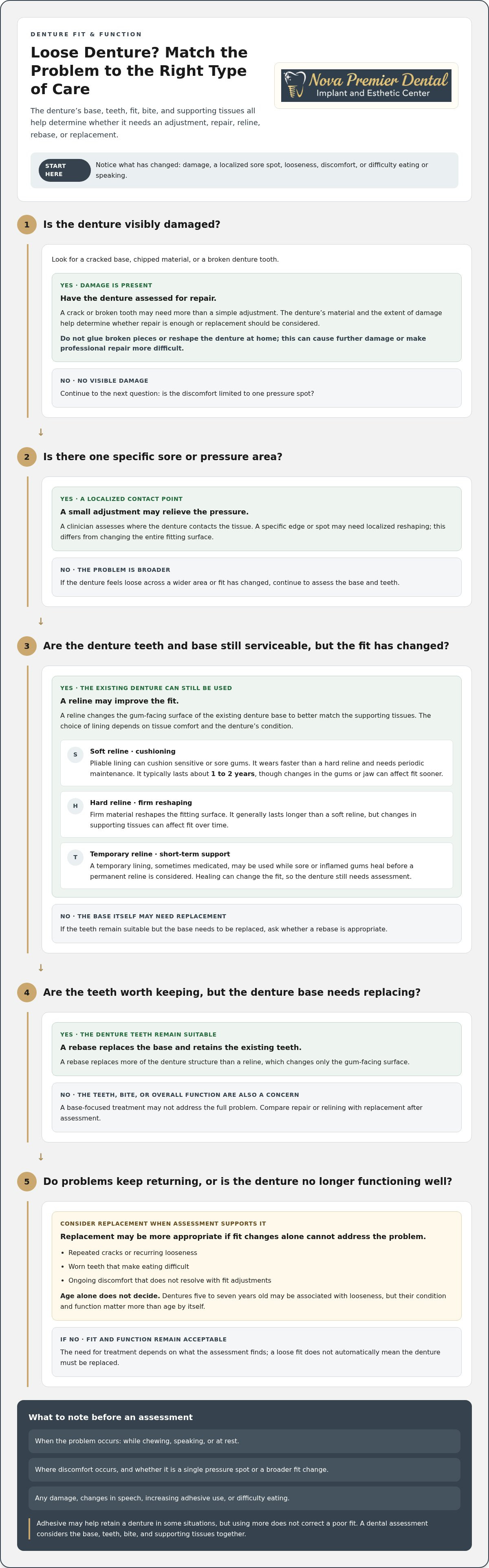
A loose-fitting denture doesn’t automatically need replacement. A reline adjusts the gum-facing surface, while a rebase replaces the denture base and retains its teeth. Repair addresses damage, and a new denture may be considered when the existing one no longer functions well. The right approach depends on the appliance’s condition and the source of the problem.
Changes in fit can make eating or speaking less comfortable. This guide explains how denture relines, rebases, repairs, and replacements differ, and what a dental assessment considers before recommending an approach. You’ll learn how the base, teeth, bite, and supporting tissues affect the decision, and why adding adhesive may not solve the underlying fit problem.
Key Takeaways
- A softer lining and a firmer reline serve different needs; gum sensitivity and the denture’s condition help guide the choice.
- A reline adjusts the existing base, while a rebase replaces that base and keeps the denture teeth.
- Pressure spots, changes in speech, or increasing reliance on adhesive can point to a fit issue that deserves attention.
- Replacement may be more suitable when damage, worn teeth, or recurring discomfort cannot be addressed by adjusting the fit alone.
Soft vs hard denture reline: which is suitable?
A soft reline adds cushioning, while a hard reline reshapes the denture’s gum-facing surface with rigid material. The right option depends on gum comfort, the denture’s condition, and whether the fit itself needs correction.
Soft Denture Relines
A soft denture reline adds pliable lining material inside the denture base. Its cushioning can suit sensitive or sore gums by reducing direct pressure during chewing. The material wears faster than a hard reline and needs periodic maintenance. A soft reline typically lasts about 1 to 2 years, though gum and jaw changes can affect fit sooner.
Hard Denture Relines
A hard denture reline reshapes the fitting surface with firm material for a more durable adjustment. It may suit a denture whose teeth and base are still serviceable but no longer match the gums. Hard relines generally last longer than soft ones, although changes in the supporting tissues can affect the fit over time. A hard reline may follow a soft reline after a few weeks, once gum contours have stabilized.
Temporary Relines
A temporary reline uses a short-term lining, sometimes with medicated material, while sore or inflamed gums heal before a permanent reline. This can help when a firm, lasting lining against irritated tissue would be uncomfortable. The temporary layer does not replace an assessment of the denture’s surface, bite, or structure. Healing can also change the fit, so it may affect the final treatment.
For example, discomfort limited to the gum-facing surface may point toward relining, while a cracked base calls for a different assessment. Adhesive can help retain a denture in some situations, but adding more does not correct a poor fit. An evaluation considers how the denture functions during chewing and speaking, and whether its teeth and bite remain suitable. These fit considerations apply to complete and partial dentures. Implant support is another treatment consideration when a removable denture lacks stability, but it involves a separate assessment of the jaw and prosthesis design.
Denture reline vs rebase: what is the difference?
A reline changes the gum-facing surface of an existing denture base to improve fit. A rebase replaces the base but keeps the existing denture teeth. Both address the base, but a rebase replaces more of the denture structure.
Changes in the gums and jawbone can gradually affect how dentures sit. Signs include movement while eating, new discomfort, gum irritation, or needing more adhesive to keep the denture stable. Changes in speech clarity can also point to a fit problem. Adhesive may help temporarily, but using more will not correct a poor fit.
Check for visible damage as well as changes in comfort. A cracked base, chipped material, or broken denture tooth may call for repair rather than a reline. With a partial denture, changes in natural teeth or supporting crowns can also affect stability. A dental assessment considers the base, teeth, bite, and supporting structures together.
Age alone doesn’t determine whether a denture needs replacement. Dentures five to seven years old may be associated with looseness, but their condition and function matter more than age by itself. Repeated cracks, recurring looseness, worn teeth that make eating difficult, or ongoing discomfort are reasons to compare repair or relining with replacement.
Household glue or attempts to reshape a broken denture can damage it and make professional repair more difficult. At-home repair kits can also create a poor fit, discomfort, or further damage. Don’t bond broken pieces yourself. A dentist can assess whether repair is enough or replacement is more appropriate.
A white patch that remains after a day of rest, persistent sore spots, pain, or a sudden change in fit also deserves attention. Note when the problem occurs, such as while chewing or speaking, and share those details at a dental visit. They can help distinguish a pressure area from damage or a broader fit problem.
Do you offer adjustments, relines, and repairs?
Yes. Sore spots, pressure areas, poor fit, and damage can each call for a different type of denture care. The right approach starts with assessing where the denture contacts the tissue and how it functions during eating and speaking.
Sore-Spot and Pressure Adjustments
A denture adjustment makes a small change to relieve pressure or irritation at a specific contact point. A sore spot may come from an edge or localized area pressing on the gums, rather than a problem across the entire fitting surface. Note where discomfort occurs and whether it appears while chewing or at rest. That information helps guide the assessment.
On-Site Repairs and Adjustments
Some adjustments can be made in the dental office; other repairs require laboratory work. A clinician assesses the denture material and damage before choosing an approach. A pressure area, for example, may need localized reshaping, while a crack or broken tooth may need more than a simple adjustment. Reshaping alone will not restore a structurally damaged denture.
Relines and Rebases
A reline changes the gum-facing surface to improve fit; a rebase replaces the denture base while retaining its teeth. These treatments address broader base problems than a small pressure adjustment. A temporary reline may use medicated material while sore or inflamed tissue heals, before a more durable change is considered. Because a hard reline uses firm material, tissue condition and denture stability matter when planning treatment.
Before treatment, an assessment should consider the denture’s fit, base, teeth, and bite together. A backup denture should also be checked before relying on it during laboratory work. If discomfort persists after an adjustment, or a break affects eating, arrange a professional evaluation rather than reshaping the denture yourself. Learn about denture repair assessment to understand the next step for a damaged appliance.
Choosing between a reline and replacement for loose dentures
A dentist distinguishes repair, relining, and replacement by assessing the denture’s base, teeth, fit, and function. A reline addresses a fit problem, while damage or worn teeth may call for repair or replacement.
Repair Versus Reline
Repair restores a damaged part; a reline changes the gum-facing surface to improve fit. A cracked base cannot be fixed just by reshaping its tissue-facing surface. A chipped tooth or fracture needs an assessment of the damage and denture structure. If the base is intact but the denture shifts against the gums, a reline may address the problem more directly.
Reline Versus Replacement
A reline may suit a denture that has lost stability because the gums or jaw have changed, provided its base, teeth, and bite remain serviceable. Replacement may be more appropriate when worn teeth make eating difficult, the base is damaged, or looseness and discomfort keep returning. Dentures seven to ten years old may be candidates for replacement, but age alone does not determine treatment.
Consider what still works. If the denture’s teeth meet comfortably and its base is sound, improving the fit may preserve useful function. If worn teeth make chewing difficult, a better fit alone will not solve the problem. A dentist also assesses how the denture contacts the gums and whether the natural teeth or crowns supporting a partial denture have changed.
Lower dentures can remain unstable when reduced bone support limits retention, even after the fitting surface is adjusted. In that case, repeating a soft reline may not solve the underlying stability problem. An assessment should consider tissue support, bite, and oral health, not just adhesive use or denture age.
Note when movement or discomfort occurs, such as during eating or speaking, and keep track of cracks or repeated repairs. These details help a dentist identify what needs attention first and whether further maintenance or replacement is more appropriate.
Nova Premier Dental: Dental Implants
Nova Premier Dental is a Falls Church prosthodontic specialty office serving Northern Virginia, with complete and partial dentures, denture repair, and dental implants. For patients considering implant-supported treatment, the discussion can include how implant support relates to denture design and oral function.
Dr. Peterson Huang is a dentist and dual board-certified prosthodontist; you can learn about his training. Patients can also explore prosthodontic care in Northern Virginia as they consider their next steps.
Make the next denture decision with a clear plan
Before your next dental visit, note what you want your denture to do more comfortably, such as staying steady while speaking or managing meals. Bring the denture, if possible, and describe when the problem occurs. These details help focus the discussion on function, fit, and the appliance’s condition. Whether you’re considering denture repair, denture replacement, or relining dentures because they feel loose, the goal is to match treatment to the specific concern, not simply choose the most extensive option.
A focused assessment can help clarify the alternatives and what each would involve for your oral health. If you’d like to discuss your denture concerns and possible next steps, contact Nova Premier Dental. A thoughtful conversation can help you move forward with greater clarity.
Frequently Asked Questions
Can dentures be repaired?
Yes, repair may be possible when the damaged area can be restored and the appliance remains usable. The assessment considers where the break is, whether all pieces are present, and whether the denture still works with the patient’s bite. A missing fragment or damage near a supporting clasp may affect the repair approach. Bring the appliance and any loose pieces to the dental visit.
What affects the cost of a denture reline?
The cost depends on the reline material, the work involved, and whether laboratory work is needed. Before agreeing to treatment, ask for an estimate that identifies the planned procedure and any separate repair or adjustment. This makes it easier to understand what the proposed work includes. The amount depends on the denture and treatment plan, rather than a standard national fee.
Can Loose Dentures Be Fixed Without Replacement?
Yes, in suitable cases, an existing denture can be adjusted or relined instead of replaced. For a partial denture, the dentist also considers how its clasps and supporting teeth contribute to retention. For a complete denture, the fit across the supporting tissues matters. The key question is whether the appliance can function well after the proposed correction.
Should I wear my dentures both day and night?
There is no wearing schedule that suits every denture and treatment situation. Follow the instructions for your appliance, especially if you’re adapting to a new denture or have had recent dental treatment. If you weren’t given guidance about overnight wear, ask your dentist for instructions specific to your mouth and prosthesis rather than relying on a general rule.
How much does denture repair cost in the United States?
One nationwide amount cannot account for every denture repair. The estimate depends on the damage, the material, and whether laboratory work or additional adjustments are part of the plan. A useful estimate identifies the proposed repair and any related work separately. This helps you compare the treatment plan with your denture’s actual condition, without relying on an unrelated general figure.
What causes dentures to become loose, and what can you do about loose dentures?
Changes in the supporting gums, jaw, or natural teeth can affect denture retention. Note when movement happens, such as during particular meals or while speaking, and whether the problem is new or recurring. Share those observations at a dental assessment. Avoid reshaping the appliance yourself, since changing its surface can make it harder to identify the source of the fit problem.
Disclaimer
The information provided on this website and blog is intended for general educational and informational purposes only and should not be considered dental or medical advice, diagnosis, or treatment. Reading content on this website does not establish a doctor-patient relationship with Nova Premier Dental or Dr. Peterson Huang. Dental conditions and treatment needs vary from patient to patient. Individuals should consult directly with a qualified dental professional for personalized evaluation, diagnosis, and treatment recommendations. Do not delay seeking professional dental care based on information found on this website. While we strive to provide accurate and up-to-date information, no guarantee is made regarding the completeness, accuracy, or applicability of the content. Treatment outcomes may vary depending on individual circumstances. If you are experiencing a dental emergency or urgent oral health concern, please contact a licensed dental professional immediately or call 911 in the event of a medical emergency.


