


Article by
Peterson Huang DMD, MS, FACP, FRCDC
Dr. Peterson Huang is a dual board-certified prosthodontist serving Falls Church and Northern Virginia. He has been recognized as a Top Prosthodontist by Northern Virginia Magazine and Arlington Magazine and is affiliated with the Inova Fairfax Hospital Tumor Board. Dr. Huang focuses on dental implants, full mouth reconstruction, and complex restorative dentistry for patients who need advanced, comprehensive care.
Teeth grinding is more than a nighttime habit: bruxism can happen while you’re awake or asleep. Bruxism treatment in McLean, VA, typically focuses on protecting teeth with a custom night guard, evaluating bite and jaw symptoms, and addressing contributing factors. There isn’t one treatment that cures bruxism for everyone.
Jaw soreness, morning headaches, tooth sensitivity, or chipped teeth can make grinding hard to ignore. This guide explains how bruxism may affect your teeth and jaw, what factors may be associated with it, and how a dental evaluation can guide care. You’ll learn what night guards can and can’t do, when damaged teeth or restorations may need attention, and why it matters to manage grinding forces before rebuilding worn teeth. Understanding these options can help you decide what to do next.
Key Takeaways
- Grinding can occur while you’re awake or asleep, and jaw symptoms may call for evaluation of both the teeth and temporomandibular joints.
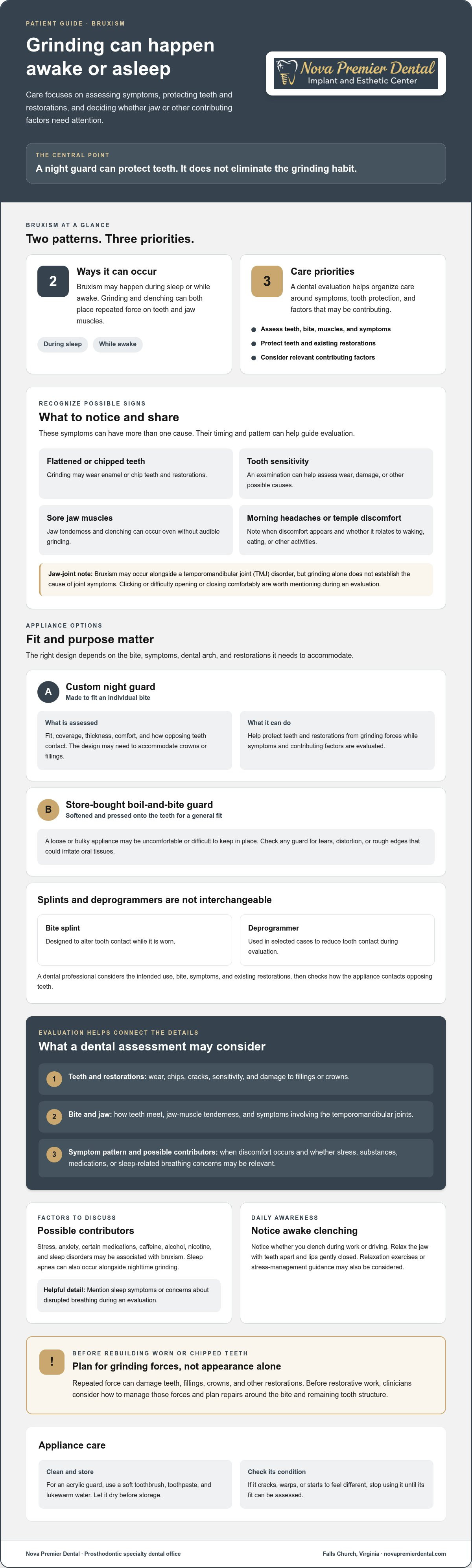
- A custom night guard can protect teeth and restorations from grinding forces, but it doesn’t eliminate the underlying habit.
- Headaches and tooth pain may have several contributing factors; an evaluation can help distinguish wear or damage from other causes.
- Stress, bite factors, sleep-related breathing, and substances may influence grinding, so identifying relevant contributors can guide care.
What Is Bruxism and How Is It Treated?
Bruxism is repetitive teeth grinding or clenching during sleep or while awake. Care focuses on assessing symptoms, protecting teeth, and determining whether jaw-joint concerns or other factors need attention.
Bruxism and TMJ Connections
The temporomandibular joints (TMJs), located in front of the ears, connect the jaw to the skull and allow it to move. Bruxism may occur alongside a TMJ disorder, but grinding alone doesn’t establish the cause of joint symptoms. A dental examination can assess tooth wear, jaw-muscle tenderness, and how the teeth meet. The National Institute of Dental and Craniofacial Research notes that dentists can check for these signs and recommend care. A custom device may protect teeth while the source of discomfort is evaluated, while complementary care from practices such as Chiropractic Lifestyle Family Practice P.C. can help evaluate how upper cervical alignment influences jaw and facial tension.
Clenching and TMJ Symptoms
Jaw clenching can load the muscles and joints without the audible grinding associated with teeth grinding. Symptoms to track include jaw soreness, temple discomfort, clicking, and difficulty opening or closing comfortably. Note when they occur, such as on waking, during eating, or after a stressful day. That pattern helps distinguish muscle tenderness from joint-related symptoms. In McLean, Virginia, readers can learn about bruxism and teeth grinding as part of understanding these concerns.
Recognizing Bruxism Signs and Symptoms
Watch for flattened or chipped teeth, sensitivity, sore jaw muscles, and morning headaches. Bruxism can involve grinding during sleep or repetitive behaviors while awake. Stress, anxiety, certain medications, caffeine, alcohol, nicotine, and sleep disorders may be associated with bruxism. Sleep apnea can also occur alongside nighttime grinding, so mention any breathing concerns during an evaluation. A dentist can assess wear and tenderness and consider a night guard, bite evaluation, or repair of damaged restorations.
In Virginia, dental insurance coverage depends on the specific plan and treatment. Care for a jaw-joint disorder may sometimes fall under medical rather than dental insurance, while night-guard benefits vary by plan.
What are night guards?
A night guard is a removable dental appliance worn during sleep. Its coverage, material, and fit affect comfort and how the upper and lower teeth contact. The appropriate design depends on the dental arch, bite, and any restorative work it needs to accommodate.
Custom Night Guard Options
A custom oral appliance is made to fit your teeth, rather than relying on a generic shape. Dental impressions help create a guard that follows the contours of your arches, and its contact points can be assessed against your bite. Some designs cover more teeth than others. Coverage and thickness matter because they affect comfort, speech, and how securely the appliance fits around existing crowns or fillings.
Custom Versus Store-Bought Guards
Store-bought boil-and-bite guards are softened and pressed onto the teeth to create a general fit. A custom guard is made for your individual bite, so its fit and tooth contacts can be evaluated. A loose or bulky appliance may be uncomfortable and hard to keep in place. Whichever type you use, check it for tears, distortion, or rough edges that could irritate oral tissues.
Bite Splints and Deprogrammers
A bite splint is designed to alter tooth contact while it is worn. A deprogrammer is a different type of appliance used in selected cases to reduce tooth contact during evaluation. These devices aren’t interchangeable: their coverage and intended use vary. A dental professional considers your bite, symptoms, and existing restorations before selecting a design, then checks how the appliance contacts opposing teeth.
Custom Acrylic Mouthguards
Acrylic mouthguards can be made from impressions of your teeth. Their firm surface provides a defined contact area, so the fit and bite contacts should be evaluated after fabrication. Clean the appliance with a soft toothbrush, toothpaste, and lukewarm water, then let it dry before storage. If it cracks, warps, or starts to feel different, stop using it until its fit can be assessed.
What Is Bruxism (Teeth Grinding)?
Bruxism is repeated grinding or clenching that can occur during sleep or while awake. In McLean, a general dentist can examine tooth wear, bite contacts, and jaw tenderness. A dentist experienced in evaluating temporomandibular joint symptoms can assess related discomfort. A prosthodontist may help plan care when grinding has damaged several teeth or complex restorations.
Untreated grinding can wear enamel, which doesn’t grow back, and may chip or fracture teeth. Repeated force can also damage fillings, crowns, and other restorations. Severe, chronic bruxism may contribute to painful arthritis in the temporomandibular joints, though jaw pain has other possible causes. A dental examination helps distinguish a cracked tooth, sensitivity, and muscle-related discomfort before treatment is planned.
Relief depends on identifying what may be causing the pain. A dentist checks your teeth and bite, assesses jaw muscles, and reviews when headaches or tooth pain occur. For example, pain when chewing on one specific tooth may point to a tooth problem, while morning temple soreness may involve jaw muscles. Care may include a night guard to limit tooth contact, repair of damaged fillings, or assessment of persistent joint symptoms. A guard protects teeth but doesn’t cure the grinding habit.
Daily habits may influence grinding. Notice when you clench during work or driving, then relax your jaw with your teeth apart and lips gently closed. Reducing caffeine, alcohol, and nicotine may help limit factors associated with nighttime grinding. Relaxation exercises and stress-management guidance may also be considered; for broader musculoskeletal tension affecting the neck and jaw, clinics like RED Physiotherapy demonstrate how structured physical rehabilitation can help ease persistent muscle strain. If sleep symptoms suggest disrupted breathing, including possible sleep apnea, mention them during your evaluation. Before restorative work rebuilds worn or chipped teeth, clinicians consider how to manage grinding forces. This helps plan repairs around your bite and remaining tooth structure, rather than focusing on appearance alone.
Stress, bite alignment, sleep breathing, and substances as contributing factors
Bruxism can have several contributing factors, and noticing patterns can make an evaluation more useful. Keep a brief log of when jaw tension appears, such as during focused work, after a difficult day, or on waking. Note caffeine, alcohol, nicotine, medication changes, and sleep disruptions alongside your symptoms. This record can help a dentist identify recurring patterns without assuming one factor explains every symptom.
A bite evaluation examines how your teeth meet during chewing and whether a specific contact is associated with discomfort or restorative problems. Bite adjustment is not automatic treatment for grinding. Removing tooth structure changes the bite permanently, so adjustment requires a clear clinical reason and careful consideration of surrounding teeth and restorations.
Invisalign or other orthodontic treatment moves teeth to address diagnosed alignment concerns. It should not be assumed to resolve bruxism or jaw pressure simply because your bite looks uneven. A dentist assesses function, tooth position, and treatment goals before considering orthodontic movement. Cosmetic appearance alone does not establish that bite correction is needed.
Sleep and breathing belong in the discussion, too. Grinding and disrupted breathing during sleep can occur together, but grinding by itself does not diagnose sleep apnea. Mention snoring, observed breathing interruptions, or waking unrefreshed so these concerns can be considered alongside dental findings. A dentist can help determine whether your symptoms call for evaluation beyond the teeth and jaw.
For a consultation near McLean, choose a dentist who examines tooth contacts, jaw function, and relevant health history. Ask what findings support the proposed care, whether adjustment or orthodontic treatment is indicated, and what alternatives exist. If you have dental implants or existing restorations, ask how their position and bite contacts factor into the plan. Clear recommendations should relate to your examination, not just the appearance of your smile.
Nova Premier Dental: Dental Implants
Nova Premier Dental evaluates complex restorative concerns when grinding has damaged teeth or existing dental work. A dental implant replaces a missing tooth, but it doesn’t treat bruxism. Before planning an implant crown, the clinician considers bite contacts, available restorative space, and forces on the restoration. Located in Falls Church, the practice serves Northern Virginia, including McLean, Great Falls, Arlington, Fairfax, Tysons, and Annandale. If tooth wear or missing teeth complicate treatment planning, prosthodontic care at Nova Premier Dental may help coordinate the restorative plan.
Dr. Peterson Huang leads care involving complex restorative concerns. The practice’s options include crowns and bridges, complete and partial dentures, and full mouth reconstruction, selected according to the condition of the teeth and bite. Contact Nova Premier Dental to discuss your restorative concerns.
Take the Next Step Toward a Clearer Plan
Bruxism treatment in McLean, VA starts with understanding what needs attention now and what should be monitored. Before an appointment, note when discomfort appears, such as after waking or chewing, and record any changes in your bite or dental work. Bring your current night guard and a list of medications. These details can help connect your symptoms with the examination findings.
If grinding has affected several teeth or changed how restorations meet, planning involves more than choosing which tooth to repair. The sequence should account for remaining tooth structure, bite forces, and how protective care fits with restorative treatment. Ask what each recommended step addresses and how to maintain the result. That conversation can help you make an informed decision about care that considers function as well as appearance.
For a discussion of your restorative concerns, contact Nova Premier Dental. A thoughtful next step can help you move forward with greater clarity.
Frequently Asked Questions
Could my grinding be related to my sleep?
Bruxism may be associated with sleep-related breathing problems, although grinding alone doesn’t diagnose a sleep disorder. Teeth grinding and disrupted breathing can occur together. If a partner notices pauses in your breathing or you regularly wake unrefreshed, share those details with your dentist and medical clinician. A dental guard may protect your teeth, but it doesn’t assess or treat a breathing disorder.
How does Botox help with grinding?
Botox injections into muscles involved in clenching may reduce the force those muscles produce. The treatment targets muscle activity, not the cause of bruxism, damaged enamel, or a misaligned restoration. A clinician may pair injections with a splint, depending on the situation. Discuss expected effects on chewing and speaking, treatment goals, and whether a dental appliance remains appropriate to protect your teeth.
Is grinding actually harmful, or just annoying?
Grinding can be more than an annoyance if it repeatedly wears enamel or damages a filling, crown, or tooth. Enamel doesn’t repair itself once worn away, so a dentist can assess whether changes are active and whether a tooth needs protection or repair. Seek prompt dental assessment for sharp tooth pain, a new fracture, or pain that interferes with eating.
What causes bruxism?
Bruxism doesn’t have one established cause for every person. It may be associated with stress, anxiety, sleep disorders, certain medications, caffeine, alcohol, tobacco use, or bite and jaw factors. These associations don’t prove which factor is responsible in an individual case. A practical step is to note when clenching occurs and whether symptoms coincide with sleep, stress, or medication changes.
What treatments are available for bruxism in McLean, VA?
Treatment may include a custom night guard, evaluation of bite and jaw symptoms, repair of damaged dental work, and guidance on relevant contributing factors. Some care focuses on protecting teeth; other steps address discomfort or existing damage. The appropriate sequence depends on examination findings. If teeth are worn or restorations are repeatedly affected, ask how protection and repair can be coordinated.
How does a dentist diagnose bruxism and assess tooth damage?
A dentist looks for patterns of tooth wear, chips, cracks, and tender jaw muscles, then asks about symptoms and when they occur. The exam also considers existing fillings, crowns, and how the teeth contact during biting. These findings help distinguish suspected grinding from damage with another explanation. Sharing a worn guard or describing a partner’s observations during sleep can add useful context.
Disclaimer
The information provided on this website and blog is intended for general educational and informational purposes only and should not be considered dental or medical advice, diagnosis, or treatment. Reading content on this website does not establish a doctor-patient relationship with Nova Premier Dental or Dr. Peterson Huang. Dental conditions and treatment needs vary from patient to patient. Individuals should consult directly with a qualified dental professional for personalized evaluation, diagnosis, and treatment recommendations. Do not delay seeking professional dental care based on information found on this website. While we strive to provide accurate and up-to-date information, no guarantee is made regarding the completeness, accuracy, or applicability of the content. Treatment outcomes may vary depending on individual circumstances. If you are experiencing a dental emergency or urgent oral health concern, please contact a licensed dental professional immediately or call 911 in the event of a medical emergency.


