


Article by
Peterson Huang DMD, MS, FACP, FRCDC
Dr. Peterson Huang is a dual board-certified prosthodontist serving Falls Church and Northern Virginia. He has been recognized as a Top Prosthodontist by Northern Virginia Magazine and Arlington Magazine and is affiliated with the Inova Fairfax Hospital Tumor Board. Dr. Huang focuses on dental implants, full mouth reconstruction, and complex restorative dentistry for patients who need advanced, comprehensive care.
A loose implant crown doesn’t automatically mean the implant body has failed. Implant restoration failure may involve only the crown, retaining screw, or abutment while the implant remains stable. But movement can also signal a problem with the implant or surrounding bone, so have a wobbling restoration assessed promptly. Identifying the cause of these prosthetic implant complications is essential to choosing the right treatment.
It’s understandable to worry that a loose crown means losing the implant and starting treatment again. Sometimes the problem is limited to a prosthetic component that can be repaired or replaced, but the cause must be identified first. This article explains why crowns loosen or break, how a dentist distinguishes crown movement from a loose connection or implant body, and what findings guide repair, replacement, or further implant treatment. You’ll also learn what to do while waiting for an evaluation and why bite forces, implant design, and supporting tissues affect how a restoration functions.
Key Takeaways
- A crown that moves may have a crown, screw, or abutment problem; movement of the implant body points to a different concern.
- Evaluation considers the restoration and its connection alongside the implant, surrounding gums, supporting bone, and bite forces.
- Until a loose crown is assessed, avoid chewing on that side and don’t try to glue, reposition, or tighten it yourself.
- Treatment depends on the cause: a restoration may be repaired or replaced, while inflammation or implant instability calls for a different approach.
Can dental implants fail years after placement?
Yes. A dental implant can develop biological or mechanical problems years after placement, but a loose crown alone doesn’t establish implant failure. The examination must identify which component is moving and assess the surrounding gum and jawbone.
Evaluating Implant Restoration Components
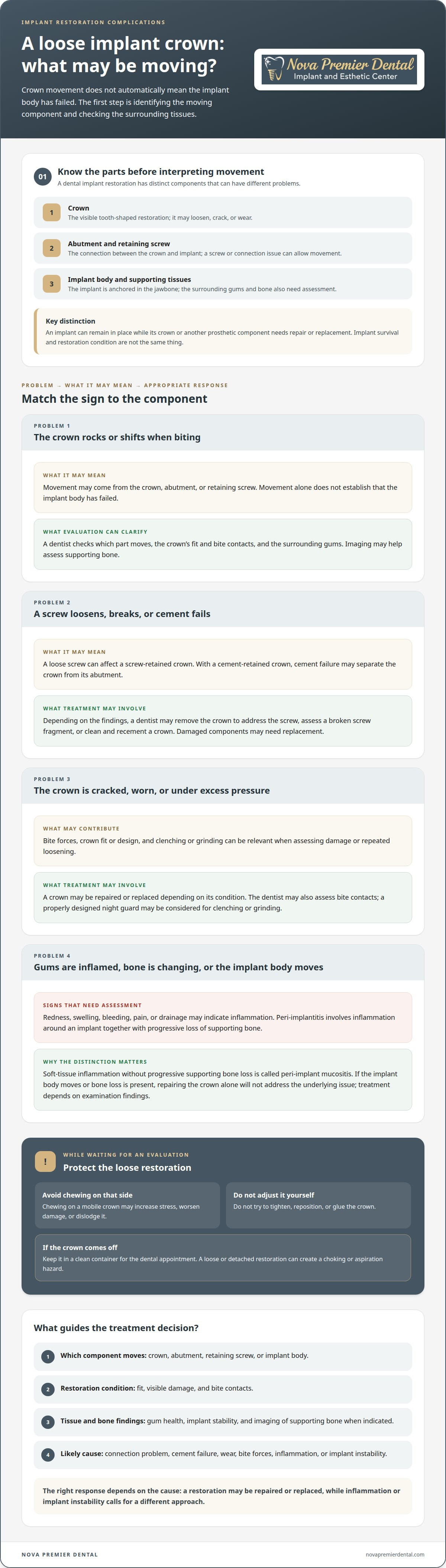
A dental implant restoration consists of the visible crown, the abutment connecting it to the implant, and the implant body anchored in the jawbone. A dentist examines these parts separately because crown damage, a loose connection, and implant movement have different causes and treatments.
The evaluation also considers the surrounding tissues, including gum redness, swelling, bleeding, or drainage. Bite contacts and the crown’s fit can reveal stress or design issues. Dental imaging helps assess supporting bone; 3D imaging may be used when needed to provide a fuller view. These findings help distinguish a crown complication from changes around the implant.
Diagnosing Implant Movement
Diagnosis starts by locating the movement. The crown may shift while the abutment and implant remain stable, or the implant body itself may move. A dentist checks the restoration’s stability and the gum tissue, then compares the examination findings with images of the surrounding jawbone.
Symptoms provide useful context. Bleeding during brushing, swelling, or drainage around an implant may indicate tissue inflammation, while a crown that rocks during biting may point to a mechanical connection problem. Imaging can show bone levels, but the dentist interprets it alongside the physical examination. Identifying the moving component matters because tightening or replacing a restoration won’t address bone loss or implant instability.
Implant Success and Failure Rates
Implant success and failure rates describe outcomes across groups, not whether an individual crown will remain intact. Implant survival generally means the implant remains in place, while crown or abutment complications are counted separately. An implant can therefore survive while supporting a restoration that needs repair or replacement.
Rates also depend on how a study defines “success,” how long patients are followed, and which restorations are included. A single implant crown and a multi-unit prosthesis face different design and loading conditions. For an individual, the practical next step is to determine whether the concern involves the crown, connection, supporting tissues, or implant body. That gives the examination a clear focus.
Why Can a Dental Implant Crown Become Loose or Damaged?
A loose or damaged crown can result from a screw connection problem, failed cement, bite forces, or wear. Treatment depends on the affected component and the health of the supporting tissues.
Diagnosing and Repairing a Loose Crown
Diagnosis determines whether movement comes from the crown, abutment, retaining screw, or implant body, guiding treatment rather than guesswork. A dentist checks the fit, bite contacts, visible damage, and tissues around the implant. Imaging can help assess the supporting bone.
A loose screw may be treated by removing the crown and tightening the screw to the implant manufacturer’s recommended torque. If the screw is fractured, the dentist assesses whether the fragment can be retrieved and whether damaged components need replacement. If cement failure has separated the crown, it may be cleaned and recemented. A cracked or worn crown may need repair or replacement, depending on its condition.
Screw-Retained and Cement-Retained Complications
Screw-retained crowns attach with a screw, while cement-retained crowns are bonded to an abutment with dental cement. This matters because a screw connection can often be accessed to address loosening, while a cemented crown may need removal and recementing.
With cement-retained restorations, cement left beneath the gum can irritate surrounding tissues and contribute to inflammation. Before choosing a repair, the dentist considers the crown’s fit and whether its design allows effective cleaning. Adjusting the bite may reduce excessive pressure. Patients who clench or grind may benefit from a properly designed night guard.
Eating on a mobile crown can put more stress on its components, worsen damage, or dislodge it, creating a choking or aspiration hazard. Avoid chewing on that side. Don’t try to tighten or reposition the crown, and never use household glue. If it comes off, keep it in a clean container for your appointment.
If movement involves the implant body or there is progressive bone loss, simply repairing the crown won’t resolve the underlying problem. Treatment may involve addressing inflammation, surgery, or implant removal. A dental evaluation can determine whether crown treatment is appropriate and what the restoration requires.
Does implant failure always mean another implant?
No. A loose restoration or inflammation around an implant doesn’t automatically mean the implant itself must be replaced. The dentist assesses tissue health, bone support, and implant stability before choosing treatment.
Symptoms of Peri-Implantitis
Peri-implantitis is inflammation around an implant accompanied by progressive loss of supporting bone. Symptoms may include red or swollen gums, irritation, pain, bleeding during brushing or flossing, and sometimes drainage.
These signs need prompt dental assessment, especially if the implant or restoration also moves. Early evaluation helps distinguish soft-tissue inflammation from a condition involving bone loss. Peri-implant mucositis, by contrast, is inflammation of the soft tissue without progressive loss of supporting bone. This distinction matters because the examination and treatment depend on whether bone is affected.
Bone Loss and Peri-Implantitis
Peri-implantitis involves inflammation and progressive loss of bone supporting the implant. As support changes, the implant may become less stable, and the restoration can begin to feel loose even when the crown itself isn’t the cause.
A dentist examines the gums and compares imaging with clinical findings to assess bone levels and implant stability. An ill-fitting restoration, cement trapped beneath the gum, or difficulty cleaning around the implant can contribute to bacterial accumulation. Addressing a restoration fault may be part of treatment, alongside care for the inflamed tissues. Repairing the crown alone won’t resolve active disease around its support.
Peri-Implantitis and Implant Failure
Peri-implantitis can lead to implant instability and failure if progressive bone loss compromises support. However, inflammation doesn’t automatically mean the implant must be removed. The decision depends on the remaining bone, the implant’s stability, and whether the disease can be controlled.
Treatment may focus on cleaning and managing affected tissues, with adjustments to the restoration if its fit or design contributes to the problem. More advanced damage may require surgery or removal of an unstable implant. Even after removal, another implant isn’t automatic: bone condition, healing, and the planned tooth replacement all matter. The dentist weighs these findings before selecting the next treatment.
Differences between loose crowns, connections, and implant bodies
Movement can start in the crown, its connection, or the implant body. A crown may chip or shift while the abutment and implant remain stable. A loose screw or abutment affects the connection, while movement of the implant itself raises concern about its support. These problems can feel similar when chewing, but affect different parts and require different assessments.
A crown-level problem affects the visible restoration. For example, damage to the chewing surface may change how the teeth meet without indicating that the implant has failed. The dentist assesses the crown’s fit, damage, and contact with opposing teeth. Repair or replacement depends on the extent of the damage and whether the restoration still functions properly.
At the connection level, the crown or abutment may move because a retaining screw has loosened or fractured, even while the implant body remains firm in the jawbone. The dentist identifies which component moves and examines how the restoration meets opposing teeth. Repeated chewing forces or grinding can contribute to mechanical complications, so treatment planning may address the bite as well as the affected component.
Movement of the implant body is different: it suggests reduced stability at the bone interface, rather than a problem with the crown or screw alone. The dentist assesses supporting bone, surrounding tissues, and imaging before deciding whether the implant can remain. If the implant itself is mobile, tightening the crown cannot restore its support. Removal may be considered, while replacement depends on the condition of the site and the overall treatment plan.
The practical question is which part moves independently: the crown, connection, or implant body. Don’t test this by rocking the restoration yourself, since added force can damage components. A dental examination can locate the source of movement and clarify which part needs attention. This helps avoid treating a crown problem as implant failure or overlooking an issue with the implant’s support.
Nova Premier Dental: Dental Implants
Nova Premier Dental evaluates implant restorations and provides dental implants and crowns and bridges for restorative concerns. Its approach to prosthodontic care in Northern Virginia includes considering the restoration, bite, and treatment goals together. Patients with needs beyond one crown may also discuss complete or partial dentures or full mouth reconstruction as part of a broader restorative plan.
Dr. Peterson Huang’s prosthodontic training and background is available for readers who want to learn more about the practice’s specialty focus. To discuss your restorative concerns, visit Nova Premier Dental online.
Take the Next Step Toward a Stable Restoration
Concern about implant restoration failure can raise questions about what comes next, but the next step doesn’t mean committing to a particular treatment. A focused evaluation can clarify your priorities, explain the findings, and help you consider your options. Tell the dentist when you first noticed a change and what you feel during everyday activities, such as speaking or chewing. These observations help guide the conversation.
Nova Premier Dental provides prosthodontic care for complex restorative concerns. If you’d like to discuss your situation and possible next steps, contact Nova Premier Dental. A clear conversation can help you move forward with greater understanding and a plan tailored to your needs.
Frequently Asked Questions
Can a failing implant be saved?
Sometimes, if the implant remains stable and the surrounding damage can be managed. “Saving the implant” means retaining the implant body, not necessarily keeping its current crown or connection. The restoration may need to be redesigned after the underlying concern is addressed. If the implant body has lost stability, retaining it may not be feasible. An assessment separates that question from decisions about replacement teeth.
Could a Loose Implant Crown Be a Sign of a Bigger Problem?
Yes, although looseness alone doesn’t establish a problem with the implant body. Note changes beyond the crown, such as a bite that suddenly feels different or a restoration that repeatedly loosens after repair. These details help distinguish an isolated component issue from a problem affecting the implant’s support. Record when the change began and whether it has happened before.
How do you reduce the risk of late implant problems?
Keep the area around the restoration accessible for cleaning and follow the home-care method demonstrated by your dental team. Tell the dentist if you clench or grind, since this can affect bite assessment and whether a night guard is appropriate. Maintenance intervals should reflect your gum health, cleaning needs, restoration design, and history of component problems, rather than follow a one-size-fits-all schedule.
How does a dentist check an implant years later?
Bring any implant records, prior images, or information about earlier crown repairs to your appointment. These details can help identify the implant system and show whether the restoration or bone appearance has changed over time. Mention when chewing began to feel different, whether the crown has been repaired before, and any recent changes in how easily you can clean around it.
What warning signs should you take seriously?
Seek prompt dental assessment if you notice movement, bleeding, swelling, pain, or drainage near an implant. Difficulty breathing or swallowing, or rapidly spreading facial or neck swelling, requires emergency medical care. Don’t wait for discomfort to appear if the restoration is moving. Until it is assessed, avoid chewing on that side and don’t try to reposition the crown yourself.
What are the common causes of a loose dental implant crown when the implant itself is healthy?
Prosthetic causes include a loosened or fractured retaining screw, failed cement, or a damaged crown. Component compatibility and following the implant manufacturer’s tightening protocol also matter when placing or replacing a restoration. Bite contacts, clenching, or grinding can add repeated mechanical stress. The cause depends on which part has lost its fit or integrity, not simply on whether the implant feels comfortable.
Disclaimer
The information provided on this website and blog is intended for general educational and informational purposes only and should not be considered dental or medical advice, diagnosis, or treatment. Reading content on this website does not establish a doctor-patient relationship with Nova Premier Dental or Dr. Peterson Huang. Dental conditions and treatment needs vary from patient to patient. Individuals should consult directly with a qualified dental professional for personalized evaluation, diagnosis, and treatment recommendations. Do not delay seeking professional dental care based on information found on this website. While we strive to provide accurate and up-to-date information, no guarantee is made regarding the completeness, accuracy, or applicability of the content. Treatment outcomes may vary depending on individual circumstances. If you are experiencing a dental emergency or urgent oral health concern, please contact a licensed dental professional immediately or call 911 in the event of a medical emergency.


