


Article by
Peterson Huang DMD, MS, FACP, FRCDC
Dr. Peterson Huang is a dual board-certified prosthodontist serving Falls Church and Northern Virginia. He has been recognized as a Top Prosthodontist by Northern Virginia Magazine and Arlington Magazine and is affiliated with the Inova Fairfax Hospital Tumor Board. Dr. Huang focuses on dental implants, full mouth reconstruction, and complex restorative dentistry for patients who need advanced, comprehensive care.
A crown’s age alone doesn’t determine whether it needs to be replaced. A cavity under a crown can develop where the restoration meets the natural tooth, a problem dentists call recurrent decay. What patients describe as crown decay symptoms, such as sensitivity, discomfort when biting, or a change near the gumline, can also have other causes. Even a crown that looks intact may not reveal what’s happening beneath it.
It’s understandable to wonder whether decay means you’ll need to replace a crown. The answer depends on an examination and how much healthy tooth structure remains, not simply how long the crown has been in place. This article explains how dentists assess possible decay around a crowned tooth, what symptoms can and can’t tell you, and how the tooth’s condition helps guide decisions about repair or replacement.
Key Takeaways
- A “cavity under crown” refers to decay in the natural tooth, not the crown material. Recurrent decay can develop near the crown’s edge.
- Crown decay symptoms can overlap with other dental concerns, so symptoms alone can’t confirm the cause.
- A dentist may combine your symptom history, an examination of the crown margins, and imaging to evaluate possible decay.
- Decay doesn’t automatically mean you need to replace a crown. The extent of the damage, the crown’s condition, and the remaining tooth structure help guide treatment.
Can You Get a Cavity Under a Crown? Causes and Symptoms of Recurrent Decay
Yes. A dental crown covers and protects a tooth, but the crown material itself cannot develop a cavity. The natural tooth beneath it can still decay, particularly where the crown’s edge meets the tooth. Dentists call new decay at or beneath the edge of existing dental work recurrent decay. A dental crown may look intact even when a problem is developing at this less visible boundary.
Plaque can collect near the crown margin, especially where cleaning is difficult. An open or damaged margin may create an area where plaque is more likely to remain. Gum recession can also expose root surface beside the crown, and that exposed tooth structure remains vulnerable to decay. These factors can increase concern, but none alone confirms that decay is present.
What symptoms can occur around a crowned tooth?
Possible signs of decay around a crown include sensitivity to temperature or sweets, discomfort when biting, food repeatedly catching near the crown, or a change in how the crown feels. These symptoms are reasons to seek an assessment, but they can’t identify the cause on their own.
- Sensitivity may relate to decay, exposed tooth surfaces, or irritation of the tooth’s nerve.
- Biting discomfort can accompany decay, but bite pressure, a crack, or gum problems may feel similar.
- Food trapping or a changed fit can point to an issue with the crown’s edge or stability, but doesn’t establish the cause.
Recurrent decay may cause few noticeable symptoms, particularly early on. Conversely, discomfort doesn’t necessarily mean there’s a cavity beneath a crown. A dentist assesses the tooth and restoration to distinguish decay from other conditions and determine whether treatment is appropriate. Symptoms help guide that evaluation, but they can’t establish whether the tooth or crown needs care.
How a Dentist Evaluates Possible Decay Under a Crown
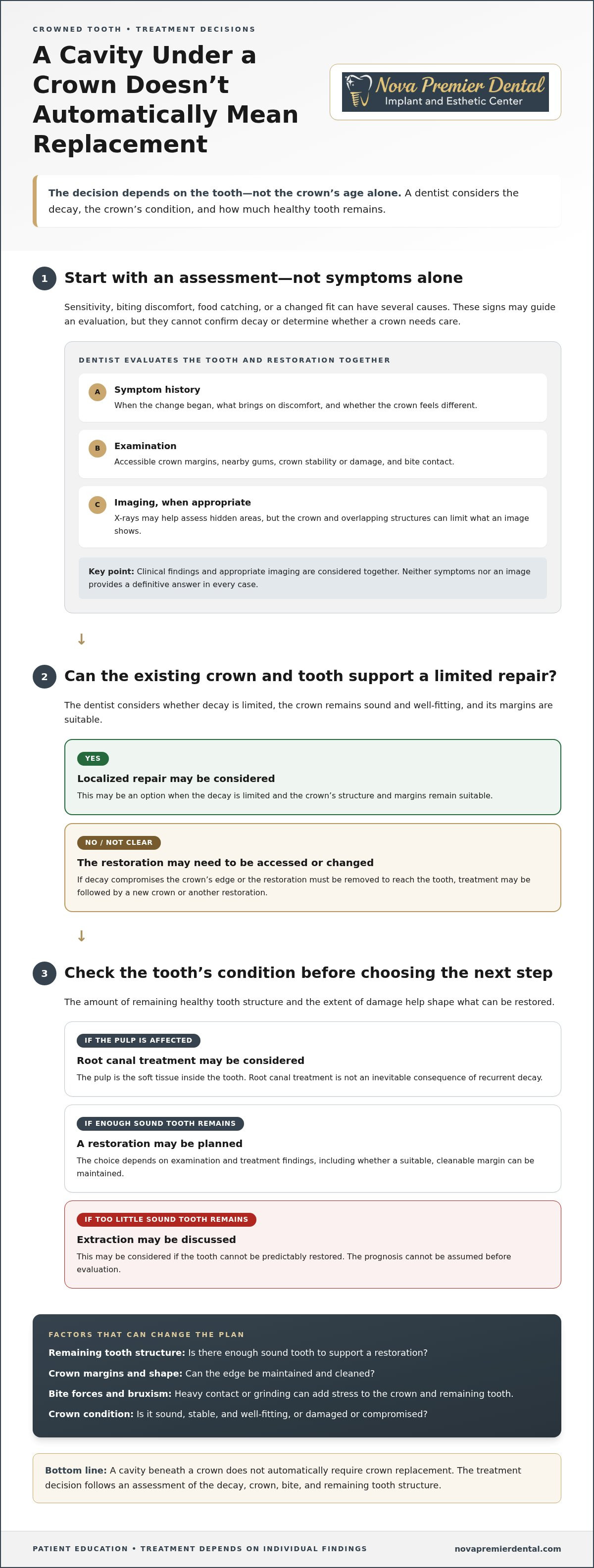
Evaluation usually follows a sequence: the dentist reviews what you’ve noticed, examines the crown and nearby tissues, then considers whether imaging would help. Each step adds context. A symptom alone doesn’t establish decay, and an image is interpreted alongside what the dentist can see and learn from your history.
- Review symptoms and dental history. The dentist may ask when a change began, what brings on discomfort, and whether the crown has felt different. Previous treatment and changes since the crown was placed can help focus the assessment.
- Examine the crown and surrounding tissues. The dentist checks accessible margins, gum condition, and whether the crown appears loose or damaged. Bite contact may also be assessed. A fracture, gum changes, bite-related pressure, or nerve involvement can cause symptoms similar to decay.
- Consider appropriate imaging. X-rays may help assess areas hidden from direct view, but the crown and overlapping structures can limit what an image reveals. Imaging supports the assessment; it doesn’t provide a definitive answer in every case.
Recurrent decay is assessed using clinical findings and appropriate imaging together. The crown can obscure part of the underlying tooth and its margins, so an intact appearance doesn’t reveal every surface. Dental history, a change in fit, or a new symptom can help the dentist decide what to examine more closely, but none confirms decay by itself.
Why a crown that looks intact may still need assessment
A dentist considers the restoration and the tooth together, distinguishing possible decay from a loose crown, fracture, gum concern, bite-related discomfort, or nerve involvement. When a crown has limited support or several restorative factors need consideration, a prosthodontist’s training may be relevant. The overview of prosthodontic care in Northern Virginia explains this specialty’s focus on restoring and replacing teeth.
Does a Cavity Under a Crown Mean the Crown Must Be Replaced?
No. Finding a cavity under a crown doesn’t automatically mean the crown must be replaced. The decision depends on how far the decay extends, whether the crown remains sound and well-fitting, and how much healthy tooth structure is left to support a restoration. Crown age alone doesn’t determine the treatment.
If decay is limited and the crown’s structure and margins remain suitable, a dentist may consider a localized repair. In other cases, decay may compromise the crown’s edge or require removing the restoration to access and treat the tooth, followed by a new crown or another restoration. The appropriate option depends on the findings during examination and treatment, not symptoms alone.
If decay or related damage affects the tooth’s pulp, the soft tissue inside the tooth, root canal treatment may be considered. It isn’t an inevitable consequence of recurrent decay. If too little sound tooth remains to support a restoration, or the tooth can’t be predictably restored, extraction may be discussed. An evaluation can clarify the options and their limitations, but the prognosis can’t be assumed in advance.
How tooth structure, bite, and crown design shape the decision
Planning considers whether enough sound tooth remains to create a restoration with margins that can be accessed and cleaned. A repair that leaves an irregular or difficult-to-clean edge may not be suitable. Bite forces matter, too: heavy contact or bruxism can place additional stress on a crown and the remaining tooth, influencing its design and follow-up. The dentist also considers whether the existing crown’s margins and shape can be maintained or need to change.
For a complex case involving limited remaining tooth structure or a compromised restoration, prosthodontic training may help inform restorative planning. Dr. Peterson Huang, DMD, MS, FACP, FRCDC, is a dentist and dual board-certified prosthodontist with prosthodontic certifications in the United States and Canada. He provides prosthodontic care at Nova Premier Dental in Falls Church. Learn about crown and restorative care for concerns involving a crowned tooth.
Preventing Recurrent Decay and Knowing When to Seek Evaluation
Consistent home care helps keep plaque from accumulating around the gumline and the edge of a crown. Brush thoroughly along that margin and clean between the teeth each day using a method that suits your needs. If the crown’s shape or position makes an area difficult to clean, ask your dentist or hygienist for individualized guidance.
Routine dental examinations allow a dentist to assess accessible crown margins and monitor changes in the surrounding tooth and gums. These visits can also help identify whether a crown’s fit or condition has changed. Home care and professional evaluation serve different purposes: cleaning supports oral health, while an examination assesses the restoration and nearby tissues.
What follow-up can address after crown treatment
Follow-up is tailored to the tooth, restoration, oral hygiene, and individual risk factors. For example, a margin that is difficult to keep clean may call for specific home-care advice, while bite forces or bruxism may be relevant to monitoring the restoration. The goal is to keep the area clean and identify changes that may need attention, not to assume every crown requires the same schedule or care plan.
Arrange an evaluation if you have persistent sensitivity or pain, a crown that feels loose, repeated food trapping, or another noticeable change. These signs don’t confirm recurrent decay, but an examination can help determine whether the cause involves the crown, tooth, gums, or bite. A prosthodontic evaluation may be useful when restorative concerns are complex, such as when a tooth has limited remaining structure or the crown’s design and bite need to be considered together. Many crowned teeth can be assessed and cared for without specialist involvement.
Nova Premier Dental is a private prosthodontic specialty dental office in Falls Church serving patients throughout Northern Virginia, including McLean, Great Falls, Arlington, Fairfax, Tysons, and Annandale. Learn about Dr. Huang’s training.
Make the Next Step an Informed One
A change around a crowned tooth is a reason to seek clarity, not to assume the restoration has failed. Whether decay is present and whether the crown needs treatment are questions for a dental assessment, not conclusions to draw from symptoms alone.
Before your visit, note when the change began and what seems to trigger it. Those details can help your dentist understand the concern and discuss options. For complex restorative decisions, prosthodontic training may offer a useful perspective.
If you have questions about a crowned tooth or a complex restorative concern, Nova Premier Dental provides prosthodontic care in Falls Church for patients throughout Northern Virginia.
Frequently Asked Questions
Can a tooth decay under a crown if the crown looks fine?
Yes. A crown can appear unchanged while a cavity under crown develops near an edge that isn’t easy to see. If you have older dental images or know when the crown was placed, share that history at your visit. Comparing records may offer useful context, though a dentist interprets them alongside current examination findings.
What are the symptoms of recurrent decay under a crown?
Possible signs include sensitivity, discomfort when chewing, food catching near the restoration, or a change in how the crown feels. Note when the sensation occurs, what seems to trigger it, and whether it’s changing. For example, sensitivity to cold differs from pain only during chewing, but neither pattern can confirm recurrent decay without an assessment.
Does recurrent decay always mean I need a new crown?
No. Crown replacement isn’t automatic. The dentist weighs the condition of the restoration against the amount and location of damage to the tooth. You can ask what findings support repair versus a new crown, and whether the proposed result will be practical to keep clean. Those details help explain the reasoning behind an individualized treatment recommendation.
Can decay under a crown require a root canal or extraction?
It can, but those treatments aren’t inevitable. The dentist assesses whether the tooth’s nerve is affected and whether enough structure remains for a restoration. If a root canal or extraction is discussed, ask what examination findings support that option and what alternatives exist. For complex restorative questions, prosthodontic evaluation may be helpful for patients in Falls Church and Northern Virginia.
Disclaimer
The information provided on this website and blog is intended for general educational and informational purposes only and should not be considered dental or medical advice, diagnosis, or treatment. Reading content on this website does not establish a doctor-patient relationship with Nova Premier Dental or Dr. Peterson Huang. Dental conditions and treatment needs vary from patient to patient. Individuals should consult directly with a qualified dental professional for personalized evaluation, diagnosis, and treatment recommendations. Do not delay seeking professional dental care based on information found on this website. While we strive to provide accurate and up-to-date information, no guarantee is made regarding the completeness, accuracy, or applicability of the content. Treatment outcomes may vary depending on individual circumstances. If you are experiencing a dental emergency or urgent oral health concern, please contact a licensed dental professional immediately or call 911 in the event of a medical emergency.


