
Article by
Peterson Huang DMD, MS, FACP, FRCDC
Dr. Peterson Huang is a dual board-certified prosthodontist serving Falls Church and Northern Virginia. He has been recognized as a Top Prosthodontist by Northern Virginia Magazine and Arlington Magazine and is affiliated with the Inova Fairfax Hospital Tumor Board. Dr. Huang focuses on dental implants, full mouth reconstruction, and complex restorative dentistry for patients who need advanced, comprehensive care.
A bone graft isn't a delay in your treatment; it's the biological insurance policy that prevents your restorative investment from failing. You might feel concerned about the additional surgery or the extended timeline that a bone graft for dental implant requires. It's common to worry about potential discomfort or the added cost of supplemental procedures when you're eager to finalize your smile. At Nova Premier Dental, we understand that these concerns are significant, yet the structural integrity of your jaw is the only way to ensure a lifelong result.
This article clarifies the biological necessity of bone augmentation and how specialized expertise ensures a predictable outcome. Research indicates that the success rate for bone grafting is generally upwards of 90%, providing a secure base for your restoration. You'll discover how a prosthodontist in Northern Virginia utilizes advanced 3D imaging and biocompatible materials to create a stable foundation. By learning about the meticulous approach of Dr. Huang, you'll gain confidence in a process designed for minimal discomfort and maximum durability. We'll preview the types of graft materials available and the precise steps taken to achieve restorative success.
Key Takeaways
- Learn why jawbone volume is the non-negotiable prerequisite for stability and how a bone graft for dental implant creates the essential scaffold for new growth.
- Understand the clinical distinctions between autografts and allografts so you can discuss the most biocompatible options for your unique physiology.
- Discover how a board-certified prosthodontist uses reverse-engineered planning to ensure the bone supports the precise position of your future tooth.
- Gain clarity on the healing phase with professional guidance on managing swelling and dietary adjustments to protect your surgical site during the first week.
- Explore the elite standards of care provided by Dr. Huang at Nova Premier Dental, where advanced certifications translate into more predictable reconstructive outcomes.
Understanding the Bone Graft for Dental Implant: Why Volume Matters
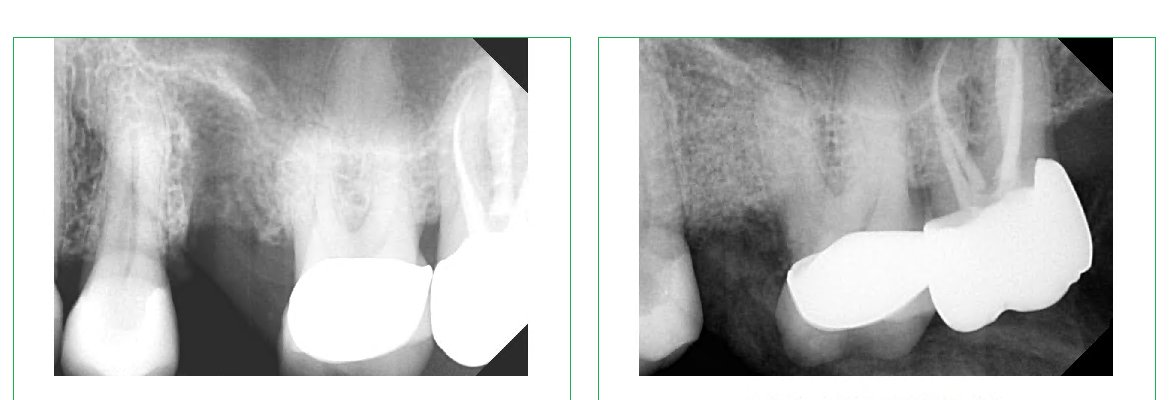
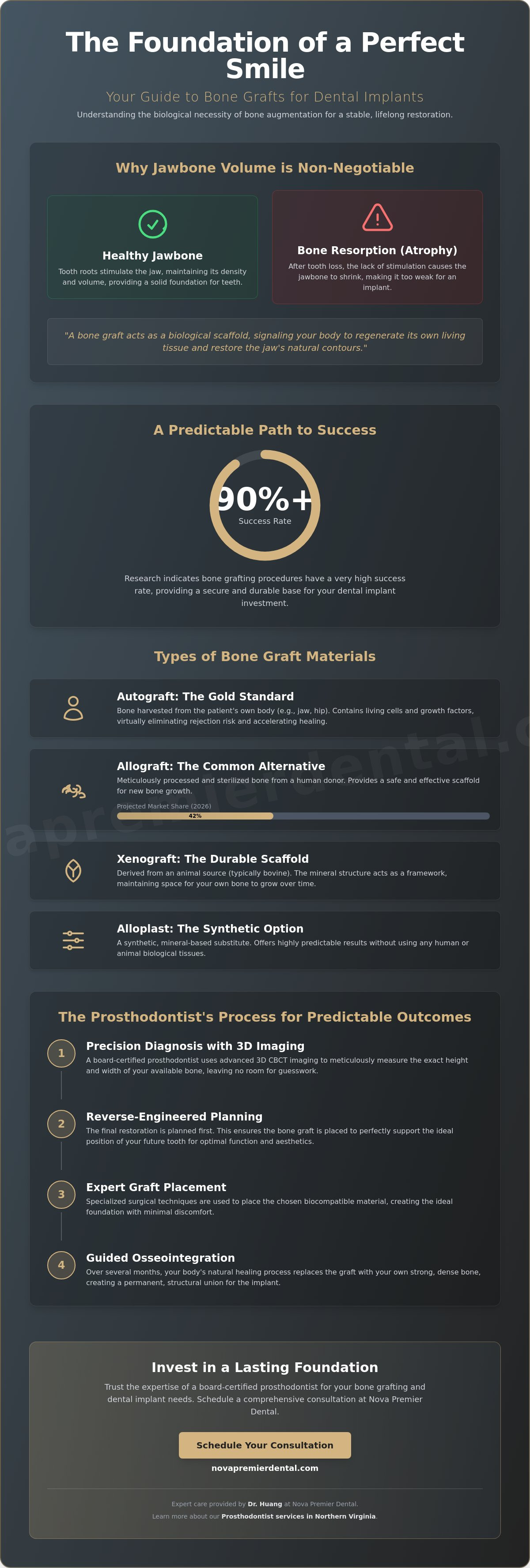
Success in restorative dentistry depends entirely on the foundation. A bone graft for dental implant serves as a sophisticated biological scaffold rather than a simple filler. It's a signal to your body to regenerate its own living tissue. Your jawbone is a dynamic organ that requires constant stimulation from tooth roots to maintain its volume. When you lose a tooth, this stimulation ceases, and the underlying alveolar bone begins to resorb. This natural atrophy occurs because the body reclaims minerals from areas it deems no longer functional.
This loss of volume affects more than just your candidacy for a prosthetic. It fundamentally impacts your facial profile and aesthetic balance. Without the structural support of a robust jawbone, the overlying soft tissues lose their framework and begin to collapse inward. This often results in a prematurely aged or "sunken" appearance that changes the way your lips and cheeks sit. Bone grafting effectively intervenes in this degenerative process. By restoring the natural contours of your jaw, we preserve your facial structure while providing the necessary width and height for a stable, long-term restoration.
The Biological Process of Osseointegration
The primary objective of any reconstructive procedure is to achieve a permanent union between the titanium post and your body. Osseointegration is the structural connection between living bone and a load-bearing implant. When a specialist places grafting material, your body’s natural healing response identifies the matrix as a site for new growth. Over a period of several months, cellular turnover replaces the graft material with your own dense bone. This transition is methodical and predictable. It ensures the final implant can withstand the significant, repetitive forces of daily chewing without shifting or failing.
When is a Bone Graft Deemed Necessary?
We determine the clinical necessity of a bone graft for dental implant through a meticulous digital evaluation of your unique anatomy. Using advanced 3D CBCT imaging, we measure the precise vertical and horizontal dimensions of the available bone. Patients who have navigated years of long-term denture wear or advanced periodontal disease frequently lack the bone density required to house an implant safely. In these complex cases, we prioritize rebuilding the foundation as a non-negotiable first step. You can visit Nova Premier Dental for a comprehensive diagnostic exam to evaluate your bone health and begin your restorative journey.
Types of Bone Graft Materials and Their Applications
The selection of material for a bone graft for dental implant is a critical decision that dictates the pace and quality of your healing. We categorize these materials based on their source, each offering unique biological advantages for specific clinical scenarios. Autografts, which utilize bone harvested from the patient's own body, remain the gold standard for compatibility. They provide essential growth factors and living cells that accelerate the regeneration process. Because the material is your own tissue, the risk of rejection is virtually non-existent.
Allografts represent a widely utilized alternative, using human donor bone that has been meticulously processed to ensure safety and eliminate cellular matter. According to current data from 2026, allografts are expected to account for roughly 42% of the bone grafts market revenue. Xenografts, typically derived from bovine or porcine sources, serve as a highly effective mineral scaffold. These materials are particularly useful when we need to maintain the physical space for new bone to grow over a longer duration. For patients who prefer a synthetic option, alloplasts provide a mineral-based substitute that offers highly predictable results without the use of biological tissues.
Choosing the Right Material for Your Restoration
Determining which material is appropriate for your case requires a deep understanding of your systemic health and the specific site requirements. A Dental Bone Graft must be tailored to the volume of bone needed and the density of the surrounding tissue. Modern tissue banks follow rigorous safety protocols to ensure all materials are sterile and biocompatible. This selection process is a foundational component of your oral reconstruction plan, as the material's resorption rate must align with your body's natural healing timeline. If you're ready to explore these options, it's helpful to meet Dr. Huang to discuss which material fits your unique physiology.
Advanced Grafting Techniques
We employ specific surgical techniques to address varying degrees of bone loss. Socket preservation involves placing a bone graft for dental implant immediately after an extraction to prevent the ridge from collapsing. For patients requiring implants in the upper posterior region, a sinus lift adds necessary bone height where the sinus cavity has expanded. Ridge augmentation restores the natural width of the alveolar ridge, ensuring the final restoration looks and functions like a natural tooth. These procedures are performed with precision to ensure the aesthetic and functional longevity of your new smile.
The Bone Grafting Procedure: What to Expect in Falls Church
Precision is the hallmark of a successful bone graft for dental implant. The surgical phase begins long before you arrive at our office, starting with comprehensive digital planning. We utilize high-resolution CBCT scans to map your jaw's topography in three dimensions, allowing us to "reverse engineer" the graft based on the final tooth position. On the day of your procedure, we administer local anesthesia to ensure the site is completely numb. For many patients, this is the only requirement for a comfortable experience, as the process is often less invasive than the initial tooth extraction.
Once you're comfortable, the surgical site is prepared with meticulous care. We create a small incision in the gingival tissue to access the underlying bone. The selected grafting material is then precisely placed into the area of deficiency. As Cleveland Clinic explains dental bone grafts, this material acts as a biological placeholder while your body builds new tissue. To protect this delicate environment, we secure the graft with a specialized semi-permeable membrane. This barrier is essential because it prevents fast-growing soft tissue from invading the space intended for slower-growing bone cells. Finally, the site is closed with fine sutures, and we provide detailed post-operative instructions to guide your initial healing.
Comfort and Sedation Options
We recognize that clinical excellence must be paired with compassionate care. While local anesthesia is highly effective for most grafting procedures, we offer personalized sedation protocols for patients navigating dental anxiety. Our Falls Church clinical team prioritizes a steady, reassuring environment where your physical and emotional comfort are never secondary. This individualized approach allows you to remain relaxed while our prosthodontist in Northern Virginia focuses on the technical nuances of your reconstruction.
The Healing Timeline and Integration
The biological transition from a graft to load-bearing bone is a methodical process. While initial recovery from the surgical incision takes only a few days, full osseointegration typically requires several months of cellular turnover. Factors such as your systemic health, smoking habits, and the specific type of graft used can influence how quickly the bone matures. We schedule regular follow-up visits with Dr. Huang to monitor this progress. These appointments are vital for verifying graft stability and ensuring the foundation is sufficiently dense before we proceed with the final implant placement.
Recovery and Aftercare: Ensuring a Successful Foundation
After the surgical phase of a bone graft for dental implant, the focus shifts to biological preservation. Managing initial swelling and minor discomfort is a predictable part of the process. You can effectively mitigate these symptoms with prescribed medications and cold compresses during the first 48 hours. Dietary restrictions are equally vital; we emphasize the importance of soft foods during the first week to avoid mechanical trauma to the surgical site. Opting for nutrient-dense, room-temperature liquids and soft solids ensures you maintain your systemic health without compromising the graft's integrity.
Oral hygiene must be adjusted to protect the area while it stabilizes. We provide specific instructions on gentle rinsing rather than vigorous brushing near the sutures. Lifestyle factors play a significant role in your outcome. Smoking, for instance, severely restricts blood flow to the gingival tissues and can impede the cellular turnover necessary for bone growth. Maintaining stable blood sugar levels is also critical for patients with systemic conditions like diabetes. Precision matters during this phase. If you have questions about your healing progress, contact our Falls Church office for personalized guidance.
Signs of a Healthy Recovery
Mild bruising and tenderness are standard clinical responses to the procedure. It's helpful to remember that healing is a non-linear process. A successful graft shows no signs of mobility or persistent inflammation after the first week. While some minor sensitivity is expected, it should steadily decrease. If you experience sudden increases in pain, a fever, or unusual discharge, you should contact our team immediately for a post-operative check. Our clinical team at Nova Premier Dental is dedicated to monitoring your progress closely to ensure a predictable result.
Preparing for the Next Step: Implant Placement
Once the healing period concludes, Dr. Huang conducts a final assessment of bone density. This step ensures the site is ready for the transition from the graft to the dental implant phase. We utilize digital imaging to confirm that the new bone has reached the necessary volume and strength to support the prosthetic load. Coordinating these long-term restorative goals requires the meticulous oversight of a prosthodontist in Northern Virginia. This expert planning guarantees that your final restoration is as functional as it is beautiful.
The Specialist Advantage: Why a Prosthodontist for Bone Grafting?
The clinical success of a bone graft for dental implant isn't solely defined by the regeneration of tissue, but by how that tissue supports a precisely engineered restoration. While some practitioners focus exclusively on the surgical placement of the material, a prosthodontist begins the process by visualizing the final tooth. This restoration-driven philosophy ensures that the new bone provides the exact support needed for a crown, bridge, or full mouth reconstruction. By aligning the surgical foundation with the final prosthetic goal, we eliminate the risk of implants being placed in positions that are difficult to restore or prone to mechanical failure.
We utilize sophisticated 3D imaging and virtual planning software to reverse engineer your treatment. This technology allows us to determine the ideal position of the final tooth and then plan the bone graft to accommodate that specific location. Such precision is vital for advanced procedures like All-on-4 or permanent dentures, where the distribution of bite forces is critical to the longevity of the prosthetic. This methodical approach transforms a standard surgical procedure into a customized restorative solution that prioritizes both functional beauty and structural longevity.
Meet Dr. Peterson Huang
Navigating the complexities of oral rehabilitation requires a high level of specialized training. The value of a dual board-certified prosthodontist is particularly evident when patients present with significant bone loss or previous restorative failures. Dr. Huang’s commitment to individualized treatment plans in Falls Church reflects a dedication to clinical perfection and patient-centered care. His work in the Northern Virginia dental community has earned him recognition for excellence in reconstructive dentistry, making him a trusted choice for patients seeking the highest standards of restorative success.
Why Specialization Matters for Your Results
Understanding the distinction between a prosthodontist vs general dentist is essential for anyone considering complex dental work. While many dentists offer implants, a prosthodontist focuses on the comprehensive structural integrity of the entire oral system. This specialized perspective ensures that every bone graft for dental implant is executed with a long-term vision for health and aesthetics. We don't just aim for a successful surgery; we aim for a restorative outcome that enhances your quality of life for decades. If you're ready to secure the foundation for a lifelong smile, schedule your consultation for a bone graft and dental implants today.
Securing Your Restorative Future
A lifelong smile begins with a commitment to structural integrity. By prioritizing a bone graft for dental implant, you ensure that your restoration is supported by a robust, biological foundation rather than a compromised ridge. We've explored how advanced 3D CBCT imaging and meticulous material selection allow for a predictable healing phase. This process isn't merely about filling a gap; it's about reverse engineering your jawbone to support the precise load of your future prosthetic.
Choosing a specialist means your treatment is guided by an expert who understands the intersection of surgery and art. At Nova Premier Dental, Dr. Huang utilizes his status as a dual board-certified prosthodontist in Northern Virginia to deliver elite care to patients in Falls Church, McLean, and Arlington. You don't have to navigate complex dental challenges alone. Our team is here to provide the clinical authority and compassionate support you deserve throughout your reconstructive journey. Consult with our board-certified prosthodontist in Falls Church today to begin rebuilding your confidence and function. Your journey toward a stable, beautiful smile is well within reach.
Frequently Asked Questions
How long do I have to wait for an implant after a bone graft?
The waiting period typically ranges from three to nine months. This duration allows for essential cellular turnover and the maturation of the new bone tissue. The exact timeline depends on the volume of the graft and your body's individual healing rate. We monitor this progress using advanced digital imaging at Nova Premier Dental to ensure the foundation is stable before proceeding.
Is a dental bone graft painful?
You won't feel pain during the procedure because we utilize local anesthesia to numb the surgical site completely. Most patients describe the experience as being less intense than a standard tooth extraction. Post-operative discomfort is usually mild and easily managed with cold compresses and prescribed pain relief protocols. Our clinical team prioritizes a steady, reassuring environment to ensure your physical and emotional comfort.
Can my body reject a dental bone graft?
True biological rejection is rare because the materials used are highly biocompatible. Failure is more often associated with external factors such as smoking, infection, or poor blood supply to the surgical site. Choosing a specialist like Dr. Huang minimizes these risks through meticulous surgical planning and sterile technique. We focus on creating an optimal environment for your body to accept and integrate the new bone.
What happens if I skip the bone graft?
Skipping a necessary bone graft for dental implant often leads to the premature failure of the restoration. Without adequate bone volume, the titanium post cannot achieve the stability required to withstand daily chewing forces. Additionally, the lack of structural support can cause the overlying gum tissue to recede or lead to a sunken facial appearance as the jawbone continues to atrophy. Rebuilding the foundation is a non-negotiable step for long-term success.
How much does a bone graft for a dental implant cost in Northern Virginia?
The cost of a bone graft depends on the complexity of the site and the specific type of material utilized. Factors such as whether you require a simple socket preservation or a more involved sinus lift will influence the final investment. We recommend a comprehensive evaluation to provide a personalized estimate. This allows us to determine the exact requirements for your restorative plan while ensuring the highest standards of care.
Are there any alternatives to bone grafting for implants?
Alternatives may exist for some patients, such as All-on-4 restorations that utilize tilted implants to maximize existing bone density. In cases of minor deficiency, shorter or narrower implants might be considered. However, a prosthodontist in Northern Virginia must evaluate your unique anatomy. This ensures that any alternative chosen provides the same level of long-term stability and functional beauty as a traditional graft.
Will insurance cover the cost of a dental bone graft?
Insurance coverage varies significantly depending on your specific provider and policy details. Some plans offer partial coverage if the graft is deemed a medical necessity for a major restorative procedure. We suggest reviewing your benefits or speaking with our administrative team to clarify your coverage. We're here to help you understand how your plan handles supplemental procedures required for your oral reconstruction.
What is the success rate of bone grafting for implants?
The success rate for dental bone grafting is exceptionally high, with research indicating it's generally upwards of 90% in healthy patients. This high level of predictability is due to modern materials science and precise surgical techniques. When the procedure is performed by a meticulous expert, it creates a highly reliable and durable foundation for a stable, lifelong dental implant.
Disclaimer
The information provided on this website and blog is intended for general educational and informational purposes only and should not be considered dental or medical advice, diagnosis, or treatment. Reading content on this website does not establish a doctor-patient relationship with Nova Premier Dental or Dr. Peterson Huang. Dental conditions and treatment needs vary from patient to patient. Individuals should consult directly with a qualified dental professional for personalized evaluation, diagnosis, and treatment recommendations. Do not delay seeking professional dental care based on information found on this website. While we strive to provide accurate and up-to-date information, no guarantee is made regarding the completeness, accuracy, or applicability of the content. Treatment outcomes may vary depending on individual circumstances. If you are experiencing a dental emergency or urgent oral health concern, please contact a licensed dental professional immediately or call 911 in the event of a medical emergency.


