

Article by
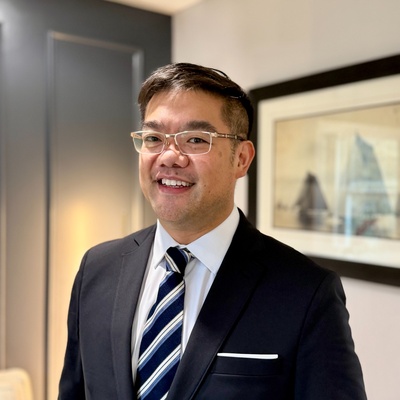
Peterson Huang DMD, MS, FACP, FRCDC
Dr. Peterson Huang is a dual board-certified prosthodontist serving Falls Church and Northern Virginia. He has been recognized as a Top Prosthodontist by Northern Virginia Magazine and Arlington Magazine and is affiliated with the Inova Fairfax Hospital Tumor Board. Dr. Huang focuses on dental implants, full mouth reconstruction, and complex restorative dentistry for patients who need advanced, comprehensive care.
When dental health issues progress beyond routine fillings or preventive cleanings, patients often face decisions that affect their ability to chew comfortably, speak clearly, and preserve their facial structure. Complex dental problems—such as extensive tooth wear, multiple missing teeth, recurring restoration failures, or structural changes following trauma or disease—require a comprehensive diagnostic and therapeutic strategy. Understanding the role of a prosthodontist in Northern Virginia helps patients make informed decisions about advanced restorative treatments and identify when a specialist evaluation is appropriate.
What is Specialty Dental Care and Why Does It Matter?
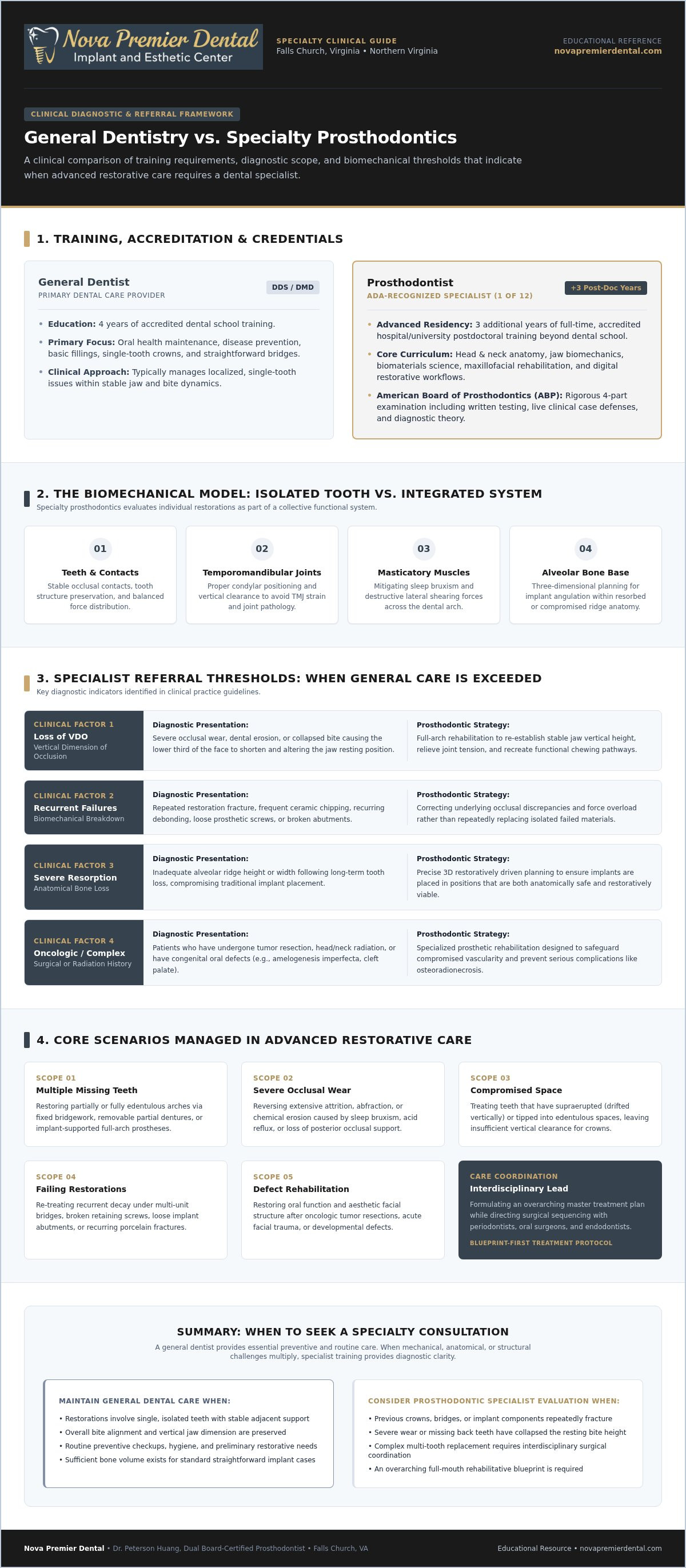
Specialty dental care refers to clinical treatment provided by dental specialists who have completed accredited postdoctoral residency training beyond dental school in a recognized dental specialty. While general dentistry focuses on oral health maintenance, routine disease prevention, basic fillings, and preliminary restorative procedures, specialty prosthodontics concentrates on diagnosing, planning, and executing complex dental restorations and tooth replacements.
When multiple teeth fail or structural breakdown alters jaw mechanics, addressing individual teeth in isolation often leads to unpredictable results. Specialty care evaluates the stomatognathic system—the complex relationship between teeth, jaw joints, nerves, and masticatory muscles—as an integrated biomechanical unit. The objective is not simply to place a restoration, but to re-establish stable occlusion (bite contact), protect remaining natural structures, and provide lasting mechanical function.
The Scope of Advanced Restorative Dentistry
Advanced restorative dentistry addresses systemic and localized dental breakdowns that compromise oral function. Prosthodontists manage cases that standard restorative protocols cannot adequately resolve, including:
- Multiple Missing Teeth: Restoring function across partially edentulous or fully edentulous dental arches using bridges, removable partial dentures, or implant-supported prostheses.
- Severe Occlusal Wear and Collapsed Bite: Correcting extensive attrition, erosion, or abfraction caused by sleep bruxism, acid reflux, or loss of posterior support.
- Compromised Restorative Space: Managing clinical situations where teeth have supraerupted (drifted upward or downward) or tipped into missing spaces, leaving insufficient vertical clearance for crowns or implants.
- Re-treatment of Failing Restorations: Resolving recurrent decay under multi-unit bridges, loose abutments, broken prosthetic screws, or fractured ceramic restorations.
- Congenital and Acquired Defects: Rehabilitating oral structures following tumor resections, trauma, or developmental conditions such as amelogenesis imperfecta or cleft palate.
Managing these complex scenarios requires an interdisciplinary approach. A prosthodontist frequently coordinates care with periodontists, oral and maxillofacial surgeons, and endodontists, formulating an overarching treatment blueprint before surgical or restorative interventions begin.
When a General Dentist Is Not Enough
Many general dentists possess significant restorative skill and comfortably manage single-tooth implants, straightforward crowns, and routine bridge work. However, specific clinical thresholds indicate that a patient's needs exceed the standard scope of general practice.
A specialist referral or consultation is generally advised when:
- There is loss of vertical dimension of occlusion (VDO): When severe wear or collapsed bites cause the lower third of the face to shorten, altering the jaw's resting position and straining the temporomandibular joints (TMJ).
- Prior restorations repeatedly fracture or fail: Recurrent debonding, porcelain chipping, or screw loosening usually points to underlying biomechanical imbalances rather than material defects alone.
- Significant bone resorption complicates implant therapy: Inadequate alveolar ridge width or height requires precise three-dimensional planning to ensure dental implants are placed in anatomically safe, restoratively restorable positions.
- Complex medical histories or oncologic treatment are present: Patients who have received head and neck radiation or surgical resection require specialized prosthetic planning to avoid complications such as osteoradionecrosis.
Attempting extensive oral rehabilitation without addressing functional dynamics can accelerate restoration failure, create chronic joint pain, or compromise remaining healthy bone and soft tissue. In these scenarios, a comprehensive prosthodontic evaluation provides clarity on clinical predictability and long-term prognosis.
The Prosthodontist Advantage: Advanced Training for Complex Care
Prosthodontics is one of the twelve dental specialties recognized by the American Dental Association (ADA). Becoming a prosthodontist requires completing three additional years of rigorous, full-time residency training in an accredited program following graduation from dental school.
During these post-doctoral programs, prosthodontists receive comprehensive clinical and laboratory training in head and neck anatomy, biomaterials science, growth and development, jaw biomechanics, maxillofacial prosthetics, and digital restorative workflows. This specialized education focuses on diagnosing and coordinating full-mouth restorations, balancing mechanical loads, and understanding how dental materials interact with oral tissues over decades of functional use.
At Nova Premier Dental in Falls Church, Dr. Peterson Huang brings advanced prosthodontic training and dual board certification to patients throughout Northern Virginia who require meticulous restorative planning.
Understanding Board Certification in Prosthodontics
While all prosthodontists complete post-doctoral specialty residencies, board certification represents an additional professional milestone. To earn certification by the American Board of Prosthodontics (ABP), a specialist must pass an intensive four-part examination process involving comprehensive written evaluations, rigorous defense of actual patient treatment outcomes before an expert panel, and extensive oral testing on clinical theory and diagnostic acumen.
Maintaining board certification requires ongoing peer review and continuing medical education. For patients evaluating complex restorative treatment options, board certification indicates that a clinician's diagnostic judgment, surgical precision, and prosthetic execution have undergone independent, rigorous evaluation by leading authorities in the field.
The Specialist’s Clinical Perspective
A prosthodontic examination approaches the mouth through a combined lens of biological health, biomechanical stability, and natural aesthetics. Rather than evaluating individual teeth in isolation, a specialist considers:
- Occlusal Forces and Load Distribution: Assessing how chewing forces are distributed across teeth and implants to minimize lateral stress, component fatigue, and porcelain fractures.
- Restorative Space and Clearance: Measuring the three-dimensional physical space available between the upper and lower arches to ensure adequate material thickness for structural integrity.
- Soft Tissue Architecture: Evaluating the health, thickness, and contour of the gingiva to support peri-implant stability and create natural aesthetic emergence profiles.
- Phonetic and Functional Harmony: Designing tooth contours, incisal edge positions, and arch curvature to ensure clear speech and unhindered tongue movement.
By establishing these clinical parameters before treatment begins, a board-certified prosthodontist in Northern Virginia designs restorations that function comfortably and reliably within the patient's individual masticatory system.
Core Services in Advanced Restorative Dentistry
Specialty dental practices deliver focused treatments designed to address moderate to severe dental deterioration. These procedures require comprehensive diagnostics, precise treatment sequencing, and specialized lab fabrication.
Complex Implant Restorations and Oral Reconstruction
Dental implants serve as the primary clinical solution for replacing missing tooth roots and restoring missing teeth without altering adjacent natural structures. However, achieving dependable outcomes requires careful planning regarding implant positioning, angulation, and prosthetic design.
- Single and Multiple Tooth Implants: For isolated missing teeth, specialists design customized abutments and screw-retained restorations that mimic natural tooth emergence and permit thorough hygiene maintenance.
- Full-Arch Fixed Restorations: Solutions such as an All-on-4 permanent denture utilize four to six strategically angled implants to support a complete arch of fixed prosthetic teeth, restoring masticatory capacity for patients with terminal dentition or significant bone loss.
- Full Mouth Reconstruction: Also known as oral reconstruction, this discipline involves systematically restoring every tooth in the maxillary and mandibular arches. Rebuilding worn, fractured, or missing dentition establishes a healthy occlusal scheme and restores lost vertical dimension.
- Precision Dentures and Overdentures: When non-removable solutions are anatomically or financially unsuitable, specialized complete and partial dentures—often stabilized with locator attachments on dental implants—offer retention, facial lip support, and ease of hygienic cleaning.
Prosthodontists routinely manage patients presenting with previously placed implants that have experienced mechanical complications, such as screw loosening, abutment wear, or poorly contoured crowns that cause chronic tissue inflammation. Resolving these issues requires a detailed understanding of implant-abutment interfaces and biomechanics.
Specialized Rehabilitation and Aesthetic Procedures
Advanced prosthodontics also encompasses treatments for unique physiological challenges and aesthetic functional needs:
- Oral Cancer Rehabilitation: Patients undergoing surgical resections or radiation therapy for head and neck cancers often experience significant soft- and hard-tissue loss. Oral cancer rehabilitation uses specialized intraoral prostheses, such as obturators, to close surgical defects between the mouth and nasal cavity, helping restore normal swallowing, chewing, and speech.
- Porcelain Veneers: In a prosthodontic setting, porcelain veneers are planned not merely as surface enhancements, but as conservative restorations designed to restore chipped enamel, protect worn guidance surfaces, and harmonize the smile within the patient's unique facial anatomy.
- Custom Protective Appliances: For patients exhibiting severe nighttime clenching or bruxism, carefully adjusted occlusal guards protect extensive restorative work and stabilize jaw joints.
Evaluating Specialty Dental Practices in Northern Virginia
Patients living in Northern Virginia—including communities such as Falls Church, McLean, Arlington, Great Falls, Vienna, and Tysons—have access to various dental providers. When selecting a specialty practice for extensive reconstruction, assessing specific clinical and diagnostic criteria ensures you receive care appropriate for your clinical circumstances.
Diagnostic Standards and Clinical Environment
Accurate treatment planning for complex restorative procedures relies on specialized diagnostic imaging and diagnostic tools:
- Cone Beam Computed Tomography (CBCT): High-resolution 3D volumetric imaging evaluates bone density, ridge dimensions, nerve canal paths, and maxillary sinus locations. This data is essential for computer-guided implant planning.
- Intraoral Optical Scanning: Digital impression systems capture accurate surface topography without the distortion, discomfort, or material shrinkage associated with conventional impression trays.
- Semi-Adjustable and Fully Adjustable Articulators: Precision mechanical instruments replicate the patient’s exact jaw movements and condylar paths, allowing accurate analysis of bite interferences before fabricating permanent restorations.
- Diagnostic Wax-Ups and Prototypes: Fabricating diagnostic models allows clinician and patient to preview proposed tooth shapes, lengths, and bite relationships in resin before any permanent tooth alteration occurs.
The clinical environment should be calm, structured, and focused on individualized patient evaluation rather than high-volume scheduling, ensuring adequate time is allocated for careful assessment and procedure execution.
Experience with Complex Patient Needs
When consulting with a prosthodontist, consider the following clinical evaluation factors:
- Documented Case Experience: Ask to review clinical cases involving conditions similar to your own. A dedicated practice will provide transparent examples of prior full-arch restorations or worn dentition treatments.
- Interdisciplinary Coordination: Verify that the practice works closely with qualified oral surgeons, periodontists, and medical providers when your case requires coordinated, multi-stage intervention.
- Focus on Material Selection: A prosthodontist should explain why specific dental materials—such as monolithic zirconia, lithium disilicate, high-noble alloys, or composite resins—are selected based on your bite force, cosmetic goals, and opposing tooth enamel.
Treatment Planning and Care at Nova Premier Dental
At Nova Premier Dental in Falls Church, advanced restorative treatment begins with thorough diagnostic information gathering. Rather than rushing into irreversible dental procedures, care follows a predictable, sequenced clinical pathway designed to maximize structural longevity.
Structured Treatment Sequencing and In-House Payment Options
Complex dental rehabilitation requires deliberate sequencing to ensure tissues heal adequately and provisional restorations function comfortably before final prosthetics are fabricated:
- Comprehensive Diagnostic Workup: Digital impressions, photographic records, bite registrations, and 3D CBCT scans are gathered to evaluate remaining tooth structure and bone volume.
- Phase I Stabilization: Controlling active periodontal inflammation, removing hopeless roots, and addressing active caries to establish a healthy biological foundation.
- Phase II Provisionalization: Fabricating diagnostic provisional restorations that establish the proposed bite height, phonetic parameters, and cosmetic contours. This phase allows the patient to adapt to their new bite over weeks or months.
- Phase III Definitive Restoration: Constructing permanent crowns, bridges, or implant prostheses using high-strength restorative materials accurately mapped to the approved provisional design.
- Phase IV Maintenance and Occlusal Protection: Implementing ongoing professional cleanings, monitoring peri-implant tissues, and fabricating a custom night guard to safeguard the investment against clenching forces.
Because comprehensive restorative care involves extensive laboratory fees and specialized clinical procedures, financial clarity is an important part of the treatment discussion. Nova Premier Dental offers in-house payment plans for qualifying patients, allowing treatment costs to be paid over several months while patients enjoy their new smile. This structured approach helps patients manage the cost of multi-phase reconstructive therapy comfortably.
What to Expect During a Specialist Consultation
Your initial consultation with Dr. Huang provides a focused, transparent evaluation of your oral health. During this appointment, you will review your dental concerns, discuss past treatment failures, and undergo a comprehensive physical examination of your dentition, periodontal tissues, and jaw joints.
Following this examination, you receive an objective appraisal of your clinical options, including conservative alternatives, anticipated timeframes, maintenance requirements, and potential limitations of each approach. This process ensures you understand every aspect of your treatment plan before making a commitment.
Frequently Asked Questions
What is the difference between a general dentist and a prosthodontist?
All prosthodontists are dentists, but not all dentists are prosthodontists. While general dentists complete four years of dental school, prosthodontists complete an additional three years of full-time post-doctoral specialty residency accredited by the ADA. This specialized education focuses exclusively on tooth replacement, complex restorative treatment, oral biomechanics, and aesthetic rehabilitation.
When should I see a prosthodontist instead of a general dentist for dental implants?
A prosthodontist evaluation is beneficial if you require multiple implants, full-arch tooth replacement, have experienced substantial bone loss, or possess a complex bite pattern that increases the risk of component wear or failure. Prosthodontists specialize in the reverse-planning process: determining the precise shape and position of the planned teeth first, and then mapping out exact implant locations to support those restorations.
How long does a full mouth reconstruction take?
Depending on clinical complexity, a full mouth reconstruction typically requires anywhere from three months to more than a year. Cases involving bone grafting, tissue healing, or implant integration require deliberate staging, including a period in provisional restorations to verify bite stability and speech comfort before final ceramic restorations are placed.
Can a prosthodontist fix restorations that have failed?
Yes. A substantial portion of prosthodontic practice involves diagnosing and resolving recurrent complications from prior dental procedures, such as broken multi-unit bridges, failing single-tooth restorations, poorly fitting dentures, or unstable bites. A specialist evaluates the underlying biomechanical cause of failure to prevent similar problems in the re-treatment plan.
How do I care for and maintain extensive restorative work?
Advanced restorations require consistent maintenance, including daily plaque removal with specialized interdental brushes, non-abrasive toothpastes, and water flossers around implant margins. Regular professional hygiene visits and occlusal monitoring are essential to assess screw torque, evaluate tissue health, and adjust bite contacts as natural aging changes occur.
If you have questions about a complex restorative or prosthodontic concern, Nova Premier Dental in Falls Church provides prosthodontic specialty care for patients throughout Northern Virginia. Contact our office to schedule a consultation to discuss your oral health goals and review your treatment options.
Disclaimer
The information provided on this website and blog is intended for general educational and informational purposes only and should not be considered dental or medical advice, diagnosis, or treatment. Reading content on this website does not establish a doctor-patient relationship with Nova Premier Dental or Dr. Peterson Huang. Dental conditions and treatment needs vary from patient to patient. Individuals should consult directly with a qualified dental professional for personalized evaluation, diagnosis, and treatment recommendations. Do not delay seeking professional dental care based on information found on this website. While we strive to provide accurate and up-to-date information, no guarantee is made regarding the completeness, accuracy, or applicability of the content. Treatment outcomes may vary depending on individual circumstances. If you are experiencing a dental emergency or urgent oral health concern, please contact a licensed dental professional immediately or call 911 in the event of a medical emergency.


