
Article by
Peterson Huang DMD, MS, FACP, FRCDC
Dr. Peterson Huang is a dual board-certified prosthodontist serving Falls Church and Northern Virginia. He has been recognized as a Top Prosthodontist by Northern Virginia Magazine and Arlington Magazine and is affiliated with the Inova Fairfax Hospital Tumor Board. Dr. Huang focuses on dental implants, full mouth reconstruction, and complex restorative dentistry for patients who need advanced, comprehensive care.
What if the secret to your smile's longevity isn't actually the teeth themselves, but the clinical care of the bone and tissue beneath them? For many patients, the transition to advanced restorative solutions brings a mix of relief and lingering anxiety about potential complications like peri-implantitis or prosthetic staining. You likely invested in this procedure to regain your quality of life, yet you might feel uncertain about the specific protocols for how to clean implant supported dentures compared to traditional removable options. At Nova Premier Dental, we understand that maintaining a high-end reconstruction requires a specialized approach that goes beyond basic hygiene.
In this guide, you'll master the clinical protocols necessary to protect your investment and ensure lifelong oral health. We will provide an expert-approved daily routine designed to prevent bone loss and eliminate odor-causing bacteria. By following these specialist-led steps, you can enjoy a stain-free smile and the confidence that your jawbone remains healthy for years to come. Whether you're visiting our homepage to learn about our comprehensive services or looking to meet Dr. Huang to discuss your restorative needs, our goal is to empower you with professional knowledge. As a leading prosthodontist in Northern Virginia, we are committed to providing the specialized care and in-house payment plans for qualifying patients that make elite dental health both accessible and sustainable.
Key Takeaways
- Differentiate between natural plaque and implant biofilm to safeguard against the clinical risks of peri-implantitis and bone loss.
- Implement a rigorous sanitization protocol for removable overdentures to preserve the functional lifespan of locator attachments and O-rings.
- Master the specialized tools and techniques for how to clean implant supported dentures in a fixed configuration, specifically targeting the prosthetic-tissue junction.
- Recognize the early clinical indicators of implant distress that necessitate professional intervention to maintain your restorative investment.
- Leverage the clinical excellence of a dual board-certified specialist to ensure your maintenance routine aligns with the highest standards of oral health.
The Science of Hygiene: Why Implant-Supported Dentures Require Specialized Care
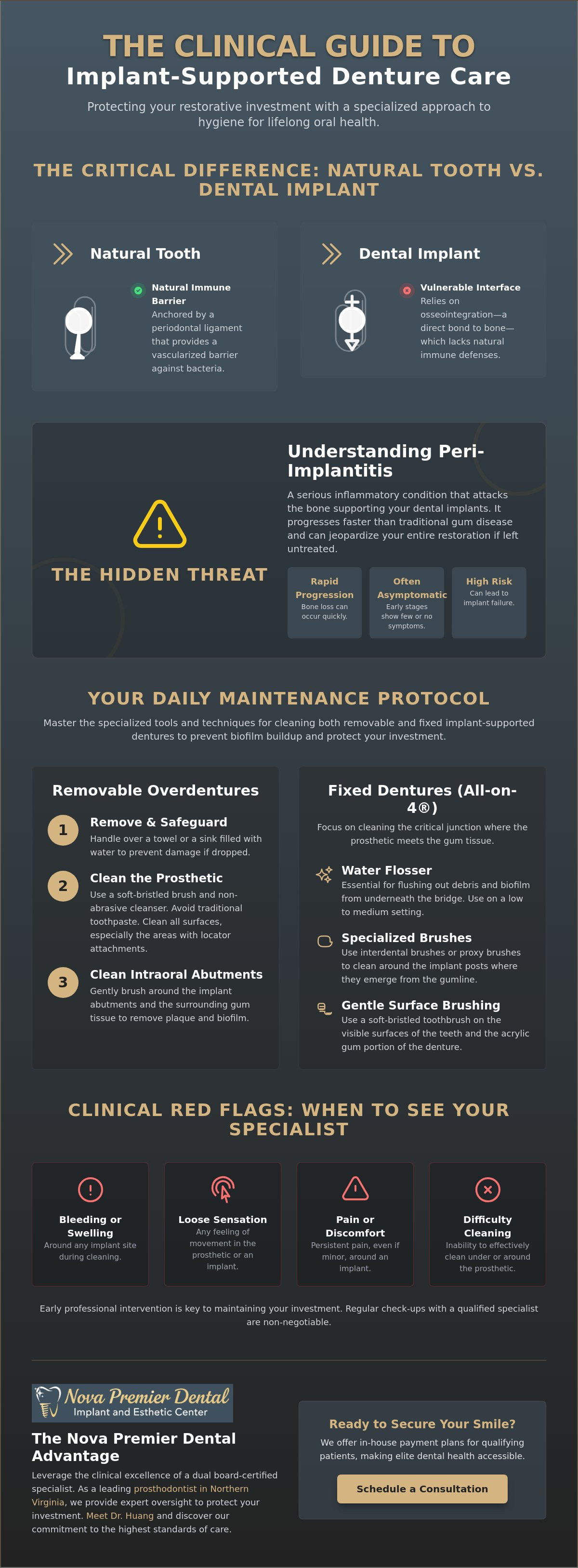
Maintaining a restorative masterpiece requires a shift in perspective from traditional oral hygiene to clinical maintenance. While many patients assume that learning how to clean implant supported dentures is identical to caring for natural teeth or conventional plates, the biological reality is far more complex. Natural teeth are anchored by a periodontal ligament that provides a vascularized barrier against bacteria. In contrast, a dental implant overview reveals that these prosthetics rely on osseointegration, a direct structural connection between living bone and a titanium post. This interface is highly successful but lacks the natural immune defenses of a tooth's ligament, making specialized hygiene protocols essential for long-term stability.
Understanding Peri-Implantitis and Bone Health
Peri-implantitis is a site-specific inflammatory condition that mirrors traditional gum disease but progresses with greater speed and severity. When bacteria accumulate around the implant site, they form a resilient biofilm that can cause the surrounding gum tissue to pull away. This inflammation eventually leads to the degradation of the supporting bone. Because the titanium post depends on a rigid bond with the jaw, even minor bone loss can jeopardize the entire reconstruction. Regular monitoring by a specialist like Dr. Peterson Huang is critical because early-stage peri-implantitis is often asymptomatic. As a dual board-certified expert, Dr. Huang uses advanced diagnostic tools to ensure the integrity of your dental implants remains uncompromised by hidden bacterial colonies.
Biofilm Management vs. Simple Brushing
Effective maintenance centers on the mechanical disruption of biofilm rather than just surface-level rinsing. Biofilm is a sophisticated community of microorganisms that adheres stubbornly to prosthetic surfaces. Simply using traditional denture cleaners can be counterproductive; many over-the-counter products are too abrasive for the delicate titanium abutments or the specialized acrylics used in modern prosthodontics. Scratches on these components create microscopic "safe harbors" where bacteria can multiply rapidly.
A meticulous approach to how to clean implant supported dentures involves using non-abrasive agents and specialized tools designed to navigate the unique architecture of your restoration. This clinical mindset ensures you are protecting the chemical and physical properties of the titanium. At our practice, we emphasize that your daily routine is the first line of defense in a broader strategy. Partnering with a prosthodontist in Northern Virginia allows for the professional oversight needed to manage these biological factors, ensuring your functional beauty lasts a lifetime.
How to Clean Removable Implant-Supported Dentures (Overdentures)
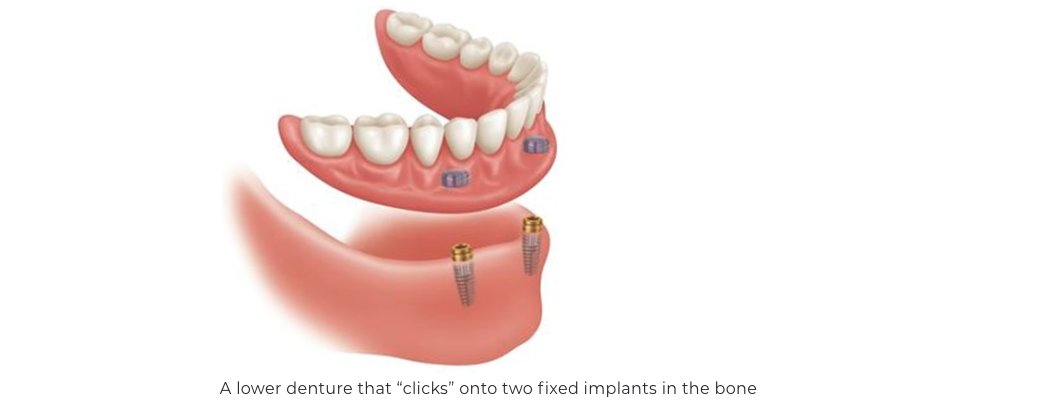
Removable overdentures provide a sophisticated balance of stability and accessibility, yet their maintenance requires a more nuanced approach than traditional dental plates. The success of this system relies on the precision of the connection between the denture and the underlying implants. Understanding how to clean implant supported dentures in a removable format involves managing both the prosthetic architecture and the intraoral abutments that provide retention.
The Daily Removable Protocol
Daily hygiene begins with a simple clinical safeguard: fill the sink with water or place a soft towel at the bottom. This prevents accidental fracture if the prosthetic is dropped during handling. Use a soft-bristled brush and a non-abrasive cleanser to gently remove food debris from all surfaces. Avoid standard toothpaste, as its abrasive particles can create micro-scratches on the acrylic that harbor bacteria. After every meal, a quick rinse helps prevent buildup within the attachment housings. Soaking is equally vital for sanitization. Use specialist-approved solutions that are gentle on metal housings. Harsh chemicals can corrode the housing or degrade the nylon inserts that provide the secure snap fit.
Maintaining the Abutments and Attachments
While the prosthetic is soaking, focus on the intraoral components. The metal abutments protruding from your gums require meticulous mechanical debridement. Use a gauze strip or a small, ultra-soft brush to clean around each post. This prevents the formation of calculus that can interfere with the prosthetic's seating. According to the Mayo Clinic guide to dental implants, maintaining the health of the surrounding tissue is paramount for long-term success. Check your nylon O-rings daily for signs of wear, such as fraying or a loss of retention. If the denture feels loose, it may indicate that the inserts need replacement. For any sudden changes in fit, seeking emergency denture repair in Falls Church ensures your smile remains functional and secure.
Mastering how to clean implant supported dentures is a commitment to your future health. We offer in-house payment plans for qualifying patients to ensure that routine maintenance and prosthetic updates remain manageable as you enjoy your restored smile. If you notice persistent irritation or a change in how your overdenture clicks into place, you can contact our clinical team to schedule a maintenance check-up and ensure your attachments are performing optimally.
Maintaining Fixed Implant-Supported Dentures: The All-on-4® Protocol
Fixed restorations, often referred to as the All-on-4® protocol, provide the closest experience to natural teeth in terms of both function and aesthetics. However, because these prosthetics aren't removed by the patient, they present unique hygiene challenges that traditional dentures do not. The "junction" where the permanent denture meets the soft tissue is a primary site for food entrapment and biofilm accumulation. Mastering how to clean implant supported dentures in a fixed configuration requires specialized instruments and a methodical approach to reach these hidden areas effectively.
Tools of the Trade for Fixed Restorations
A standard toothbrush is insufficient for a fixed restoration. You'll need a water flosser (oral irrigator) to flush debris from the narrow space between the bridge and the gums. This tool is the most effective way to disrupt biofilm in areas where physical bristles cannot reach. For mechanical cleaning, interproximal (proxy) brushes are essential. These small, tapered brushes allow you to clean around the titanium posts and the underside of the prosthetic. Additionally, using "Super Floss" or specialized threaders allows you to navigate under the bridge to ensure the entire surface is sanitized. As noted by the American College of Prosthodontists, maintaining these components is vital for preventing the inflammatory response that leads to implant failure.
The 'Under-the-Bridge' Cleaning Technique
The goal of your daily routine is to maintain the health of the prosthetic-tissue interface. This requires an angled brush to reach the posterior implants, which are often the most difficult to access. You should guide your water flosser at a 90-degree angle to the gum line, moving slowly across the entire arch. Twice-daily diligence is a non-negotiable aspect of successful oral reconstruction. While cleaning, perform a brief visual inspection. Look for signs of redness, swelling, or gum recession around the implant sites. Early detection of these red flags can prevent minor irritation from escalating into clinical bone loss.
The choice of cleaning agent is also critical. Standard whitening toothpastes are often too abrasive for the materials used in fixed prosthetics. These products can dull the finish of your teeth and create microscopic grooves that attract stains. Instead, use a non-abrasive gel or a specialty implant paste. This protects the aesthetic brilliance of your smile while ensuring the surface remains smooth and resistant to plaque. If you're concerned about the cost of maintaining these high-end restorations, our practice offers in-house payment plans for qualifying patients, allowing you to prioritize your health without financial stress.
Professional Maintenance and Recognizing Clinical Red Flags
While a meticulous daily routine is the foundation of health, it accounts for only half of the clinical equation for long-term implant success. Even the most diligent patients cannot reach every microscopic crevice where biofilm matures. Professional dental exams and cleanings in Falls Church are essential to address these sequestered areas. We recommend a professional maintenance schedule every three to six months, depending on your specific clinical risk factors and the complexity of your restoration. These visits allow us to perform deep debridement and assess the structural integrity of the prosthetic components that you cannot see during your home routine.
The Specialist's Professional Cleaning
A specialized prosthodontic cleaning differs significantly from a standard hygiene appointment. We utilize non-metallic instruments, typically crafted from high-grade resins or carbon fiber, to perform mechanical debridement without compromising the polished surface of the titanium abutments. Traditional metal scalers can create microscopic scratches that attract more bacteria, so our choice of material is a deliberate clinical safeguard. During these sessions, we also check the torque and stability of the attachment screws to ensure the prosthetic remains perfectly calibrated to your bite. Annual radiographic monitoring is another non-negotiable step. These X-rays allow us to visualize the bone levels around the implants, ensuring that osseointegration remains stable and healthy beneath the gum line.
When to Call Nova Premier Dental
Learning how to clean implant supported dentures also involves developing an awareness of clinical red flags. Early intervention is the most effective way to prevent minor irritation from escalating into implant failure. You should contact our office immediately if you notice bleeding during your brushing or flossing routine. This is often the first sign of peri-implant mucositis, a reversible precursor to more serious infection. Other warning signs include a persistent bad taste or odor that doesn't resolve with cleaning, which may indicate a biofilm trap beneath the bridge. If a fixed prosthetic feels loose or "clicks" during chewing, it often signifies a loosened screw or a change in the underlying support structure that requires immediate professional calibration.
We believe that elite restorative care should be accessible. Our practice offers in-house payment plans for qualifying patients, allowing you to manage the cost of these essential maintenance visits over several months. This ensures you can focus on your health while enjoying the full benefits of your smile. If you've noticed any changes in the comfort or stability of your restoration, schedule your professional maintenance exam today to protect your long-term oral health.
The Nova Premier Dental Advantage for Northern Virginia Patients
Choosing the right clinical environment for your restoration is as critical as the daily maintenance protocols we've explored. At Nova Premier Dental, we provide a level of specialization that is rare in the region. Dr. Peterson Huang is a dual board-certified specialist, holding advanced certifications in both prosthodontics and oral implantology. This elite status means that every phase of your care, from the surgical placement of dental implants to the final prosthetic design, is managed by a single, highly educated expert. This continuity of care eliminates the communication gaps often found when multiple offices are involved, ensuring a more predictable and successful clinical outcome.
Expertise You Can Trust in Falls Church
Patients frequently travel from McLean and Arlington to our Falls Church practice because they value the precision that only a specialist can provide. When one practitioner manages both the surgery and the restorative components, the aesthetic and functional integration is significantly enhanced. Our facility is equipped with advanced diagnostic technology, including 3D CBCT imaging, which allows for meticulous planning of each case. We invite you to review our before and after gallery to witness the transformative results we achieve for our patients. We don't simply replace missing teeth; we perform comprehensive reconstructions designed to last a lifetime.
Managing the Cost of Your New Smile
A full mouth reconstruction is a significant investment in your long-term health and self-esteem. We advocate for a "done once, done right" philosophy, which focuses on high-quality materials and expert placement to avoid the future costs of prosthetic failure. To make this level of elite care accessible, our practice offers in-house payment plans for qualifying patients. These plans are designed to be transparent and manageable, allowing you to spread the cost of your treatment over several months. This framework ensures you can prioritize your oral health and begin enjoying the benefits of your new smile without unnecessary financial delay.
Our clinical team provides individualized training on how to clean implant supported dentures, bridging the gap between professional surgery and your daily home care. Whether you are visiting our homepage to learn about our services or looking to meet Dr. Huang for a consultation, you'll find a team dedicated to excellence. As a leading prosthodontist in Northern Virginia, we are here to support your journey toward functional beauty and lasting health.
Protecting Your Restorative Investment
Mastering how to clean implant supported dentures is the most critical step you can take to preserve your jawbone health and the aesthetic brilliance of your smile. By differentiating between simple surface cleaning and clinical biofilm disruption, you ensure the longevity of your oral reconstruction. Whether you are managing a removable overdenture or a fixed bridge, your daily diligence combined with professional oversight forms a comprehensive shield against peri-implantitis. As a dual board-certified specialist, Dr. Peterson Huang provides the elite expertise required to monitor these complex biological systems throughout your life.
At Nova Premier Dental, we are dedicated to supporting your journey with advanced technology and personalized maintenance protocols. We believe that elite clinical results should be accessible; our practice offers in-house payment plans for qualifying patients to help you comfortably manage the cost of care. If you are looking for a prosthodontist in Northern Virginia who prioritizes functional beauty, we are ready to assist you. Schedule your specialized implant consultation with Dr. Huang today to ensure your smile remains secure, healthy, and radiant for years to come.
Frequently Asked Questions
Can I use regular toothpaste on my implant-supported dentures?
You should avoid using regular toothpaste on your prosthetic because it contains abrasive agents designed for natural enamel. These particles can create microscopic scratches on the acrylic and titanium components; these scratches eventually harbor bacteria and cause dulling of the finish. Instead, use a non-abrasive gel or a specialty implant paste recommended by a specialist like Dr. Peterson Huang to maintain the smooth, polished surface of your restoration.
How often should I see a prosthodontist for professional cleaning?
Most patients require a professional clinical maintenance visit every three to six months. While your home routine is essential, a prosthodontist in Northern Virginia must perform deep debridement of the implant sites and check the torque of attachment screws. These frequent visits allow for early detection of biological complications and ensure your dental implants remain securely integrated. Our practice offers in-house payment plans for qualifying patients to make this essential care accessible.
Do I need to take my implant-supported dentures out at night?
If you have a removable overdenture, you must remove it nightly to allow your gum tissues to rest and to soak the prosthetic in a sanitizing solution. However, fixed restorations like an All-on-4 bridge are designed to remain in place permanently. Regardless of the type, mastering the specific protocol for how to clean implant supported dentures before sleep is vital for preventing the overnight accumulation of pathogenic biofilm and maintaining fresh breath.
What is the best mouthwash to use with dental implants?
The ideal mouthwash for dental implants is an alcohol-free, non-staining antimicrobial rinse. Alcohol can dry out the oral mucosa and potentially degrade the specialized materials used in your complete or partial dentures. We often recommend therapeutic rinses containing chlorhexidine for short-term healing or essential oil-based, alcohol-free formulas for daily maintenance to keep the bacterial load low without causing irritation or tissue dryness.
Can I use an electric toothbrush on my All-on-4 fixed bridge?
You can safely use an electric toothbrush on a fixed bridge, provided you select a soft-bristled head and use a gentle technique. High-quality electric brushes are excellent for disrupting biofilm along the junction where the prosthetic meets the gum line. However, the brush alone cannot reach every area; you must supplement it with a water flosser and interproximal brushes to ensure the titanium posts and the underside of the bridge are thoroughly sanitized.
Why do my implant dentures have a bad smell?
A persistent odor usually indicates a buildup of bacterial biofilm or trapped food debris in hard-to-reach areas. If you're struggling with how to clean implant supported dentures effectively, bacteria can colonize the interface between the prosthetic and the gums, leading to volatile sulfur compounds. This odor is often an early warning sign of inflammation or infection, necessitating a professional evaluation at our homepage to prevent clinical complications and safeguard your health.
What should I do if my implant-supported denture feels loose?
If your restoration feels unstable, you should contact Nova Premier Dental immediately for a clinical assessment. A loose feeling can signify worn nylon inserts in an overdenture or a loosened prosthetic screw in a fixed bridge. Ignoring this change can lead to uneven pressure on the implants and potential bone loss. We offer emergency denture repair in Falls Church to quickly restore the security and function of your smile.
Are there specific foods I should avoid to keep my dentures clean?
You should minimize the consumption of extremely sticky or hard foods that can become lodged in the prosthetic's "trap" areas or damage the attachments. Foods like caramel, taffy, or hard nuts can put excessive stress on the titanium-to-bone bond and make the cleaning process significantly more difficult. Maintaining a diet of manageable foods ensures that your daily hygiene remains effective and that your oral reconstruction remains structurally sound for years to come.
Disclaimer
The information provided on this website and blog is intended for general educational and informational purposes only and should not be considered dental or medical advice, diagnosis, or treatment. Reading content on this website does not establish a doctor-patient relationship with Nova Premier Dental or Dr. Peterson Huang. Dental conditions and treatment needs vary from patient to patient. Individuals should consult directly with a qualified dental professional for personalized evaluation, diagnosis, and treatment recommendations. Do not delay seeking professional dental care based on information found on this website. While we strive to provide accurate and up-to-date information, no guarantee is made regarding the completeness, accuracy, or applicability of the content. Treatment outcomes may vary depending on individual circumstances. If you are experiencing a dental emergency or urgent oral health concern, please contact a licensed dental professional immediately or call 911 in the event of a medical emergency.


