

Article by
Peterson Huang DMD, MS, FACP, FRCDC
Dr. Peterson Huang is a dual board-certified prosthodontist serving Falls Church and Northern Virginia. He has been recognized as a Top Prosthodontist by Northern Virginia Magazine and Arlington Magazine and is affiliated with the Inova Fairfax Hospital Tumor Board. Dr. Huang focuses on dental implants, full mouth reconstruction, and complex restorative dentistry for patients who need advanced, comprehensive care.
You might be surprised to learn that placing a dental implant is often biologically less invasive than a routine tooth extraction because the jawbone lacks the dense nerve endings found in natural teeth. Many patients who visit Nova Premier Dental arrive with significant anxiety, asking are dental implants painful or if the recovery will force them to miss several days of work. It's entirely natural to feel apprehensive about surgical sensations, but modern clinical techniques have transformed the patient experience into one of predictable comfort.
As a board-certified prosthodontist in Northern Virginia, Dr. Huang is dedicated to providing a level of precision that prioritizes your comfort and long-term restorative success. This guide explores the sophisticated pain management protocols we employ, including 3D-guided surgery that minimizes tissue trauma and supports the 97.83% success rate recently documented in the 2026 Journal of Functional Biomaterials. You'll learn exactly what to expect during the healing phase and how our in-house payment plans make managing the cost of your specialized care as seamless as the procedure itself.
Key Takeaways
- Learn why the biological structure of the jawbone makes surgical placement less sensitive than the dense nerve endings found in natural teeth.
- Discover why the clinical reality of whether are dental implants painful is often more manageable than a standard tooth extraction or root canal.
- Review the specialized 72-hour recovery protocol used by a prosthodontist in Northern Virginia to minimize post-operative swelling.
- Understand how advanced 3D imaging and guided surgery at Nova Premier Dental reduce tissue trauma for a more predictable and comfortable experience.
- Learn about our in-house payment plans that allow you to comfortably manage the cost of your restorative care over several months.
The Fear vs. The Reality: Are Dental Implants Actually Painful?
The visceral image of "metal in bone" often triggers an immediate stress response. It's completely understandable why many patients hesitate, wondering are dental implants painful when they first consider tooth replacement. This mental association typically stems from a misunderstanding of how the body perceives stimuli in different tissues. In reality, dental implants represent a highly controlled, sophisticated restorative process rather than a traumatic surgery.
At Nova Premier Dental, Dr. Peterson Huang has spent years refining the patient experience in Falls Church to bridge the gap between clinical reality and patient perception. There is a distinct difference between "clinical discomfort," which is the physical sensation of the body healing, and "perceived pain," which is often amplified by fear. By utilizing advanced diagnostics and a meticulous approach, we ensure that the biological reality of the procedure is far more comfortable than most patients anticipate.
The Psychological Barrier of Dental Anxiety
Anticipatory anxiety is often the most significant obstacle to restorative health. Research suggests that the stress leading up to a dental appointment can heighten a person's sensitivity to touch and sound. We've designed our modern facility to mitigate these stressors from the moment you walk through the door. A personalized treatment plan is more than just a clinical roadmap; it's a tool for transparency. By outlining every detail, we remove the "unknown" factors that fuel fear. These plans often include:
- Detailed 3D scans showing the precise placement of the restorative hardware.
- A step-by-step timeline of the healing and osseointegration process.
- Customized sedation and comfort protocols tailored to your specific health history.
The Immediate Answer: Comfort During the Procedure
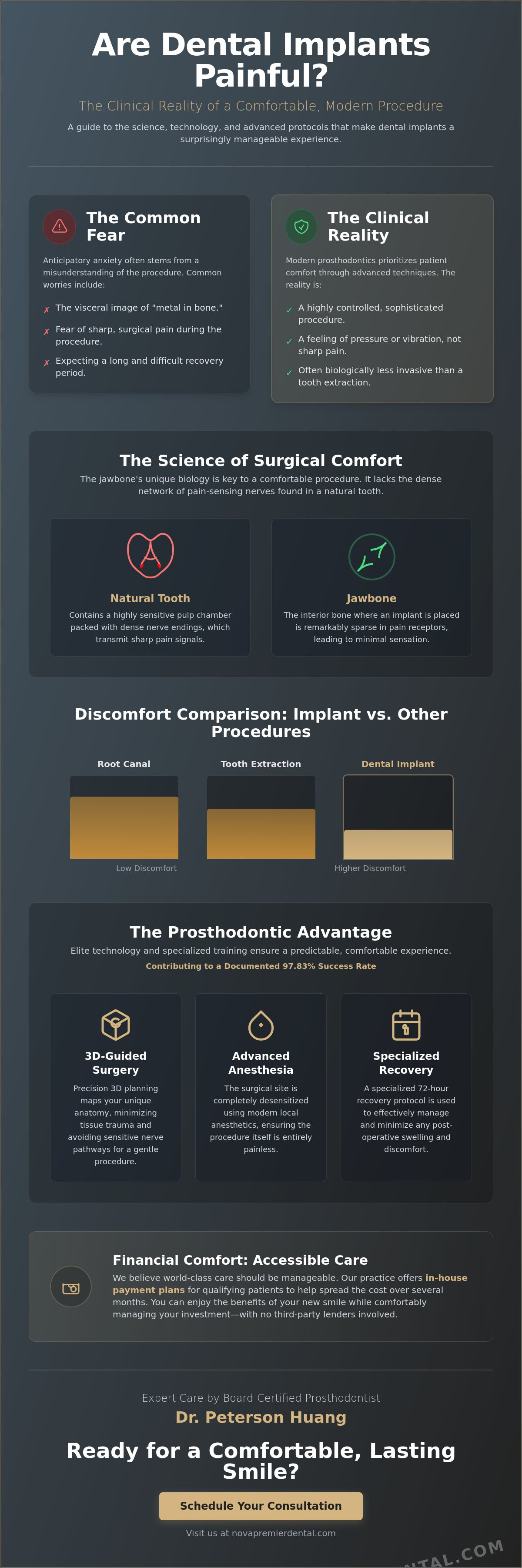
During the actual placement, the area is completely desensitized using advanced local anesthesia, making the procedure entirely painless. You won't feel any sharp sensations or cutting. Instead, most patients report a feeling of "pressure" or "vibration" as the implant is positioned. To understand the foundational science, it's helpful to look at what dental implants are and how they integrate with the jawbone. Because the interior of the bone has very few sensory nerve endings, the site doesn't transmit pain signals the way a cavity or an infected tooth does. Modern anesthesia techniques have effectively made surgical pain a relic of the past, ensuring you remain comfortable throughout the entire session.
The Science of Surgical Comfort: Why Bone Doesn’t Feel Pain Like Teeth Do
To understand the biological reality of restorative surgery, one must first look at the unique nerve distribution of the human face. Patients who wonder are dental implants painful are often relieved to learn that the jawbone is fundamentally different from a natural tooth. While a tooth contains a highly sensitive center known as the pulp, the interior jawbone is remarkably sparse in pain-sensing receptors. This biological paradox means that while a toothache can be agonizing, the placement of a sterile titanium post into the bone typically results in a sensation of dull awareness rather than sharp distress.
A clear understanding of how dental implant surgery is done highlights why this biological difference is so critical. By utilizing precision 3D planning at our Falls Church practice, we can map out your unique anatomy before the procedure even begins. This ensures that the implant is positioned with mathematical accuracy, avoiding sensitive nerve pathways and minimizing any disruption to the surrounding tissues. When you choose a Prosthodontist in Northern Virginia, you're opting for a specialist who uses these elite techniques to prioritize your comfort throughout the restorative journey.
Anatomy 101: Nerve Distribution in the Jaw
The primary concern for any specialist is the protection of the alveolar nerve, which runs through the lower jaw. Because we use advanced imaging to visualize this nerve in three dimensions, we can maintain a safe distance during the placement of dental implants. Interestingly, removing a diseased tooth is often more physically taxing on the body than placing an implant. An extraction involves the detachment of ligaments and the manipulation of sensitive nerve endings in the tooth socket, whereas an implant is placed into the cortical bone, which lacks those same receptors. This anatomical fact is the primary reason why the question are dental implants painful is met with such reassuring clinical data. If you're ready to see the functional beauty of these results, you might explore our before and after cases.
Advanced Sedation Options for Total Relaxation
While local anesthesia is highly effective at numbing the surgical site, we recognize that many patients require an extra layer of peace. Comfort is a clinical priority in specialized prosthodontics, not an afterthought. We offer various sedation levels that allow patients with high anxiety to essentially nap through their surgery. This ensures that your experience is defined by total relaxation rather than the sounds or sensations of the clinical environment. By combining these advanced sedation options with meticulous surgical techniques, we transform a complex reconstructive procedure into a predictable and stress-free appointment.
Comparing Discomfort: Dental Implants vs. Extractions and Root Canals
When evaluating if are dental implants painful, it helps to view the procedure through a comparative lens. In a clinical discomfort scale, most patients find the placement of an implant significantly easier than a root canal or a complex wisdom tooth extraction. This is primarily because an infected tooth is surrounded by active inflammation and pressurized bacteria, which heightens sensitivity. Conversely, implant surgery is a sterile, elective procedure performed on healthy, prepared tissue. Our oral reconstruction protocols at Nova Premier Dental prioritize the gentle handling of soft tissues, which dramatically reduces the body's inflammatory response.
Clinical observations regarding pain or discomfort after dental implant surgery indicate that the average patient experiences only mild soreness that is easily managed. The biological reason for this manageable recovery is the lack of trauma to the periodontal ligament. This ligament is the structure that causes the most distress during a traditional extraction. By avoiding the mechanical force required to "pull" a tooth, we preserve the surrounding architecture and minimize the signals your body sends to indicate pain.
Why an Implant is Often "Easier" Than an Extraction
An extraction is a subtractive process that involves mechanical force to detach a tooth from its socket. In contrast, an implant is an additive process. It's a precise, controlled placement into a site that has been carefully prepared with mathematical accuracy. If we perform immediate implant placement following an extraction, we can often reduce the total number of "sore days" by combining the healing phases into a single window. This approach allows you to move directly into the restorative phase without multiple separate surgeries, preserving both your comfort and your jawbone structure.
The Role of Precision in Minimizing Trauma
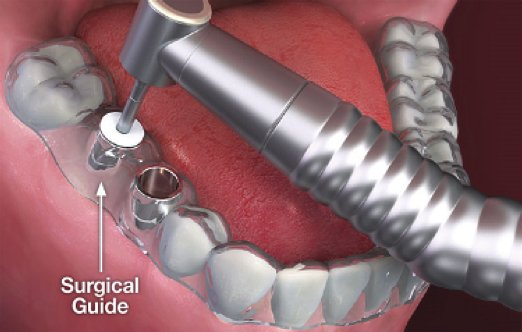
Dr. Huang utilizes computer-generated surgical guides that allow for a minimally invasive approach. These guides act as a GPS for the procedure, making the surgery faster and far more accurate than traditional methods. Shorter surgery times aren't just about convenience; they directly correlate to less post-operative swelling and a faster return to your daily routine. Seeing a specialist who performs these complex reconstructions daily ensures that every movement is optimized for your comfort. If you're concerned about how your specific case might feel, we invite you to contact our office for a specialized assessment.
Managing the Healing Phase: What to Expect During Recovery
Most patients find that the recovery following a reconstructive procedure at Nova Premier Dental is far more manageable than they initially feared. While the question are dental implants painful is a common concern during the planning phase, the post-operative experience is typically defined by mild tenderness. As a prosthodontist in Northern Virginia, Dr. Huang provides a specialized recovery protocol to ensure every patient feels supported during the healing window. This period generally lasts about 72 hours, during which the body begins the initial stages of integrating the new restorative hardware.
The First 72 Hours: A Specialist’s Protocol
The first three days are the most critical for managing inflammation. We recommend a proactive approach that begins immediately after you leave our office. Applying cold compresses to the cheek in 20-minute intervals for the first 24 hours is the most effective way to prevent swelling before it starts. Keeping your head elevated, even while sleeping, helps reduce localized pressure at the surgical site. Most of our patients find that standard over-the-counter relief is entirely sufficient to manage any minor discomfort during this brief period. Rest is essential; giving your body the space to heal without the stress of a heavy workload or intense exercise will accelerate your return to normal function.
You should be able to distinguish between normal healing sensations and potential complications. A dull, manageable ache or slight swelling is a standard clinical marker of progress. However, if you experience sharp pain that intensifies after the fourth day, or if you develop a fever, these are signs that you should contact our office immediately. Our commitment to your care doesn't end when the surgery is over. We monitor your progress closely to ensure that your path to a restored smile remains on track.
Professional Aftercare and Long-Term Comfort
Nutrition plays a vital role in the success of your dental implants. Adhering to a soft food diet for the first week protects the surgical site from mechanical stress and allows the delicate gum tissue to close properly. If your treatment plan included a bone graft to provide a more stable foundation, you might notice a slightly different sensation of fullness during the first few days. This is a normal part of the oral reconstruction process.
We want our patients to focus on their health rather than logistical hurdles. That's why we offer in-house payment plans for qualifying patients. These plans allow you to manage the cost of your care over several months while you're already enjoying the functional benefits of your new smile. Once the site has fully healed, your implant should feel exactly like a natural tooth. It becomes a permanent, painless, and functional part of your smile. If you're ready to begin this journey toward a healthier mouth, schedule a consultation with our specialized team today.
The Prosthodontic Advantage: Elite Care for a Comfortable Smile
While the biological facts and surgical advancements provide the foundation for a comfortable experience, the most critical variable in the question are dental implants painful is the expertise of the clinician. A board-certified prosthodontist in Northern Virginia possesses a level of specialized training that goes far beyond general dentistry. This elite education focuses specifically on the complex relationship between jawbone structure, soft tissue health, and the mechanics of a perfect bite. At Nova Premier Dental, we believe that clinical excellence is the only way to ensure a truly patient-centric outcome.
Dr. Huang’s approach combines high-level technical proficiency with a commitment to individualized care. By treating the most difficult reconstructive cases daily, a specialist develops a surgical touch that minimizes unnecessary tissue disruption. This precision is what allows our patients to return to their lives with minimal downtime and a sense of security in their restorative journey. You aren't just getting a replacement tooth; you're receiving a meticulously planned medical device installed by a perfectionist in the field.
Why Dual Board Certification Matters for Your Experience
Dr. Huang holds dual board certifications, which serves as a primary signature of his dedication to the craft of medical reconstruction. This level of certification is rare and signals to the Northern Virginia community that they're receiving care from a practitioner recognized at the highest national level. Our practice has been honored with various awards and recognition, reflecting our commitment to setting a higher standard in restorative dentistry. Specialized training leads to more predictable outcomes, which include:
- Advanced surgical precision that reduces localized inflammation.
- A comprehensive understanding of full-mouth aesthetics and functional harmony.
- A proven track record with complex cases that general practices often refer out.
Accessible Excellence: In-House Payment Plans
We understand that discomfort can sometimes be financial rather than physical. To ensure that elite specialist care remains within reach, we offer in-house payment plans for qualifying patients. These plans are designed to help you manage the cost of dental implants by spreading payments over several months. This allows you to prioritize your health and function today while comfortably managing the investment over time. You shouldn't have to compromise on the quality of your care due to financial logistics.
If you've been hesitating because you’re worried are dental implants painful, we invite you to experience a higher standard of care. Our team is here to guide you from your initial consultation to the final placement of your custom restoration with compassion and clinical authority. Contact our office today to schedule your specialized assessment and take the first step toward a functional, beautiful, and painless smile.
Redefining Your Restorative Experience
The biological reality of dental implants is that they offer a predictable path to oral health without the intense distress many fear. By understanding that bone tissue lacks the dense nerve endings found in natural teeth, it becomes clear why patients often find this procedure easier than a standard extraction. If you've been wondering are dental implants painful, the answer lies in the precision of specialized care. Dr. Huang’s status as a dual board-certified prosthodontist in Northern Virginia ensures that every phase of your treatment is managed with clinical excellence and compassionate professionalism.
Our commitment to your comfort includes utilizing precision 3D surgical planning to minimize tissue trauma and ensure a smooth recovery. We believe that elite care should be accessible, which is why Nova Premier Dental offers in-house payment plans for qualifying patients. These plans allow you to spread the cost of your restorative care over several months while you enjoy the functional beauty of your new smile. You don't have to navigate this journey alone. Schedule a consultation with Dr. Peterson Huang to discuss your comfortable implant journey today. We look forward to helping you regain your confidence with a solution that feels as natural as it looks.
Frequently Asked Questions
Is dental implant surgery more painful than a tooth extraction?
Dental implant surgery is typically less painful than a tooth extraction because the procedure involves placing a sterile post into bone tissue, which has fewer pain receptors than the periodontal ligaments surrounding a natural tooth. While an extraction requires mechanical force to detach a tooth from its socket, implant placement is a highly controlled and precise restorative process. Most patients at Nova Premier Dental report that the sensation is much more manageable than they anticipated.
How long does the soreness last after getting a dental implant?
The majority of patients experience mild soreness for approximately three to five days following the procedure. It's common to wonder are dental implants painful during the first 48 hours when inflammation peaks, but this discomfort usually subsides quickly as the soft tissue begins to heal. By the end of the first week, most individuals have returned to their normal routine without any lingering sensitivity at the surgical site.
What can I take for pain after my dental implant procedure?
Over-the-counter anti-inflammatory medications, such as ibuprofen or acetaminophen, are usually sufficient to manage post-operative tenderness. Our clinical team provides a specific dosage schedule tailored to your health history to ensure you stay comfortable as the local anesthesia wears off. We recommend starting your first dose before the numbness completely fades to stay ahead of any initial healing sensations.
Will I be awake during the dental implant surgery?
Your level of consciousness depends on the sedation option you choose during your consultation with Dr. Huang. While local anesthesia is used to completely numb the site, many patients opt for oral or IV sedation to reach a state of deep relaxation or a light nap. This ensures that the clinical environment doesn't trigger anxiety, allowing the specialist to perform the reconstruction while you remain entirely at ease.
Why does my dental implant site feel throbbing after 3 days?
Throbbing is often a sign of increased blood flow to the area as the body's natural healing response intensifies. If the sensation is accompanied by manageable swelling, it's typically a normal biological marker of progress. However, if the throbbing becomes severe or is paired with a fever, you should contact our office for a clinical evaluation to ensure the site is integrating correctly and remains free of irritation.
Can I go back to work the day after dental implant surgery?
Most patients are able to return to work the very next day, especially when the procedure involves a single implant. If your treatment plan requires a more extensive prosthodontist in Northern Virginia to perform multiple placements or bone grafting, we may suggest an additional day of rest. Avoiding strenuous physical activity for the first 48 hours is the most effective way to prevent increased swelling and ensure a predictable recovery.
Is it normal to have bruising after an implant placement?
Minor bruising and localized swelling are standard biological responses to any surgical intervention and are not cause for alarm. These symptoms usually peak around the second day and begin to fade significantly by day four or five. Using a cold compress as directed in your aftercare instructions will help minimize these effects and keep your recovery period as discreet as possible.
What happens if the pain doesn’t go away after a week?
If discomfort persists or intensifies after seven to ten days, it's important to schedule a follow-up exam to rule out minor infections or healing delays. While rare, persistent pain requires a professional assessment to ensure the implant is successfully undergoing osseointegration. To help you focus entirely on your recovery, we offer in-house payment plans that allow you to manage the cost of specialized care over several months while you enjoy the long-term benefits of your restored smile.
Disclaimer
The information provided on this website and blog is intended for general educational and informational purposes only and should not be considered dental or medical advice, diagnosis, or treatment. Reading content on this website does not establish a doctor-patient relationship with Nova Premier Dental or Dr. Peterson Huang. Dental conditions and treatment needs vary from patient to patient. Individuals should consult directly with a qualified dental professional for personalized evaluation, diagnosis, and treatment recommendations. Do not delay seeking professional dental care based on information found on this website. While we strive to provide accurate and up-to-date information, no guarantee is made regarding the completeness, accuracy, or applicability of the content. Treatment outcomes may vary depending on individual circumstances. If you are experiencing a dental emergency or urgent oral health concern, please contact a licensed dental professional immediately or call 911 in the event of a medical emergency.


