

Article by
Peterson Huang DMD, MS, FACP, FRCDC
Dr. Peterson Huang is a dual board-certified prosthodontist serving Falls Church and Northern Virginia. He has been recognized as a Top Prosthodontist by Northern Virginia Magazine and Arlington Magazine and is affiliated with the Inova Fairfax Hospital Tumor Board. Dr. Huang focuses on dental implants, full mouth reconstruction, and complex restorative dentistry for patients who need advanced, comprehensive care.
Did you know that modern dental implants maintain a success rate between 95% and 98%? While these statistics are encouraging, the transition from a titanium post to a functional tooth depends entirely on the biological intricacies of the dental implant healing process. It's natural to feel a sense of trepidation regarding the length of the recovery period or the potential for post-operative discomfort. At Nova Premier Dental, we understand that patients seek more than just a procedure; they require the reassurance that their investment is protected by clinical excellence.
By understanding the biological phases of osseointegration and soft tissue remodeling, you can replace anxiety with the confidence that comes from expert knowledge. This guide details the essential stages of recovery and explains how specialized care from a prosthodontist in Northern Virginia can optimize your results. You'll learn how Dr. Huang utilizes advanced protocols to accelerate healing while ensuring long-term structural integrity. We'll examine everything from the initial inflammatory response to the final restoration, providing you with a clear roadmap to a restored, healthy smile.
Key Takeaways
- Understand the biological phenomenon of osseointegration, where the jawbone forms a structural connection with the titanium surface to support advanced reconstructive procedures.
- Learn the essential protocols for managing the first 72 hours post-surgery to stabilize clot formation and minimize inflammatory responses for a more comfortable recovery.
- Discover the specific biological stages of the dental implant healing process, from initial cellular activity to the final maturation of the surrounding hard and soft tissues.
- Gain insight into how gingival formers and abutments meticulously shape the gum tissue to ensure your final restoration achieves both functional beauty and health.
- Identify how the clinical expertise of a board-certified prosthodontist ensures long-term stability and protects your investment in restorative dental care.
Understanding the Dental Implant Timeline and Osseointegration
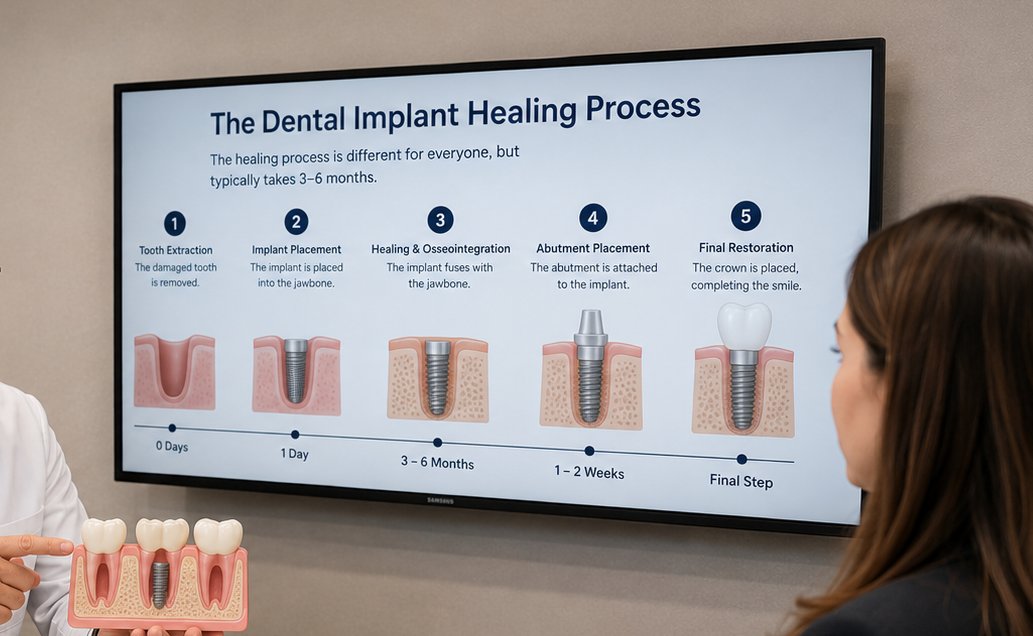
The dental implant healing process is far more than a simple recovery period; it's a sophisticated, multi-stage biological merger between technology and living tissue. While many patients focus on the visible healing of the gingiva, the most critical work happens beneath the surface. Soft tissues often heal within two weeks, yet the underlying bone requires several months to reach the density needed to support a permanent crown. This delicate phase requires the meticulous oversight of a prosthodontist to ensure the transition from a surgical site to a functional tooth is seamless.
Understanding the mechanics of Dental Implants helps demystify this timeline. Unlike other dental treatments that sit on top of the gums, an implant must become part of your anatomy. This transformation isn't a passive event but an active physiological response where your body accepts and secures the new root. By viewing healing as a partnership between the surgeon's precision and the body's regenerative power, patients can better appreciate the necessity of each stage in the recovery journey.
Prosthodontic care is essential during this time because it bridges the gap between surgery and final aesthetics. A specialist doesn't just wait for the bone to heal; they monitor the health of the surrounding tissues and the alignment of the implant to prevent future complications. This level of expert supervision ensures that when the final restoration is placed, it's supported by a foundation that is biologically sound and mechanically stable.
The Science of Bone Fusion
Titanium is highly biocompatible, allowing specialized bone cells called osteoblasts to attach directly to the implant surface. This process transitions through several stages, from the initial blood clot to the formation of dense, load-bearing bone. This cellular activity is the reason why implants are considered the gold standard for tooth replacement. Osseointegration serves as the structural and functional connection between living bone and the titanium surface, providing the anchor for a lifetime restoration.
Factors Influencing Your Healing Speed
Bone density and location significantly impact the dental implant healing process. The lower jaw is typically denser, often allowing for faster stability than the upper jaw. Systemic factors like diabetes or smoking can also alter the biological timeline by slowing cellular regeneration. For these reasons, Dr. Peterson Huang at Nova Premier Dental creates a personalized treatment plan to monitor these variables and ensure a predictable, successful restorative result.
The Critical First 72 Hours: Managing Immediate Post-Surgical Recovery
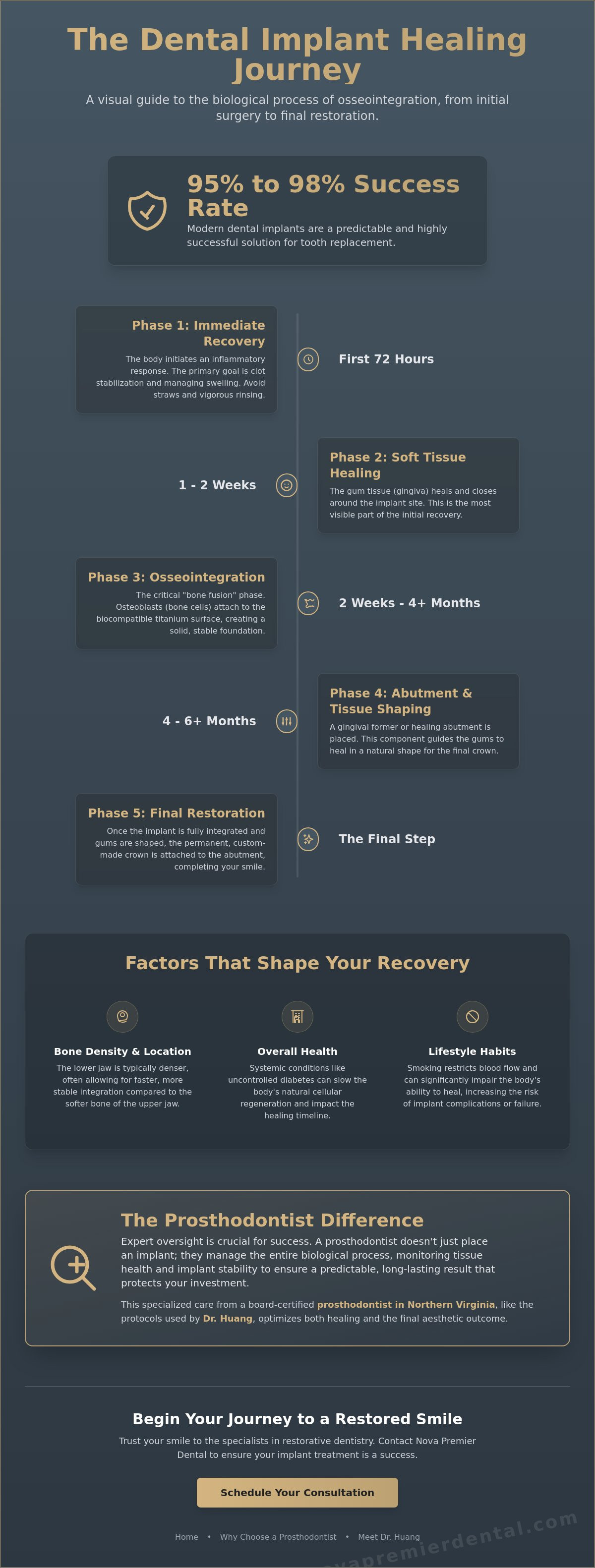
The first 72 hours are the most critical window for the dental implant healing process. During this timeframe, the body initiates the inflammatory response necessary for recovery. The primary clinical objective is to facilitate clot stabilization and manage localized edema. Minor oozing or residual numbness from local anesthesia is common and expected during the first day. At Nova Premier Dental, we provide detailed post-operative protocols that go beyond generic instructions. Our team monitors your early recovery to ensure the surgical site remains protected from external stressors. This meticulous attention to detail is why our patients report high levels of satisfaction during the most sensitive days of their recovery.
Most general advice suggests simply "resting," but we focus on why specific actions are prohibited. For instance, suction from a straw or vigorous spitting creates negative pressure that can dislodge the newly formed blood clot. This leads to a painful condition known as dry socket or increases the risk of infection. Understanding what to expect after dental implant surgery helps patients navigate these early hours with precision rather than guesswork. If you experience any unexpected changes or have concerns about your recovery, contact our team for immediate guidance.
Step-by-Step Aftercare for the First 3 Days
Immediate post-operative care requires a methodical approach to minimize discomfort and secondary swelling. Following these steps ensures the dental implant healing process remains on a predictable trajectory.
- Cold Compress Therapy: Apply an ice pack to the external facial area in a 20-minute on and 20-minute off cycle for the first 24 to 48 hours. This constricts blood vessels and limits the extent of facial swelling.
- Clot Preservation: Avoid the use of straws, smoking, or vigorous rinsing. These activities disrupt the healing site and can delay the biological timeline.
- Postural Elevation: Keep your head elevated with two or three pillows while sleeping. This reduces blood pressure at the surgical site, which significantly decreases morning swelling and throbbing.
Dietary Transitions During Early Healing
Nutrition plays a vital role in cellular repair, but the mechanical act of chewing must be restricted to protect the implant's initial stability. The "no-chew" phase should last at least 72 hours. Focus on high-protein liquids and soft foods served at lukewarm temperatures. Extreme heat can cause vasodilation, leading to renewed bleeding at the site.
- Stage 1 (Days 1-2): Focus on Greek yogurt, protein shakes (consumed with a spoon), pureed soups, and fruit smoothies.
- Stage 2 (Day 3 and beyond): Transition to soft solids such as mashed potatoes, scrambled eggs, or well-cooked pasta once the initial sensitivity subsides.
The Long-Term Biological Integration: Weeks to Months of Bone Healing
Once the initial inflammation of the first week subsides, you enter the most critical and "silent" phase of the dental implant healing process: biological maturation. This period marks the transition from surgical healing, where the focus is on the soft tissues, to functional integration, where the jawbone actively bonds to the titanium. Many patients feel completely recovered after just fourteen days. The gums appear healthy and pink, and the post-operative sensitivity has vanished. However, this sense of "normalcy" can be deceptive. While you feel fine, the bone is still in a state of high activity, meticulously remodeling itself around the implant's microscopic features.
According to the American Association of Oral and Maxillofacial Surgeons, the dental implant healing process requires this undisturbed time to ensure the interface between the device and the jawbone is strong enough to withstand the immense pressure of chewing. At Nova Premier Dental, we use specialized imaging during follow-up appointments to verify this stability. For patients undergoing comprehensive oral reconstruction, this monitoring is even more vital, as multiple sites must synchronize their healing timelines to support a full-arch restoration.
The 3-to-6 Month Milestone
Biological maturation occurs as bone cells, or osteoblasts, weave through the implant threads. If we "load" the implant with a permanent tooth too early, micro-movements can occur. These tiny shifts, often invisible to the naked eye, can prevent the bone from bonding and lead to fibrous encapsulation. This is essentially the body creating scar tissue instead of bone, which results in implant failure. Beyond replacing missing teeth, dental implants provide the necessary stimulation to the jawbone to prevent long-term resorption, maintaining your facial structure and bone density over time.
Signs of Successful Integration
Clinical success is determined by several diagnostic factors during your specialist evaluations. We look for a total absence of movement, pain, or lingering inflammation around the gum line. Additionally, we require radiographic evidence. High-resolution X-rays must show an increase in bone density directly adjacent to the titanium post, indicating the body has successfully claimed the implant as its own. This successful integration is the absolute biological prerequisite for the final crown, ensuring your new tooth is as durable and stable as a natural one.
Soft Tissue Maturation and the Final Restorative Phase
While the previous phase focused on the internal stability of the bone, the final stages of the dental implant healing process emphasize the health and aesthetics of the soft tissue. This phase is where the technical success of the surgery meets the clinical artistry of restorative dentistry. To achieve a result that looks and feels natural, we must meticulously manage the gingival architecture. This is accomplished through the use of a healing cap, or gingival former, which is a small component placed atop the implant to guide the gums as they heal. This shaping process creates a healthy "gum cuff" or emergence profile, ensuring that the final crown appears to grow naturally from the ridge rather than simply sitting on top of it.
Effective soft tissue management is a signature of high-end reconstructive care. Unlike general practices that may overlook the nuances of the gum line, our Falls Church practice prioritizes this transition to prevent food impaction and ensure long-term hygiene. By carefully guiding the tissue maturation, we establish a biological seal that protects the underlying integration. If you're ready to complete your smile with a specialist's touch, schedule your restorative consultation with our team today.
The Abutment Placement Procedure
The abutment placement procedure is a minor, minimally invasive step that occurs once osseointegration is clinically verified. During this appointment, the specialist gently exposes the implant and secures the abutment, which functions as the structural connector for your new tooth. Over the following two weeks, the soft tissue matures and tightens around this connector. In cases involving extensive oral reconstruction, we may utilize a temporary abutment. This allows us to "test drive" the tissue response and refine the aesthetics before the permanent, final component is fabricated.
Crafting Your Permanent Restoration
Crafting your permanent restoration requires a level of precision that goes beyond standard dental care. We take highly accurate impressions to map the exact contours of your mouth and the specific orientation of the implant. Our practice utilizes a specialized smile design process to ensure the final crown or bridge matches the unique translucency and shade of your surrounding teeth. As a specialist in prosthodontics in Northern Virginia, Dr. Huang focuses on the delicate harmony between functional bite alignment and aesthetic beauty. You can see the transformative impact of this precision in our before and after gallery. Transitioning to full functional use is the final milestone, providing you with a restoration that's indistinguishable from a natural tooth.
Maximizing Implant Success: The Role of Specialized Prosthodontic Care
Successful placement of the titanium post is a significant milestone, yet the surgical procedure represents only half of the journey toward long-term stability. The ultimate longevity of your restoration depends on the specialist's ability to manage the complex biological environment during the dental implant healing process. At Nova Premier Dental, we utilize advanced diagnostic technologies and computer-guided surgical protocols to minimize trauma to the surrounding tissues. This precision reduces the body's inflammatory response, which facilitates a more predictable and efficient recovery. For patients in Falls Church, McLean, and Arlington, this means a recovery experience grounded in clinical excellence and meticulous planning.
Choosing a practitioner with dual board certification provides a distinct advantage in handling high-stakes reconstructive cases. A specialist's perspective ensures that every variable, from bone density to occlusal forces, is accounted for before the first incision is made. This proactive approach prevents the common mechanical and biological failures that can occur when implants are treated as isolated components rather than part of a dynamic oral system. Our commitment to individualized care ensures that your recovery isn't just a waiting period, but an actively managed phase of medical reconstruction.
The Prosthodontic Difference in Northern Virginia
The expertise of a prosthodontist in Northern Virginia is particularly vital when managing bone grafts or compromised soft tissue health. Dr. Huang applies a perfectionist's touch to the architecture of the smile, ensuring the foundation is robust enough to prevent complications like peri-implantitis. This condition, characterized by inflammation and bone loss around the implant, is often the result of improper planning or poor tissue management. Because of our specialized focus on complex restorative cases, our practice has become the definitive source for dental second opinions in the Tysons and Falls Church area.
Commitment to Long-Term Oral Health
Maintaining the integrity of your investment requires a partnership between the patient and the clinical team. While the dental implant healing process concludes with the placement of the crown, the health of the supporting bone and gingiva requires lifelong vigilance. We prioritize patient education, providing specific protocols for home care that protect the biological seal around your restoration. Additionally, regular cleanings and exams are essential to monitor the stability of the implant and the health of the adjacent teeth.
Your journey to a functional and beautiful smile deserves the oversight of a dedicated expert. If you're ready to explore the possibilities of specialist-led restorative care, contact our Falls Church office to schedule your comprehensive consultation. We look forward to helping you achieve a lifetime of oral health and confidence.
Secure Your Restorative Future
The journey to a restored smile is a sophisticated biological process that requires both patient diligence and clinical expertise. From the initial stabilization of the first 72 hours to the long-term maturation of the jawbone, every stage of the dental implant healing process must be managed with precision. By prioritizing proper aftercare and attending follow-up evaluations, you ensure that your investment in oral health remains stable for a lifetime. Success isn't just about the surgery itself; it's about the meticulous management of the bone and soft tissue environment that follows.
At Nova Premier Dental, we combine the expertise of a Dual Board-Certified Prosthodontist with advanced 3D imaging technology to guide your recovery. Dr. Peterson Huang specializes in complex oral reconstruction, ensuring that even the most challenging cases achieve functional beauty and structural integrity. If you're ready to take the next step toward a permanent, healthy smile, we invite you to Schedule Your Consultation with Board-Certified Prosthodontist Dr. Peterson Huang. Your path to a confident future begins with a commitment to specialized care.
Frequently Asked Questions
How long does the dental implant healing process take on average?
The dental implant healing process typically spans three to six months for complete osseointegration. Lower jaw implants often heal faster due to higher bone density, while the upper jaw may require the full six-month window. This timeline is necessary for the titanium post to become a permanent part of your anatomy. Individual health factors and the need for supporting procedures like bone grafting can influence your specific recovery duration.
What are the main stages of dental implant recovery?
Recovery occurs in four distinct biological phases: the inflammatory stage, soft tissue healing, osseointegration, and functional maturation. The initial 72 hours focus on clot stabilization and swelling management. Over the next several weeks, the gingiva heals around the site. The most critical phase is the months-long process where bone cells attach to the implant. Finally, the site matures to support the mechanical forces of chewing.
Is it normal to have pain 2 weeks after dental implant surgery?
Significant pain two weeks after surgery is not typical and warrants a clinical evaluation. Most post-operative discomfort peaks within the first three to five days and should steadily resolve by the end of the first week. If you experience a sudden increase in throbbing or sharp pain after the initial healing period, it may indicate a complication such as an infection. Always contact your specialist if your symptoms don't follow a downward trajectory.
What are the warning signs of dental implant failure during healing?
The most prominent warning signs of potential failure include implant mobility, persistent severe pain, or pus discharge at the surgical site. While minor swelling is expected initially, swelling that returns after the first week is a clinical concern. Other indicators include a fever or a lingering foul taste. Early intervention by a board-certified prosthodontist can often address these issues before they lead to the loss of the implant.
Can I smoke during the dental implant healing process?
Smoking is strongly discouraged as it significantly increases the risk of implant failure. Nicotine constricts blood vessels and reduces the delivery of oxygen and nutrients required for bone fusion. This delay in the dental implant healing process can lead to poor integration or infection. For the best clinical outcome, patients should refrain from all tobacco products for at least one week before surgery and several months throughout the recovery.
How soon after dental implant surgery can I return to work?
Most patients return to their professional responsibilities within one to three days following the procedure. If your surgery involved multiple sites or intravenous sedation, you might require a longer period of rest. Physical jobs that involve heavy lifting should be avoided for at least five days to prevent increased blood pressure at the surgical site. Your specialist will provide a specific recommendation based on the complexity of your reconstructive plan.
When can I start eating normally again after an implant?
You can typically return to a standard diet once the final crown is placed, which occurs after osseointegration is complete. During the initial healing months, you must avoid chewing directly on the implant site to prevent micro-movements. Stick to soft foods like pasta, fish, and cooked vegetables during the first few weeks. Hard, crunchy, or sticky foods should be strictly avoided until your specialist confirms the bone has fully bonded to the titanium.
How do I know if my dental implant is healing correctly?
Correct healing is characterized by a gradual reduction in swelling and a return to healthy, pink gum tissue. You shouldn't feel any movement or clicking when speaking or swallowing. During follow-up appointments at Nova Premier Dental, Dr. Huang will use radiographic imaging to confirm bone density is increasing around the implant threads. A successful recovery is largely silent, meaning the site feels integrated into your natural jaw structure.
Disclaimer
The information provided on this website and blog is intended for general educational and informational purposes only and should not be considered dental or medical advice, diagnosis, or treatment. Reading content on this website does not establish a doctor-patient relationship with Nova Premier Dental or Dr. Peterson Huang. Dental conditions and treatment needs vary from patient to patient. Individuals should consult directly with a qualified dental professional for personalized evaluation, diagnosis, and treatment recommendations. Do not delay seeking professional dental care based on information found on this website. While we strive to provide accurate and up-to-date information, no guarantee is made regarding the completeness, accuracy, or applicability of the content. Treatment outcomes may vary depending on individual circumstances. If you are experiencing a dental emergency or urgent oral health concern, please contact a licensed dental professional immediately or call 911 in the event of a medical emergency.


