
Article by
Peterson Huang DMD, MS, FACP, FRCDC
Dr. Peterson Huang is a dual board-certified prosthodontist serving Falls Church and Northern Virginia. He has been recognized as a Top Prosthodontist by Northern Virginia Magazine and Arlington Magazine and is affiliated with the Inova Fairfax Hospital Tumor Board. Dr. Huang focuses on dental implants, full mouth reconstruction, and complex restorative dentistry for patients who need advanced, comprehensive care.
Approximately 120 million Americans currently live with the loss of at least one tooth, while 36 million face the challenges of total edentulism. At Nova Premier Dental, we believe that the choice of partial vs full dentures is a sophisticated clinical decision regarding bone preservation and facial architecture, not just a cosmetic fix. You likely want to regain the ability to eat comfortably and smile without hesitation, yet the technical differences between these options often lead to confusion regarding longevity and function. It's vital to understand how each prosthetic impacts your long-term oral health before committing to a treatment path.
This specialized guide will clarify the functional implications of each restoration to help you secure a healthy, predictable outcome. We'll examine how a prosthodontist in Northern Virginia evaluates your remaining dentition to preserve your jawbone and overall health. Dr. Huang and our team are dedicated to meticulous reconstruction, offering in-house payment plans for qualifying patients to ensure your care remains manageable while you enjoy your new smile. You'll gain the clarity needed to choose a restorative path that balances long-term durability with a natural, elite aesthetic.
Key Takeaways
- Understand the fundamental clinical differences between partial vs full dentures, specifically how each restoration uses either remaining natural teeth or gum tissue for support.
- Learn how a precision-fitted prosthesis prevents alveolar bone resorption and maintains your facial architecture to avoid the appearance of premature aging.
- Discover the strategic value of your remaining teeth and why a specialist might recommend specific extractions to ensure a more stable long-term result.
- Recognize why specialized prosthodontic expertise is vital for complex cases, ensuring your restoration provides maximum stability during high-force activities.
- Explore how individualized treatment plans and in-house payment options help you prioritize restorative excellence while managing the investment over time.
Understanding the Basics: What Are Partial and Full Dentures?
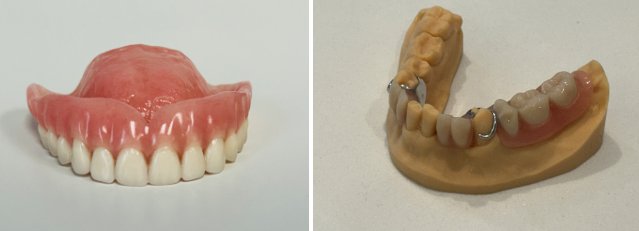
Full dentures, also known as complete dentures, are indicated for patients experiencing total edentulism, where all natural teeth in a single arch are missing. Partial dentures serve a different clinical purpose, designed for individuals who retain several healthy natural teeth that can act as stable anchors for the prosthesis. While both options fall under the foundational Overview of Dentures, the clinical decision between partial vs full dentures depends on your unique oral architecture and the long-term viability of your remaining dentition. The primary objective of any restoration is to return your masticatory function and speech clarity to a state of excellence. At Nova Premier Dental, our prosthodontist in Northern Virginia utilizes a highly customized approach to ensure every Falls Church patient receives a restoration that is both functional and aesthetically indistinguishable from natural teeth.
Complete (Full) Dentures for Total Restoration
Complete dentures rely on a combination of muscle control and surface tension for stability. For the upper arch, a traditional suction fit is created against the palate, providing a secure foundation. The lower arch often presents a greater clinical challenge due to the tongue's movement and a smaller surface area, making precision fitting by a specialist critical for patient comfort. We utilize high-grade, medical-grade acrylics that meticulously mimic natural gingival tissue. It's common for new wearers to experience a brief transition period as the neuromuscular system adapts to the presence of the new prosthesis, but a meticulous fit minimizes this learning curve.
Partial Dentures for Targeted Tooth Replacement
When you have healthy teeth remaining, partial dentures offer a conservative solution that leverages your existing anatomy. These devices use metal or tooth-colored aesthetic clasps to attach to your natural teeth, which serve as abutments. This connection provides significantly more stability than a full denture during high-force activities like chewing fibrous or tough foods. Beyond aesthetics, partials play a vital role in preserving jawbone integrity by preventing the remaining teeth from shifting into gaps. They function in a bridge-like manner, filling non-adjacent spaces to restore a continuous, functional arch. This preservation of natural teeth is often the preferred route when the remaining structures are healthy enough to withstand the added force of the prosthetic.
The Prosthodontic Perspective: How Restorations Impact Oral Health
When a tooth is lost, the alveolar bone that once supported it begins to resorb because it no longer receives the physiological stimulation provided by chewing. This biological change is a central factor when weighing the merits of partial vs full dentures. A prosthodontist in Northern Virginia focuses on the complex biomechanical relationship between the prosthetic and the underlying bone. As the American Dental Association on Dentures highlights, the type of restoration chosen significantly influences how these forces are distributed across the oral tissues. Dr. Huang utilizes his extensive training to ensure every restoration respects these biological boundaries while restoring your quality of life.
A properly engineered denture does more than replace teeth; it provides the structural scaffolding necessary to maintain a youthful facial appearance.
Preserving Bone Density and Facial Structure
Without the support of a precisely engineered prosthetic, the lips and cheeks can lose their internal foundation, leading to "sunken" facial features that often characterize advanced tooth loss. While partials are typically tooth-supported, leveraging the strength of remaining dentition to distribute weight, full dentures are primarily tissue-supported. This difference is vital for long-term comfort. In cases where the bone has already diminished significantly, oral reconstruction may be a necessary prerequisite. This ensures the final restoration has a stable, healthy base to rest upon, preventing further collapse of the facial profile.
The Role of Precision Fit in Long-Term Comfort
Standard dentures often rely on generalized impressions, which can lead to chronic "denture sores" and accelerated bone loss due to uneven pressure distribution. A specialist-led approach uses advanced diagnostic technology to capture the minute details of your oral landscape. This results in a stable, comfortable daily experience that prevents the micro-movements that damage soft tissue. If a prosthetic becomes loose over time, it's not just an inconvenience; it can cause lasting damage to the ridge. In such instances, seeking emergency denture repair is essential to restore the fit and protect your underlying health.
To ensure your smile remains functional and aesthetic, we offer in-house payment plans for qualifying patients, making elite care accessible while you enjoy the benefits of your restoration. You can contact our specialists to begin your restorative journey.
Partial vs. Full Dentures: A Side-by-Side Comparison
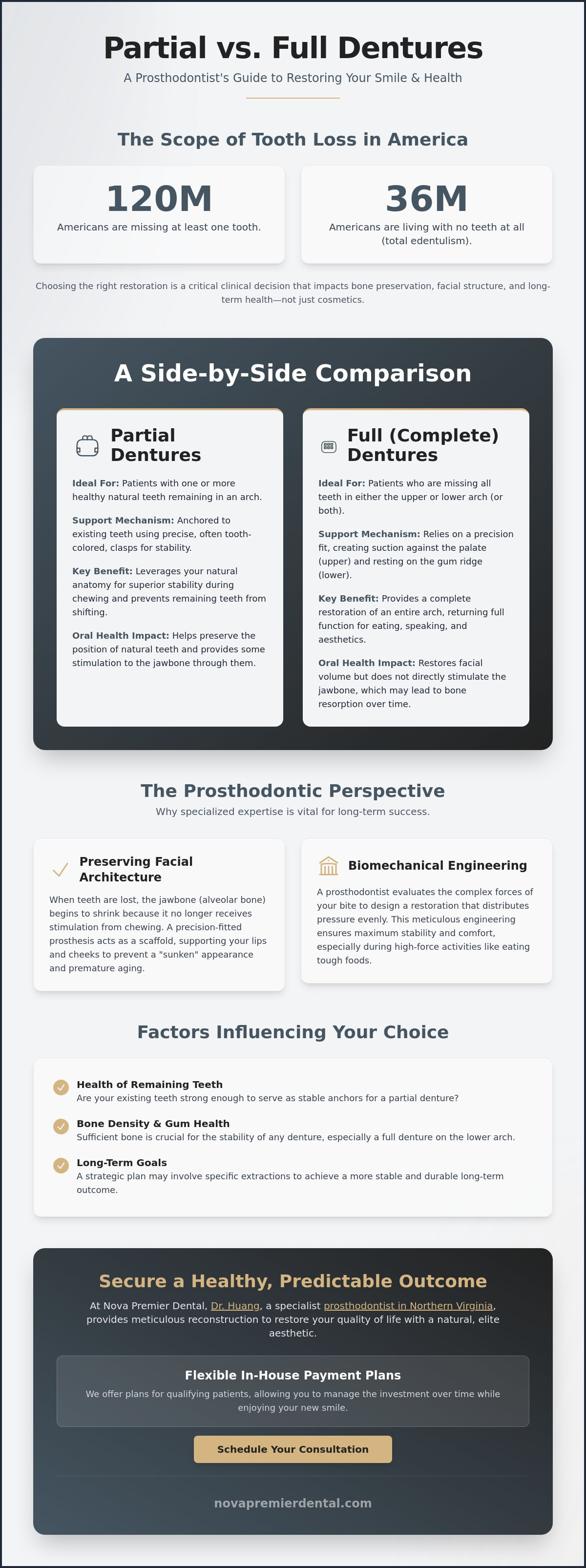
Choosing between partial vs full dentures involves a meticulous analysis of how the prosthetic will interact with your existing oral environment. While both options aim to restore the architecture of your smile, they differ significantly in their reliance on biological structures. As noted in the guide on Partial and Complete Dentures, the presence or absence of natural teeth dictates the primary support mechanism. A prosthodontist in Northern Virginia evaluates these factors to ensure the final restoration provides both functional stability and a seamless aesthetic integration.
Stability, Retention, and Support Mechanisms
Partial dentures offer inherently superior stability because they leverage the established root systems of your remaining healthy teeth. These natural anchors provide a rigid foundation that resists the horizontal and vertical forces generated during high-force activities like chewing fibrous foods. Conversely, conventional full dentures rely on atmospheric pressure and surface tension between the acrylic base and the gum tissue. This suction is often sufficient for the upper arch; however, the lower arch can be more mobile due to tongue movement. To address this, Dr. Huang often discusses the integration of dental implants to stabilize full dentures, effectively mimicking the root-based support found in partial restorations.
Aesthetic Integration and Natural Look
The aesthetic goals for these restorations differ based on whether you're supplementing an existing smile or creating an entirely new one. For partial dentures, the clinical challenge lies in meticulous shade-matching. We analyze the translucency and hue of your natural teeth to ensure the prosthetic blends invisibly. Full dentures provide a blank canvas, allowing us to design a completely new smile line that harmonizes with your age, skin tone, and facial symmetry. This level of customization ensures that the restoration doesn't just look like teeth, but like your teeth.
Daily maintenance remains a constant for both types. Since both are removable, they require a dedicated hygiene routine to prevent bacterial buildup. We guide our patients through a trial phase, where you can preview the aesthetics and fit before the final processing occurs. This methodical approach ensures your restoration feels like a natural extension of yourself. To help you prioritize these restorative outcomes, we offer in-house payment plans for qualifying patients, making elite care accessible while you enjoy the benefits of your new smile.
Determining the Right Path: Factors That Influence Your Choice
Determining the most effective restorative path requires a sophisticated evaluation that extends beyond a simple count of missing teeth. When comparing partial vs full dentures, the clinical viability of your remaining dentition is the primary deciding factor. We must assess whether your existing teeth are robust enough to serve as abutments, or if their "strategic value" is insufficient to support a long-term prosthetic. In some complex cases, extracting a compromised tooth to facilitate a more stable, well-fitting full denture is the superior clinical choice. This strategic decision-making is why a comprehensive dental exam is the non-negotiable first step in your treatment plan.
Evaluating Remaining Tooth Health and Longevity
Periodontal health is a critical prerequisite for partial dentures. If the surrounding gum tissue or bone structure is weakened by disease, the anchor teeth won't withstand the mechanical stresses of a prosthetic. Similarly, deep decay in an anchor tooth can compromise the entire restoration, leading to premature failure. Dr. Huang meticulously evaluates the prognosis of each tooth, ensuring that we only build upon a foundation that promises durability. This level of scrutiny distinguishes a prosthodontist in Northern Virginia from general practitioners who may overlook these subtle biomechanical risks.
Lifestyle Considerations and Maintenance
Your daily habits and professional requirements also influence the selection process. Individuals who engage in frequent public speaking or have specific dietary preferences often find the enhanced stability of a partial denture more conducive to their lifestyle. However, the psychological transition to a removable appliance is significant. Whether you choose partial or full restorations, daily cleaning rituals are essential to maintain oral health and prosthetic longevity. You should also expect regular clinical adjustments, as the jawbone naturally changes its shape over time. This ensures the prosthetic continues to fit the evolving landscape of your mouth.
To ensure you receive the highest standard of restorative care without delay, Nova Premier Dental offers in-house payment plans for qualifying patients. This allows you to manage the investment over several months while immediately benefiting from a functional, aesthetic smile. Schedule your consultation today to determine the best path for your long-term health.
Specialized Denture Solutions at Nova Premier Dental
Selecting the appropriate restoration involves more than just filling a gap in your smile. It's a commitment to your long-term systemic health and facial integrity. While many general practices offer basic tooth replacement, the complexity of partial vs full dentures requires the specialized eye of a prosthodontist in Northern Virginia. At Nova Premier Dental, we provide elite restorative care to patients across Falls Church, McLean, and Arlington, ensuring that every prosthetic is a masterpiece of both form and function. We prioritize the use of high-grade, biocompatible materials that offer superior durability and a natural translucency that mimics real enamel.
Why a Board-Certified Prosthodontist Makes the Difference
The success of a complex oral reconstruction depends on a deep understanding of the masticatory system. Dr. Huang holds dual board certifications, a distinction that signals a higher standard of clinical excellence and a dedication to the most challenging reconstructive cases. Our practice utilizes state-of-the-art technology, including digital impressions and advanced bite analysis, to capture the precise dynamics of your jaw movement. This data-driven approach eliminates the guesswork often associated with traditional methods. We don't believe in "quick fixes" that lead to discomfort; instead, we focus on creating a stable, harmonious relationship between your restoration and your natural anatomy.
Managing Your Care with Flexible In-House Payment Plans
We understand that pursuing high-end restorative dentistry is a significant investment in your quality of life. To ensure that elite care remains accessible, Nova Premier Dental offers in-house payment plans for qualifying patients. These plans are designed to help you distribute the cost of your treatment over several months, providing a predictable way to manage your finances while you are already enjoying the functional and aesthetic benefits of your new smile. Our team is committed to transparency, and we'll work closely with you to align your clinical needs with a manageable financial strategy.
Your journey toward a fully functional, aesthetic smile begins with a meticulous evaluation of your oral health. Whether you require a sophisticated partial or a complete arch restoration, our specialist-led team is here to guide you toward the most effective path. We invite you to contact our office today to schedule a consultation and discover how a customized, prosthodontic approach can transform your health and confidence.
Secure Your Long-Term Oral Health and Confidence
Choosing between partial vs full dentures is a sophisticated clinical decision that dictates the future of your bone health and facial architecture. It's vital to partner with a specialist who understands the biomechanical nuances of these restorations to ensure your smile remains functional and aesthetic for years to come. Whether you're leveraging healthy natural teeth as anchors or requiring a complete arch replacement, the goal is a predictable, high-end outcome that restores your quality of life.
At Nova Premier Dental, we're dedicated to providing elite reconstructive care to patients in Falls Church and throughout Northern Virginia. As a Dual Board-Certified Prosthodontist, Dr. Huang offers a level of expertise that ensures your prosthetic is meticulously engineered for comfort and stability. We also provide in-house payment plans for qualifying patients, allowing you to comfortably manage the investment in your health while you enjoy the benefits of a rejuvenated smile. You don't have to navigate these complex health challenges alone.
Schedule Your Specialized Consultation with Dr. Huang today to discuss your path toward restorative excellence with a leading prosthodontist in Northern Virginia. Your journey to a more confident and functional future starts here.
Frequently Asked Questions
Can a partial denture be turned into a full denture later if I lose more teeth?
While some acrylic partials allow for the addition of new teeth, a transition to a full denture typically necessitates a completely new prosthesis to ensure a precise, clinical fit. Converting an existing partial often compromises the structural integrity and suction required for a stable full arch. Dr. Huang evaluates your oral architecture to determine if a new restoration is the most predictable path for your long-term comfort.
How long do partial vs. full dentures typically last before needing replacement?
Most partial vs full dentures are designed to last between 5 and 10 years before requiring replacement or significant modification. This timeline is influenced by natural changes in your jawbone and gum tissue, which alter how the prosthetic rests in your mouth. Regular check-ups at Nova Premier Dental allow us to monitor these changes and perform necessary relines to maintain a secure fit.
Will my insurance cover the difference between partial and full dentures?
Dental insurance typically classifies both types as "major procedures" and often covers approximately 50% of the cost, though this is subject to your annual benefit maximum. These maximums frequently range between $1,000 and $1,500, which may not cover the entire restorative process. To help bridge this gap, we offer in-house payment plans for qualifying patients, allowing you to manage costs over several months while enjoying your new smile.
Is it harder to learn how to eat with a full denture compared to a partial?
Learning to eat with a full denture is generally more challenging than with a partial because it lacks the stability provided by natural tooth anchors. Full dentures rely on atmospheric pressure and neuromuscular control, requiring a period of adaptation for your tongue and cheeks. Partials offer immediate stability during high-force chewing, making the transition feel more natural for most patients comparing partial vs full dentures.
What happens if my denture breaks or no longer fits correctly?
If your prosthetic breaks or becomes loose, you should seek emergency denture repair immediately rather than attempting a home fix. DIY repairs can permanently damage the acrylic or cause tissue irritation that leads to accelerated bone loss. A prosthodontist in Northern Virginia can perform precise adjustments or laboratory relines to restore the original fit and function of your device.
Are there permanent alternatives to removable partial and full dentures?
Dental implants serve as the primary permanent alternative to removable prosthetics, offering a foundation that mimics natural tooth roots. Options like implant-supported bridges or permanent dentures provide superior stability and help preserve your jawbone density over time. We invite you to discuss these advanced reconstructive options during your initial consultation to find a solution that fits your specific health goals.
Disclaimer
The information provided on this website and blog is intended for general educational and informational purposes only and should not be considered dental or medical advice, diagnosis, or treatment. Reading content on this website does not establish a doctor-patient relationship with Nova Premier Dental or Dr. Peterson Huang. Dental conditions and treatment needs vary from patient to patient. Individuals should consult directly with a qualified dental professional for personalized evaluation, diagnosis, and treatment recommendations. Do not delay seeking professional dental care based on information found on this website. While we strive to provide accurate and up-to-date information, no guarantee is made regarding the completeness, accuracy, or applicability of the content. Treatment outcomes may vary depending on individual circumstances. If you are experiencing a dental emergency or urgent oral health concern, please contact a licensed dental professional immediately or call 911 in the event of a medical emergency.


