

Article by
Peterson Huang DMD, MS, FACP, FRCDC
Dr. Peterson Huang is a dual board-certified prosthodontist serving Falls Church and Northern Virginia. He has been recognized as a Top Prosthodontist by Northern Virginia Magazine and Arlington Magazine and is affiliated with the Inova Fairfax Hospital Tumor Board. Dr. Huang focuses on dental implants, full mouth reconstruction, and complex restorative dentistry for patients who need advanced, comprehensive care.
Did you know that by the end of 2026, nearly 42.5 million Americans are expected to rely on dentures for their daily function? Even though they're common, many patients at Nova Premier Dental arrive frustrated by persistent slippage and the constant need for messy adhesives. If you're struggling with painful sores or embarrassment during meals, learning how to make dentures fit better is the first step toward reclaiming your comfort. It's understandable to feel discouraged when your prosthetic doesn't move with you, but achieving a secure fit is a matter of precision science rather than just luck.
As a specialized prosthodontist in Northern Virginia, Dr. Huang understands that optimal stability requires a sophisticated approach to oral reconstruction. This guide provides professional techniques to eliminate denture movement and prevent the bone loss that often complicates long-term wear. We'll preview advanced solutions ranging from professional laboratory relines to the life-changing security of dental implants. You'll gain the expert knowledge needed to restore your ability to eat your favorite foods and speak with total clarity.
Key Takeaways
- Understand the biological process of bone resorption and why the loss of natural tooth roots leads to a gradual change in your prosthetic's stability.
- Learn professional techniques for how to make dentures fit better, including the precise application of adhesives and the critical role of overnight soaking.
- Identify the clinical differences between hard and soft relines to determine which restorative adjustment is best suited for your gum sensitivity.
- Recognize the health warning signs of chronic sores and denture stomatitis to prevent long-term damage to your oral tissues.
- Discover how dental implants and fixed bridges can mimic natural tooth roots to permanently stop bone loss and eliminate slippage.
Understanding Why Dentures Lose Their Fit Over Time
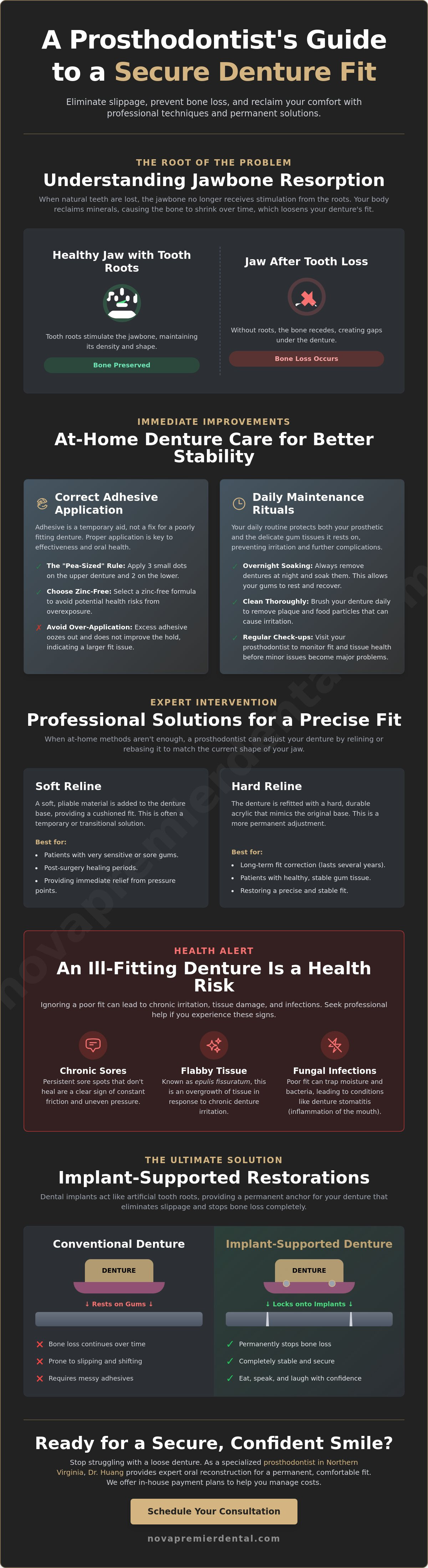
The primary reason patients ask how to make dentures fit better isn't usually a flaw in the prosthetic itself. It's a biological reality called bone resorption. When you lose natural teeth, the jawbone no longer receives the mechanical stimulation provided by tooth roots during chewing. The body perceives this lack of activity as a signal that the bone is no longer necessary. It begins to reclaim essential minerals like calcium from the jaw, leading to gradual shrinkage. Before exploring professional solutions, it's helpful to understand what are dentures and how they interact with this changing anatomy.
Even a single millimeter of bone loss creates a microscopic gap between the appliance and the ridge. This gap acts as a pivot point. When you bite down, the denture tips or slides, creating friction that leads to painful sores. External factors like significant weight loss or natural aging can accelerate these changes, making a once-perfect fit feel unstable within just a few years. It's a common struggle, but understanding the underlying structural shift is the first step toward finding a permanent fix.
The Role of Jawbone Atrophy in Northern Virginia Patients
Long-term denture wear, particularly beyond the five-year mark, significantly alters the landscape of the mouth. This atrophy is especially aggressive in the lower jaw. Unlike the upper arch, which benefits from the broad surface area of the palate for suction, the lower ridge is narrow and constantly disturbed by tongue movement. At Nova Premier Dental, we emphasize the importance of specialized prosthodontics to monitor these structural shifts. A prosthodontist in Northern Virginia has the advanced training to detect bone loss before it compromises your facial structure or speech patterns.
Why 'Good Enough' Fit Isn't Enough for Oral Health
Accepting a loose fit can lead to more than just social embarrassment. Ill-fitting prosthetics often cause flabby tissue, a condition known as epulis fissuratum, where the soft tissues overgrow in response to chronic irritation. This uneven pressure creates a destructive feedback loop; the more the denture shifts, the faster the bone recedes. Dr. Peterson Huang approaches these cases with a focus on structural oral reconstruction. His goal isn't just to provide a replacement but to ensure the underlying foundation remains healthy. If you're concerned about costs, our practice offers in-house payment plans for qualifying patients. These allow you to manage payments over several months while enjoying the immediate benefits of a secure, healthy smile.
Immediate Strategies to Improve Denture Stability at Home
While professional intervention is the definitive path to stability, your daily maintenance routine significantly influences how to make dentures fit better between clinical appointments. Immediate improvements often stem from refining how you handle and secure your prosthetic. Small adjustments in your morning and evening rituals can mitigate minor slippage and protect the delicate contours of your oral anatomy. It's often the cumulative effect of these small habits that determines whether your appliance feels like a natural extension of your mouth or a burdensome foreign object.
Choosing and Applying Denture Adhesives Correctly
Adhesives should serve as a secondary support rather than a primary solution for a failing prosthetic. When choosing between creams, powders, or strips, consider the degree of instability you're experiencing. For most patients, a high-quality cream provides the most reliable seal. The "pea-sized" rule is essential here; apply three small dots of adhesive on the upper denture and two on the lower. Over-application causes the material to ooze out, which is both unpleasant and indicative of an underlying fit issue. We strongly advise patients at Nova Premier Dental to select zinc-free formulas. Chronic, excessive exposure to zinc in dental adhesives has been linked to neurological complications, making it a critical factor in long-term safety.
Maintaining the Structural Integrity of Your Prosthetic
The longevity of your denture's fit depends on preserving the intaglio, or the underside surface that rests against your gums. This surface is precision-engineered to match your ridge exactly. Using abrasive toothpastes or stiff brushes can create micro-scratches that harbor bacteria and eventually alter the shape of the acrylic. You should also incorporate daily gum massages using a soft cloth or a very gentle brush. This stimulates blood flow to the underlying tissues, which helps maintain the health of the ridge and may slow the rate of atrophy discussed in the previous section.
Structural warping is another common culprit behind sudden instability. Hot water is the enemy of dental acrylic; always use lukewarm or cool water for cleaning and rinsing. The "overnight soak" is not merely for hygiene. It keeps the material hydrated to prevent it from becoming brittle or changing shape. For comprehensive denture care and adjustments, following a rigorous protocol is your best defense against premature wear. Regular dental exams and cleanings allow our team to catch minor warping before it causes tissue damage. If you feel your current prosthetic requires more than home remedies, Dr. Huang can evaluate the structural integrity of the base. For those ready to move toward a more permanent solution, our practice offers in-house payment plans to ensure expert care remains accessible.
Professional Solutions: Relining, Rebasing, and Occlusal Adjustments
When daily maintenance and adhesives no longer provide the security you need, clinical intervention is the only reliable path to comfort. Many patients search for how to make dentures fit better and encounter risky do-it-yourself kits. At Nova Premier Dental, we strongly advise against these. DIY reliners often lack the precision required for proper bite alignment and can lead to accelerated bone loss or tissue infections. Instead, professional solutions focus on the structural harmony between your prosthetic and your changing oral anatomy. These adjustments ensure your appliance functions as a precise medical tool rather than a source of irritation.
Hard vs. Soft Relines: Which Do You Need?
A reline is a routine procedure that updates the fitting surface of your prosthetic to match the current contours of your gums. A hard reline involves replacing the internal surface with high-grade, permanent acrylic. It's the gold standard for patients with healthy gum tissues who have experienced the bone resorption described earlier. For those with chronic sensitivity or thin, friable tissues, a soft reline may be more appropriate. This technique utilizes medical-grade silicone to provide a cushioned interface that reduces friction. During your appointment, Dr. Huang takes a functional impression while your jaw is in motion, ensuring the new surface accommodates your unique speech and chewing patterns. For patients facing sudden damage, we also provide emergency denture repair to restore function quickly.
When a Reline Isn't Enough: The Rebasing Process
While a reline only modifies the fitting surface, rebasing involves replacing the entire pink acrylic base while retaining the existing teeth. This is necessary when the original base becomes brittle, porous, or severely warped. It's a cost-effective way to extend the life of your prosthetic without the expense of a completely new unit. This process requires extreme precision to maintain the "vertical dimension" of your face, which is the distance between your nose and chin when your teeth meet. Preserving this measurement is vital for preventing a "collapsed" facial appearance and ensuring your jaw joints remain healthy. Seeking professional solutions for ill-fitting dentures from a specialist ensures these nuances aren't overlooked.
Occlusal adjustments are the final piece of the stability puzzle. Even a perfectly relined base will feel loose if your teeth don't meet evenly. By shaving microscopic high spots on the teeth, we balance the bite and prevent the appliance from tilting. As a leading prosthodontist in Northern Virginia, Dr. Huang uses these advanced techniques to provide long-term stability. To make these essential services more manageable, we offer in-house payment plans that allow you to distribute the cost over several months while you enjoy your improved fit.
When Fit Becomes a Health Issue: Identifying Warning Signs
Ignoring a loose prosthetic can transform a minor annoyance into a significant medical concern. While patients often focus on how to make dentures fit better for social reasons, the clinical implications of a poor fit are far reaching. Chronic irritation from a shifting plate can lead to Denture Stomatitis, a yeast infection characterized by intense redness and inflammation beneath the appliance. Additionally, a collapsed bite often triggers Angular Cheilitis. This condition causes painful, cracked sores at the corners of the mouth because the lips fold over themselves, creating a moist environment where bacteria thrive. These aren't just aesthetic issues; they're signs that your oral foundation is under stress.
Chronic sores that refuse to heal deserve immediate attention. When a denture rubs against the same spot for weeks, it can create deep ulcers. In some cases, persistent trauma to the soft tissues can lead to more serious cellular changes. It's vital to remember that your prosthetic should never be painful. If you find yourself avoiding certain foods or limiting your speech to prevent discomfort, your fit has already reached a critical stage that requires professional intervention.
The Hidden Dangers of DIY Denture Repair Kits
Many patients attempt to bypass clinical visits by using over the counter relining kits. While these products promise a quick fix, they often mask the underlying bone loss discussed in earlier sections. Improperly applied DIY liners create uneven pressure spots that actually accelerate bone resorption. Even worse, using household adhesives like superglue introduces toxic chemicals into your mouth and can permanently damage the prosthetic material. Before you risk your long term health, we recommend seeking a dental second opinion to ensure your adjustments are structurally sound and bio-compatible.
Warning Signs You Need Immediate Professional Attention
You should seek help from a prosthodontist in Northern Virginia if you experience persistent pain that prevents proper nutrition. Visible cracks in the base or chips in the teeth are structural failures that can harbor dangerous pathogens. If you notice a sunken appearance in your lower face, it indicates that your bone loss has reached a stage where a simple reline is no longer sufficient. At Nova Premier Dental, Dr. Huang prioritizes your systemic health by ensuring every restoration is stable and functional. If you've noticed persistent sores or a change in your bite, contact our office for a comprehensive evaluation. To ensure you don't delay essential care, we offer in-house payment plans that allow you to manage the cost over several months while protecting your smile.
The Permanent Solution: Transitioning to Implant-Supported Restorations
While professional relines and rebasing provide necessary relief, they don't address the underlying biological cause of instability. For patients seeking the definitive answer to how to make dentures fit better, implant-supported restorations offer a permanent shift in quality of life. Unlike traditional prosthetics that rest on the gums, dental implants integrate directly into the jawbone. This allows them to mimic natural tooth roots, providing the mechanical stimulation required to stop the bone resorption process described earlier. By halting bone loss, implants preserve your facial structure and provide a foundation that is physically incapable of slipping or clicking.
Choosing an implant-supported solution is the gold standard for restoring 100% of your natural chewing function. This transition allows you to return to a diet of fibrous vegetables and tough proteins without the fear of your prosthetic dislodging. As a dual board-certified specialist, Dr. Peterson Huang focuses on the engineering and aesthetics of these complex cases. He ensures that the transition from a removable plate to a fixed or stabilized restoration is seamless, predictable, and life-changing.
Reclaiming Stability with Implant-Supported Dentures
For many patients in Falls Church, the "overdenture" concept provides the perfect balance of stability and accessibility. These are often referred to as "snap-on" dentures because they click onto a few strategically placed dental implants. While they're still removable for cleaning, they stay firmly in place during speech and meals. The psychological benefits are profound; you'll no longer feel the constant anxiety of a shifting prosthetic. For those who want to move away from removable appliances entirely, the All-on-4 system provides a fixed bridge that functions exactly like natural teeth.
Planning Your Restoration at Nova Premier Dental
A successful transition requires a comprehensive oral reconstruction plan that accounts for your unique bone density and health history. At Nova Premier Dental, we use advanced imaging to map out the most stable positions for your implants. We're committed to making this level of specialized care accessible to our community. Our practice offers in-house payment plans for qualifying patients, allowing you to manage the cost of your care over several months while you're already enjoying the benefits of your new, secure smile. If you're ready to stop wondering how to make dentures fit better and start experiencing total stability, contact our prosthodontist in Northern Virginia to schedule your consultation.
Reclaiming Your Functional Stability
Achieving a secure fit is essential for your systemic health and daily quality of life. As we have explored, the journey to stability involves understanding the biological changes in your jawbone and utilizing professional restorative techniques to counteract bone resorption. Whether you require a specialized reline to address tissue sensitivity or are ready to explore the permanent security of dental implants, the goal remains the same: a prosthetic that functions without compromise.
Understanding how to make dentures fit better is the first step toward ending the cycle of painful sores and social anxiety. Dr. Peterson Huang is a Dual Board-Certified prosthodontist in Northern Virginia who specializes in complex oral reconstructions. He provides the meticulous, individualized care necessary to restore both form and function. To ensure these elite services remain accessible, Nova Premier Dental offers in-house payment plans for qualifying patients. These allow you to comfortably manage the cost of your care over several months while already enjoying the benefits of your restored smile.
Don't settle for a loose prosthetic that limits your lifestyle and health. Schedule your specialized denture consultation with Dr. Huang today to begin your journey toward lasting comfort. You deserve a smile that feels as natural and secure as it looks.
Frequently Asked Questions
Can I reline my own dentures with a store-bought kit?
While store-bought kits are widely available, you shouldn't use them when searching for how to make dentures fit better. These kits lack the precision of a clinical impression and often create uneven pressure points. This imbalance leads to accelerated bone resorption and potential tissue infections. A prosthodontist in Northern Virginia ensures the reline matches your unique bite while protecting your jaw's structural integrity.
How often should I have my dentures professionally adjusted?
You should have your prosthetic evaluated at least once every six months during your routine cleanings and exams. Most patients require a professional reline every one to two years to account for natural bone changes. Regular monitoring is the most effective way to discover how to make dentures fit better before minor instability causes significant soft tissue damage or permanent bone loss.
Why do my dentures fit in the morning but feel loose by evening?
This fluctuation is typically caused by daily changes in your gum tissue's fluid volume. Gums often appear slightly more swollen in the morning due to overnight fluid retention, providing a tighter fit. By evening, as you move and eat, this swelling subsides, creating a gap between the tissue and the appliance. If this change is significant, Dr. Huang may recommend a reline to accommodate your baseline tissue volume.
Will losing weight really make my dentures fit poorly?
Yes, significant weight loss often results in a reduction of the fatty tissues within your gums. This shrinkage alters the shape of the ridge that supports your prosthetic, leading to sudden instability. If you've recently lost weight, your appliance may require a reline or rebase to restore a secure seal. Our practice provides in-house payment plans to help manage the costs of these necessary structural adjustments.
Is it normal for new dentures to cause sores during the first week?
It's common to experience minor "hot spots" or small sores as your mouth adapts to a new prosthetic. Your gums are soft tissues that must build a tolerance to the hard acrylic base. However, if sores persist beyond the first week or prevent you from eating, you need a clinical adjustment. Dr. Huang can identify the specific pressure points and refine the base to improve your daily comfort.
Can a prosthodontist fix a denture that has been broken in half?
Yes, a broken prosthetic can often be restored through emergency denture repair. Do not attempt to use household glues, as they are toxic and can ruin the acrylic beyond repair. We use medical-grade resins to fuse the pieces back together while maintaining the original bite alignment. If the fracture is severe, we'll discuss whether rebasing or a new restoration is the safer long-term choice.
What is the difference between a hard reline and a soft reline?
The primary difference lies in the material used for the fitting surface. A hard reline uses permanent, medical-grade acrylic to provide long-term stability for patients with healthy gums. A soft reline utilizes a flexible, medical-grade silicone layer. This is preferred for patients with thin tissues or chronic sensitivity, as it provides a cushioned interface that reduces friction and prevents painful sores during chewing.
How do I know if I’m a candidate for implant-supported dentures?
Candidates for dental implants must have sufficient bone density to support the posts and good overall health. Dr. Huang uses advanced 3D imaging to evaluate your jaw structure and determine if you're a fit for "snap-on" or fixed restorations. If bone loss is significant, he can discuss preparatory procedures to ensure you're ready. Our team offers in-house payment plans to make these permanent solutions financially manageable.
Disclaimer
The information provided on this website and blog is intended for general educational and informational purposes only and should not be considered dental or medical advice, diagnosis, or treatment. Reading content on this website does not establish a doctor-patient relationship with Nova Premier Dental or Dr. Peterson Huang. Dental conditions and treatment needs vary from patient to patient. Individuals should consult directly with a qualified dental professional for personalized evaluation, diagnosis, and treatment recommendations. Do not delay seeking professional dental care based on information found on this website. While we strive to provide accurate and up-to-date information, no guarantee is made regarding the completeness, accuracy, or applicability of the content. Treatment outcomes may vary depending on individual circumstances. If you are experiencing a dental emergency or urgent oral health concern, please contact a licensed dental professional immediately or call 911 in the event of a medical emergency.


